"Recreational hunting is not the problem"? When PR interviews replace journalism
On March 29, 2026, the Austrian regional portal MeinBezirk.at published an interview with Anton "Toni" Larcher, Tyrol's state hunting master and, since January 2026, president of Jagd Österreich.


Editor Georg Herrmann conducted the interview.
What presents itself as a journalistic contribution reveals itself, upon closer examination, as an uncommented mouthpiece for the recreational hunting lobby: no follow-up questions, no contextualization, no scientific framing. The following is a fact-check of the central claims.
«Part of the solution when it comes to healthy wildlife populations and stable habitats»
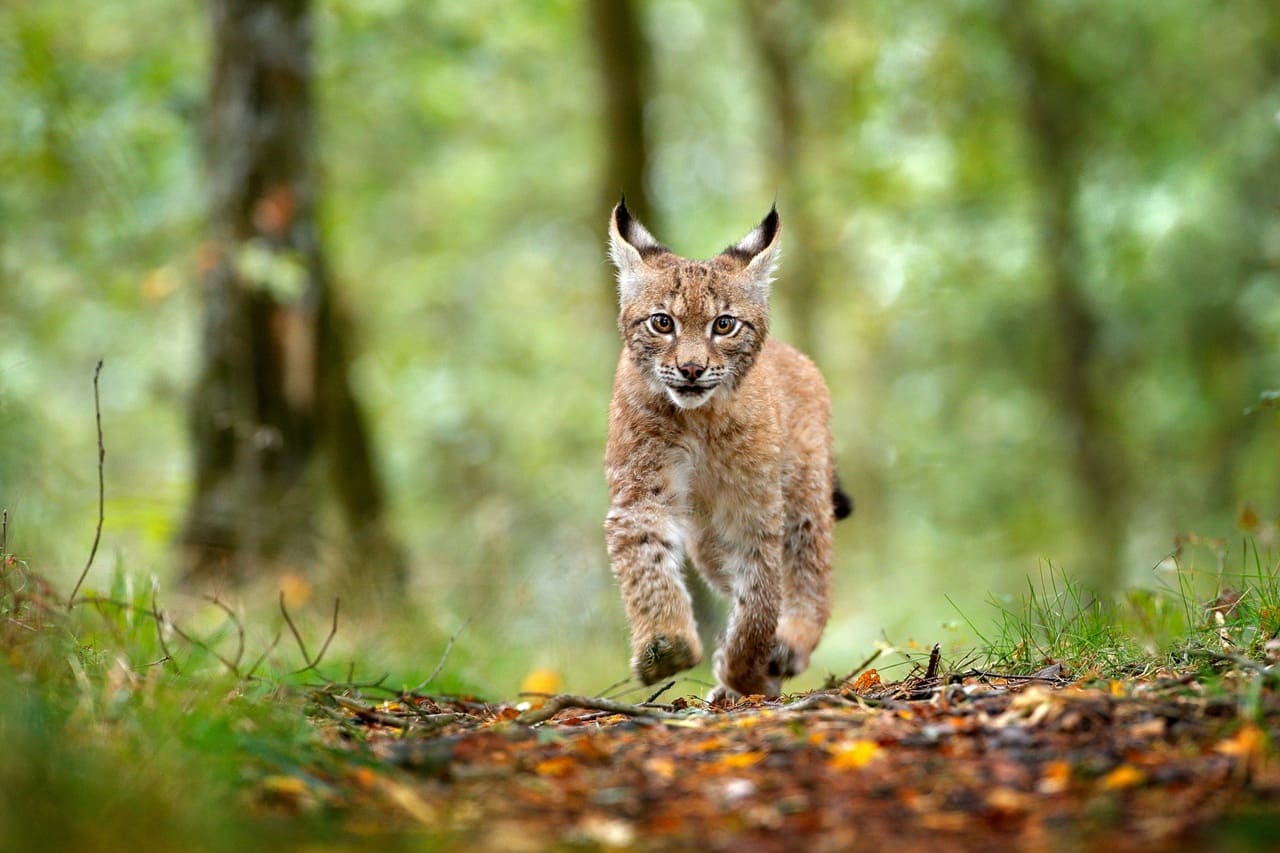
This sentence sits completely askew in the landscape. It is repeated three times in the interview, as if repetition could replace evidence. What Larcher presents as self-evident fact is in reality a circular argument: Recreational hunting in Central Europe has exterminated all natural regulators, namely wolves, lynxes and bears. It keeps populations artificially inflated through systematic wildlife feeding. It destroys social structures through hunting pressure and thus promotes uncontrolled reproduction. And then it presents itself as «part of the solution» for precisely the problems it has created itself. It's as if an arsonist were celebrated as a firefighter.
«Healthy wildlife populations» means in the language of the recreational hunting lobby: enough animals to shoot, preferably with large trophies. «Stable habitats» means: habitats that serve the interests of recreational hunting, not wildlife. The definitions of BAFU, IUCN and all established nature conservation organizations say the opposite: nature conservation means preserving habitats, promoting biodiversity and minimizing human intervention. Recreational hunting does the opposite. It selectively intervenes according to leisure interests. A detailed analysis can be found in the dossier Hunting myths: 12 claims you should critically examine.
«135,000 recreational hunters do nature conservation»
The claim that around 135,000 recreational hunters would make a «contribution to nature conservation» deliberately conflates voluntary individual achievements such as fawn rescue or biotope maintenance with the actual purpose: the shooting right as a leisure activity. Anyone who rescues fawns and shoots the same fawns in autumn is not practicing nature conservation. They are pursuing a hobby that occasionally includes nature conservation-related activities. Actual nature conservation work is carried out by biologists, rangers, national park administrations and nature conservation organizations.
«Well-trained nature users»
Larcher describes recreational hunters as «well-trained nature users who intensively engage with ecology, wildlife biology and sustainable management». The reality is different: young hunter training in Austria lasts on average around four months. There are even compact courses that can be completed in just three weeks. Depending on the state, formats vary between evening and weekend courses over a few months. Costs are around 800 euros. This short training is nowhere near comparable to a wildlife biology or ecology degree, which takes four to five years. The term «nature user» is revealingly honest: it's about use, not protection. Anyone who kills an animal for personal pleasure is not a nature conservationist, no matter how well-trained they claim to be. The psychology of recreational hunting examines the underlying motives more closely.
«Recreational hunting regulates wildlife populations»
The regulation narrative is refuted by population ecology. Ecologist Prof. Dr. Josef H. Reichholf summarizes: recreational hunting does not regulate, it creates inflated and suppressed populations. Intensive hunting destroys family bonds and social structures, leading to uncontrolled reproduction. High hunting pressure drastically reduces life expectancy, leads to premature sexual maturity and increases birth rates. In hunting-free areas such as the Swiss National Park, the Bavarian Forest or Italian national parks, wildlife populations regulate themselves through natural mechanisms: food availability, climate, predators and social structures. The dossier Hunting in Switzerland: figures, systems and the end of a narrative documents this with extensive data.
Wildlife feeding: the vicious cycle of recreational hunting
What is also completely absent from Larcher's interview is the widespread practice in Austria of wildlife feeding. This is a central contradiction in the self-presentation of recreational hunting: on one hand, recreational hunters claim to need to regulate wildlife populations; on the other, they systematically feed those same populations. In Austria, around 350,000 deer and red deer were killed in the 2022/23 hunting season. At the same time, the same recreational hunting community feeds wildlife from autumn well into spring.
Only hoofed game is fed, namely deer and elk, which carry trophies. Foxes, martens or other wildlife are not fed but hunted year-round. This selection alone reveals the motive: it is not about animal welfare, but about maintaining high populations for shooting pleasure and trophy production. Specially developed concentrate feed causes animals to grow particularly large antlers.
Science is clear here: artificial feeding prevents natural selection, keeps population densities unnecessarily high, promotes the spread of diseases such as tuberculosis and aggravates forest damage through increased browsing. Wildlife become semi-tame, human-dependent animals and lose their freedom and independence. In some regions of Austria, they are kept in winter enclosures for over eight months a year. Even the Austrian Federal Forests have drastically reduced wildlife feeding stations because wildlife are evolutionarily adapted to winter conditions and survive the winter without artificial food, provided they are left undisturbed. A detailed analysis of the wildlife feeding problem can be found in the article Austria: animal welfare means feeding ban.
The wolf as «challenge»
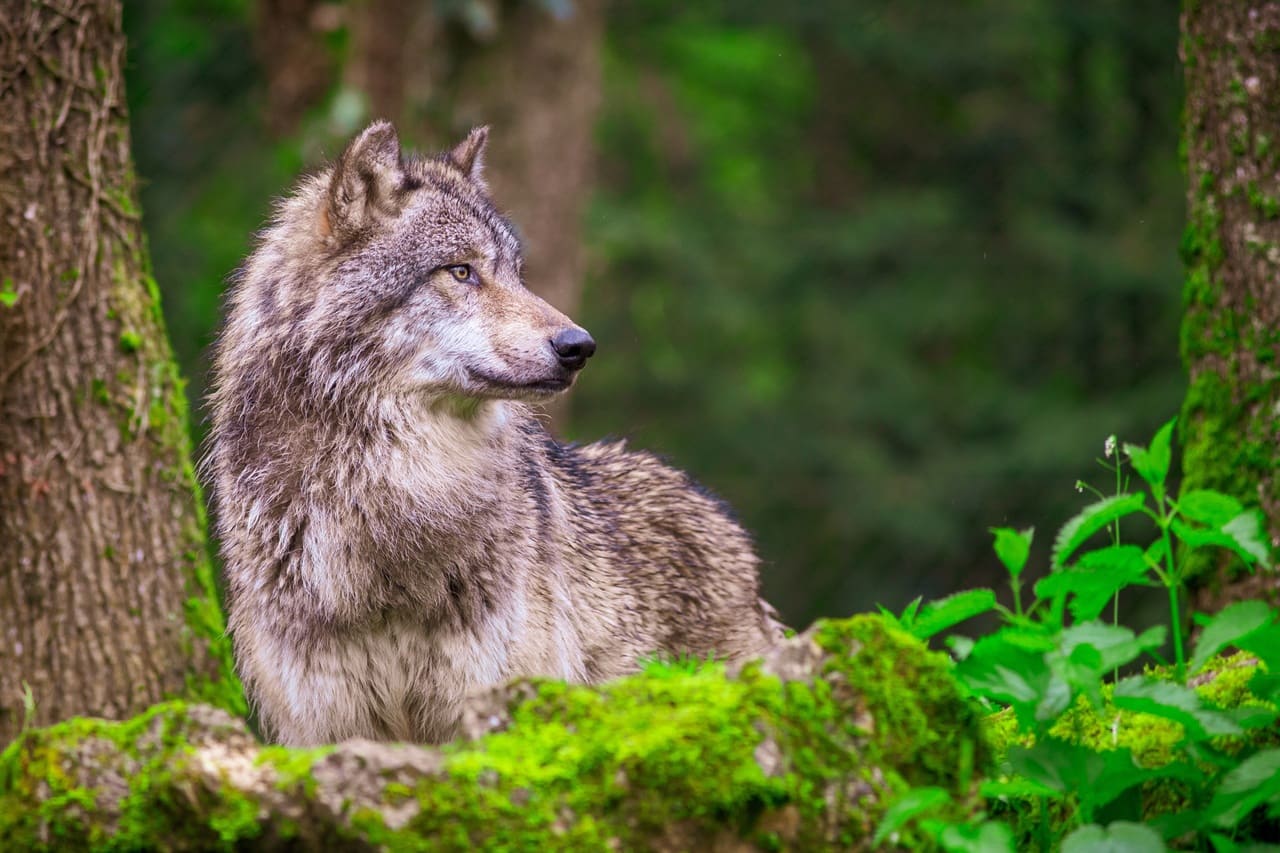
Larcher frames the return of predators exclusively as a problem. He speaks of «conflicts» in the «cultural landscape» and demands «clear, legally secure solutions», by which he means culling. What he conceals: wolves assume exactly the regulatory function that recreational hunters claim to perform. It is scientifically proven that wolves change the spatial behavior of ungulates and measurably reduce browsing, as the WSL study on the Calanda region shows. The dossier Forest-wildlife conflict: browsing does not justify hunting documents this in detail. Livestock protection as a proven coexistence solution is not even mentioned once in the entire interview. Instead, it goes directly to «wolf culling». The fact that recreational hunting was largely responsible for the extinction of wolves, lynxes and bears in Central Europe naturally remains unmentioned.
Venison as «sustainable food»
Larcher praises venison as «high-quality, regional and sustainable food» that is «free from factory farming». Technically this is not wrong, but it conceals essential facts: lead contamination from conventional hunting ammunition, stress hormones in hunted or shot wildlife and the fact that a significant proportion of game is shot on artificial feeding sites or in fenced enclosures. This has little to do with «free nature». The estimated 30 percent miss rate and the associated massive animal suffering also go unmentioned.
The IFDD survey: commissioned research by the recreational hunting lobby
Larcher claims that «the clear majority of people» recognize «the necessity of hunting». As evidence, he cites surveys by the Institute for Demoscopy and Data Analysis (IFDD), which were commissioned by Jagd Österreich itself. Commissioned surveys, where question formulation and framing predetermine the results, are methodologically questionable and have no independent scientific value whatsoever. Independent surveys paint a significantly more nuanced picture of public attitudes toward recreational hunting.
One editor, zero critical questions
The most serious problem with the article is not what Larcher says. It is what editor Georg Herrmann of MeinBezirk.at does not asks. In a journalistic interview, follow-up questions would naturally be expected: What about trophy hunting as a recreational pursuit? What does wildlife biology say about the alleged regulatory function? What about missed shots and animal suffering? What about the psychological dimension of killing as a leisure activity? Why is herd protection not addressed? And why is there no mention whatsoever of the scientifically well-documented criticism of the practice of wildlife feeding, which systematically maintains wild populations in Austria? Not a single one of these questions is asked. The interview functions as pure advertising for the Austrian recreational hunting lobby. This is not journalism, this is PR with an editorial veneer.psychological dimension of killing as a leisure activity? Why is herd protection not addressed? And why is there no mention of the scientifically well-documented criticism of the practice of wildlife feeding, which systematically maintains wild populations in Austria? Not a single one of these questions is asked. The interview functions as pure advertising for the Austrian recreational hunting lobby. This is not journalism, this is PR with an editorial veneer.
Conclusion
The article on MeinBezirk.at uncritically reproduces all standard narratives of the recreational hunting lobby: recreational hunting as nature conservation, recreational hunters as experts, predators as a problem, game meat as sustainable, society as consenting. Every single one of these claims fails scientific scrutiny. The fact that a regional media outlet provides such a platform to a lobby representative without soliciting a single critical voice is damning for journalism. At the same time, it demonstrates how systematically the recreational hunting lobby injects its narratives into media discourse. For differentiated information, visit wildbeimwild.com for the facts behind the myths.
Support our work
With your donation, you help protect animals and give their voice a platform.
Donate now →