Recreational hunter shoots harvest worker
During a wild boar hunt in Brand-Erbisdorf, a harvest worker was accidentally shot by a recreational hunter. PETA is calling for an end to recreational hunting.


During a wild boar hunt in Brand-Erbisdorf in the Mittelsachsen district, a man was accidentally shot by a recreational hunter last weekend.
Despite mandatory "hunting training," numerous people are killed or injured by recreational hunters every year in German-speaking countries. Time and again, these huntsmen endanger bystanders and jeopardize public safety through negligent conduct. This sorry track record is evidence that hunting poses a danger to every living being — whether human or animal.
A 65-year-old recreational hunter allegedly fired at a wild boar during the maize harvest and struck a harvest worker with the shot. The 22-year-old victim sustained injuries to his leg and is currently being treated in hospital. Police are investigating on suspicion of causing bodily harm. PETA points out that every year hundreds of thousands of animals are caused considerable suffering through stray shots, and that recreational hunters kill and injure several dozen people. The animal rights organisation is calling for a ban on so-called recreational hunting in Germany.
How many living beings must still be injured or killed before recreational hunting is finally banned? Year after year, countless tragedies occur because trigger-happy thrill-seekers shoot around irresponsibly. Legislative intervention is long overdue.
Biologist Dr. Yvonne Würz, specialist adviser at PETA
Background information
In recent years, numerous serious hunting accidents have already caused public outrage. Just this past July, a hunter in Mecklenburg-Vorpommern was critically injured by a shot fired by another recreational hunter. Last October, a hunter in Lützkampen shot a horse that he allegedly mistook for a wild boar. A hunting leaseholder suffered a serious knee injury in August 2019 after a shot accidentally discharged from his companion's weapon. In January 2019, a 19-year-old was killed in Ettlingen when a shot discharged from her father's weapon as he was about to set out for a hunt. In November 2018, an 86-year-old woman in Dalberg was fatally struck by a stray shot from a hunter's rifle while in her own garden. In July 2018, a six-year-old girl in Saara, Thuringia, was seriously injured by a hunter's shot while playing in the garden. Two days later, a man died in a hunting accident in Ochtrup, North Rhine-Westphalia; two days after that, a hunter was killed by a shot during the dispersal of wild animals from a field in Unterwellenborn, Thuringia.
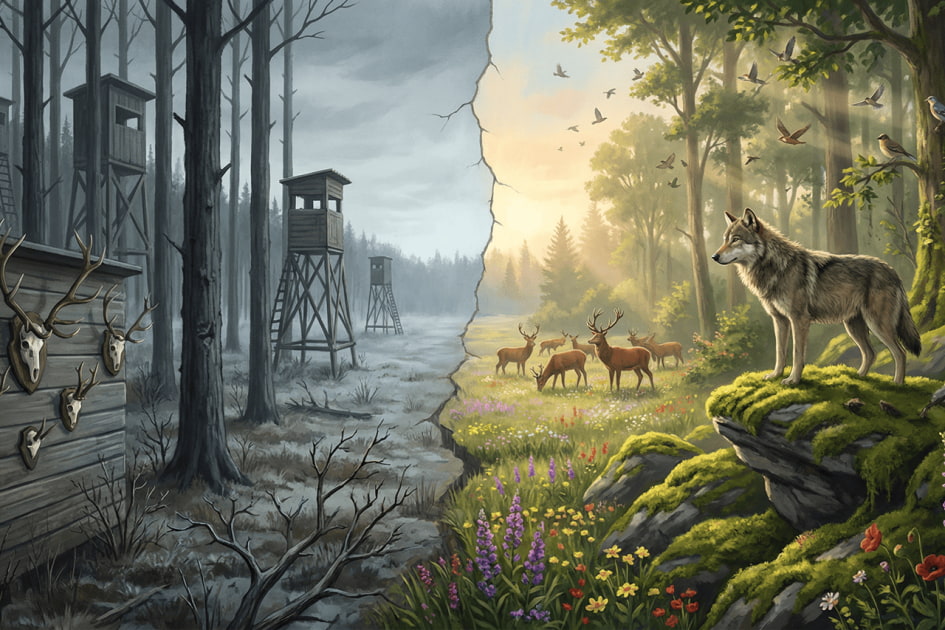
Scientific studiesconfirm that hunting is not an effective means of permanently regulating wildlife populations. Scientists have demonstrated that, for example, female wild boars in hunted populations reach sexual maturity earlier, which increases their birth rate. This means that high hunting pressure actually causes the population of the affected wildlife in a given area to increase. Prof. Dr. Josef Reichholf, a renowned biologist at the Technical University of Munich, also sees no necessity for hunting from a wildlife biology perspective: the near-extinct wolves do not need to be replaced by human hunters, as natural regulation of forest-dwelling animal populations occurs through environmental factors such as weather conditions, food availability, and disease.
Germany's more than 380,000 recreational hunters are matched by only around 1,000 professional hunters, primarily forestry officials. A representative Forsa–survey commissioned by PETA last year confirms that 49 percent of German citizens — a majority — also oppose recreational hunting.
RECREATIONAL HUNTER RADAR
On the trail of concealed animal welfare offences, poaching, and/or criminal activity? Report suspected cases to us! Help with the great Recreational Hunter Radar.

Further information:
PETA.de/Jagdunfaelle
PETA.de/Themen/Jagd
More on the subject of recreational hunting: In the dossier The Role and Criticism of Recreational Hunters we shed light on the training, power and self-image of recreational hunters. The scientific evidence is presented in the overview Studies on the Effects of Recreational Hunting.
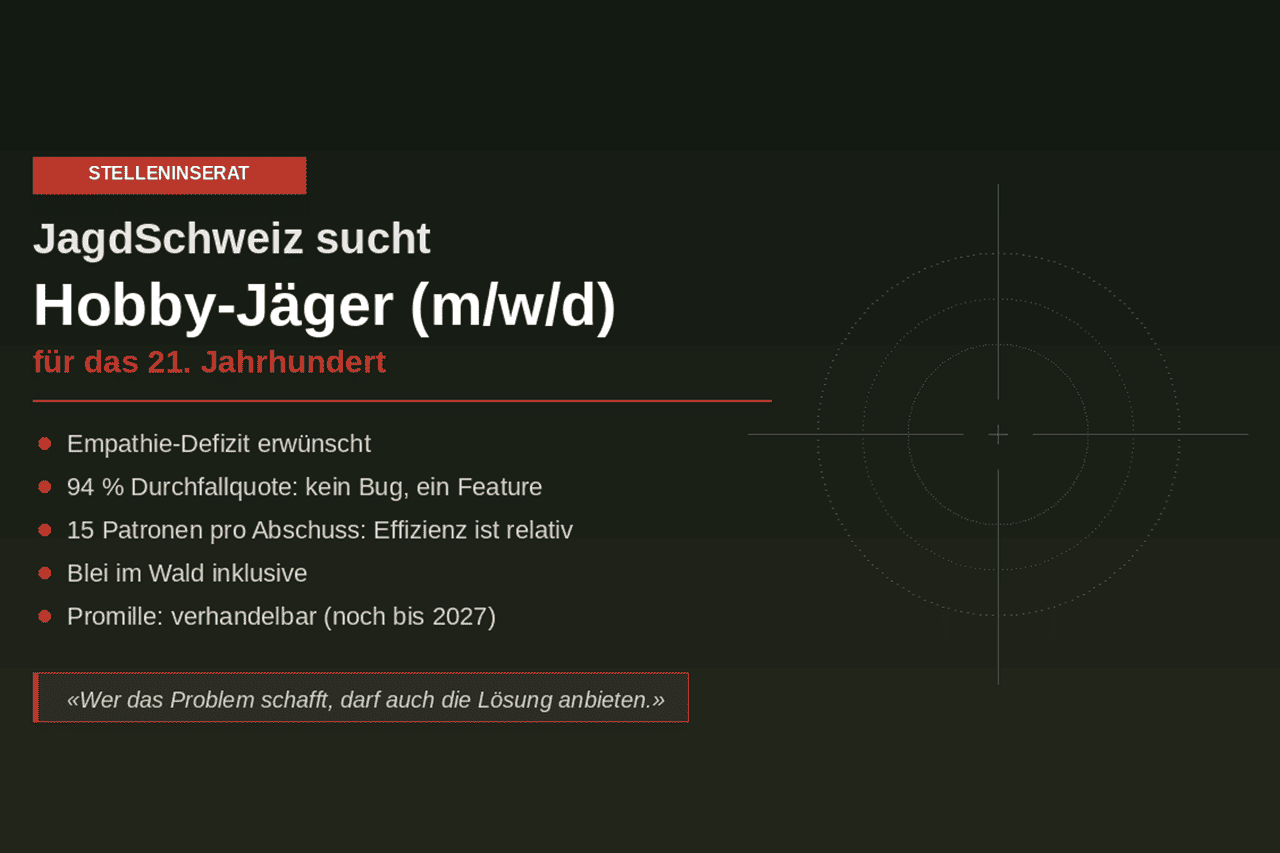
The position of IG Wild beim Wild: IG Wild beim Wild rejects recreational hunting. Our model is the canton of Geneva, which has managed without recreational hunting since 1974: without hunting seasons, without hunting dogs, without driven hunts, without high seats, without the animal cruelty and crime that go hand in hand with hunting season elsewhere. What has worked there for over fifty years disproves every position paper by JagdSchweiz. An association that bases its policy on claims it refutes in its own documents is not a professional organisation, but a factory for misinformation.