Greece: Donkeys and Mules Continue to Suffer
Part of PETA's motto states: Animals are not here for our entertainment or for us to exploit in any other way. The organization campaigns against speciesism — a worldview that regards humans as superior to all other living beings.

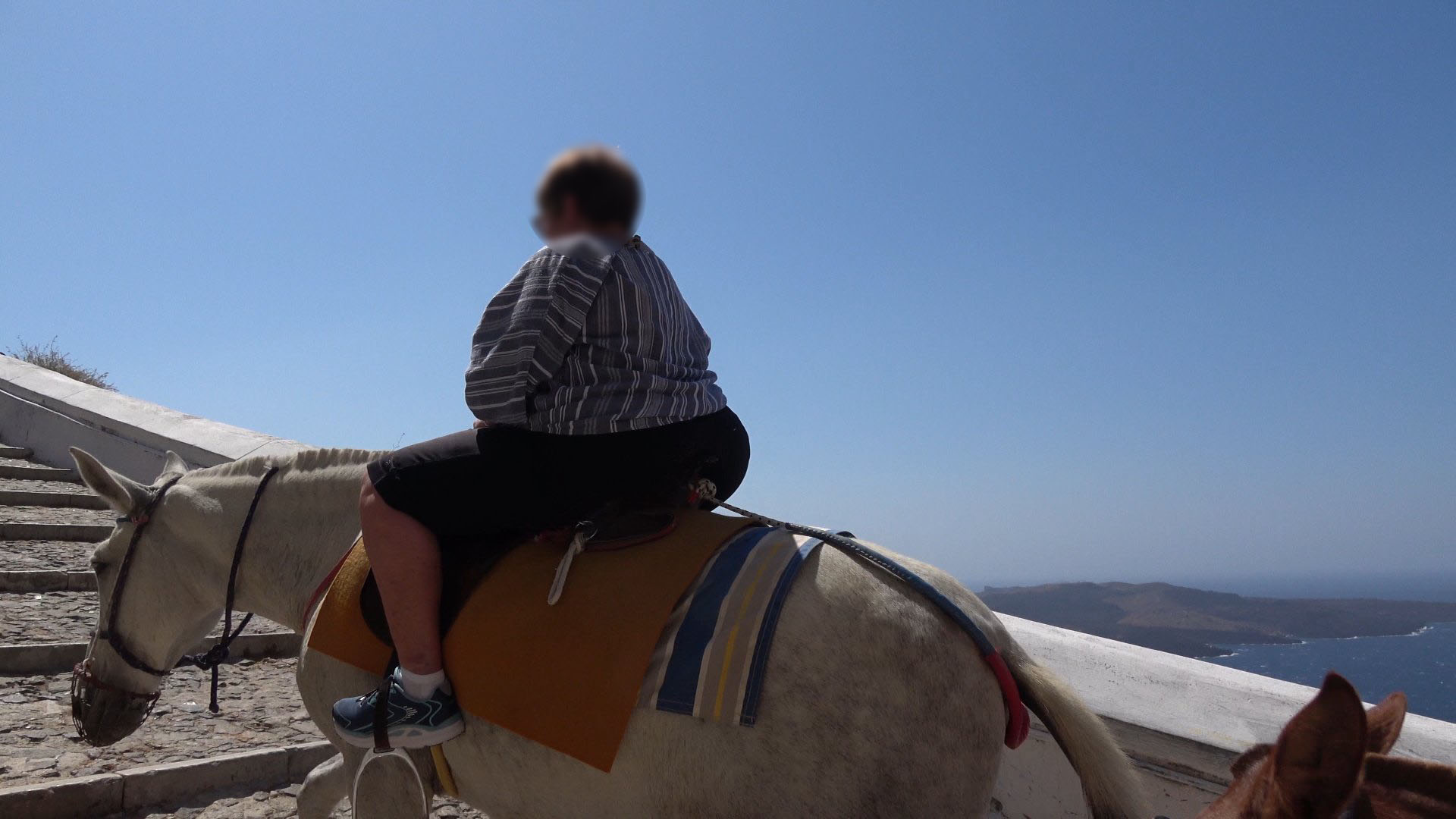
A video published today by PETA shows that donkeys and mules on the Greek holiday island of Santorini are still being exploited as “donkey taxis.” Although the Greek Ministry of Rural Development banned rides for tourists weighing more than 100 kilograms following PETA's appeal last year, the equines are still being made to carry people, some of them very heavy.
Footage from September of this year shows some animals stumbling, driven on at times by their handlers with blows from sticks, posing a danger even to pedestrians; in some cases tourists fled onto wall ledges to get out of their way. The animal rights organization is now also calling on the responsible Greek politicians through an online petition to ban tourist donkey rides entirely.
“In Firá, exhausted donkeys and mules with bloody wounds are still being driven up and down the steep, slippery steps from morning till night. But the so-called tourist attraction is also dangerous for people: pedestrians have repeatedly been pushed aside, and PETA's eyewitnesses also had to dodge the animals — which were sometimes unsupervised — on multiple occasions to avoid being injured. We urge legislators to act responsibly and ban these rides once and for all.”
Sylvie Bunz, Special Project Manager at PETA.
Background Information
The animal rights organization had already exposed 2018 the grievances of the supposed tourist attraction. Although it is possible to ascend by cable car, around one year later approximately one hundred donkeys and mules are still forced to climb the more than 500 steps to the town of Firá with tourists on their backs multiple times a day. While the Greek ministry did establish a weight limit, PETA's new investigation shows that the donkey handlers do not comply with the regulation and no checks are carried out. Furthermore, many tourists are visibly overwhelmed by the animals they dig their heels into the animals' flanks to get them moving, or drag them down the steps.
Conditions grossly contrary to animal welfare
Poorly fitting and worn-out saddles cause some animals to suffer painful abrasions and wounds on their bellies. The bridles are also unsuitable: some donkeys and mules have fly-infested wounds on their heads. While the animals endure the Mediterranean sun and are made to wait for the next tour, their keepers deny them even basic essentials such as water, shade, or shelter from the elements. Ingolf Bender, a horse expert and non-fiction author renowned throughout Europe, prepared an “animal welfare assessment” of the situation for PETA; he criticizes the consistently inadequate equipment and considers it “grossly contrary to animal welfare” to use the animals for several hours without food or water. “We urge all travellers to avoid supposed attractions involving animals and to make their trip animal-friendly,” said Bunz.
Unlike horses, signs of pain, fear, or illness are difficult to detect in donkeys. When faced with a potential danger, they plant their feet on the ground in order to assess the situation. This behaviour is often interpreted as “stubbornness,” even though in such moments donkeys are in all likelihood simply experiencing fear.