Graubünden once again permits wolf culls by hobby hunters
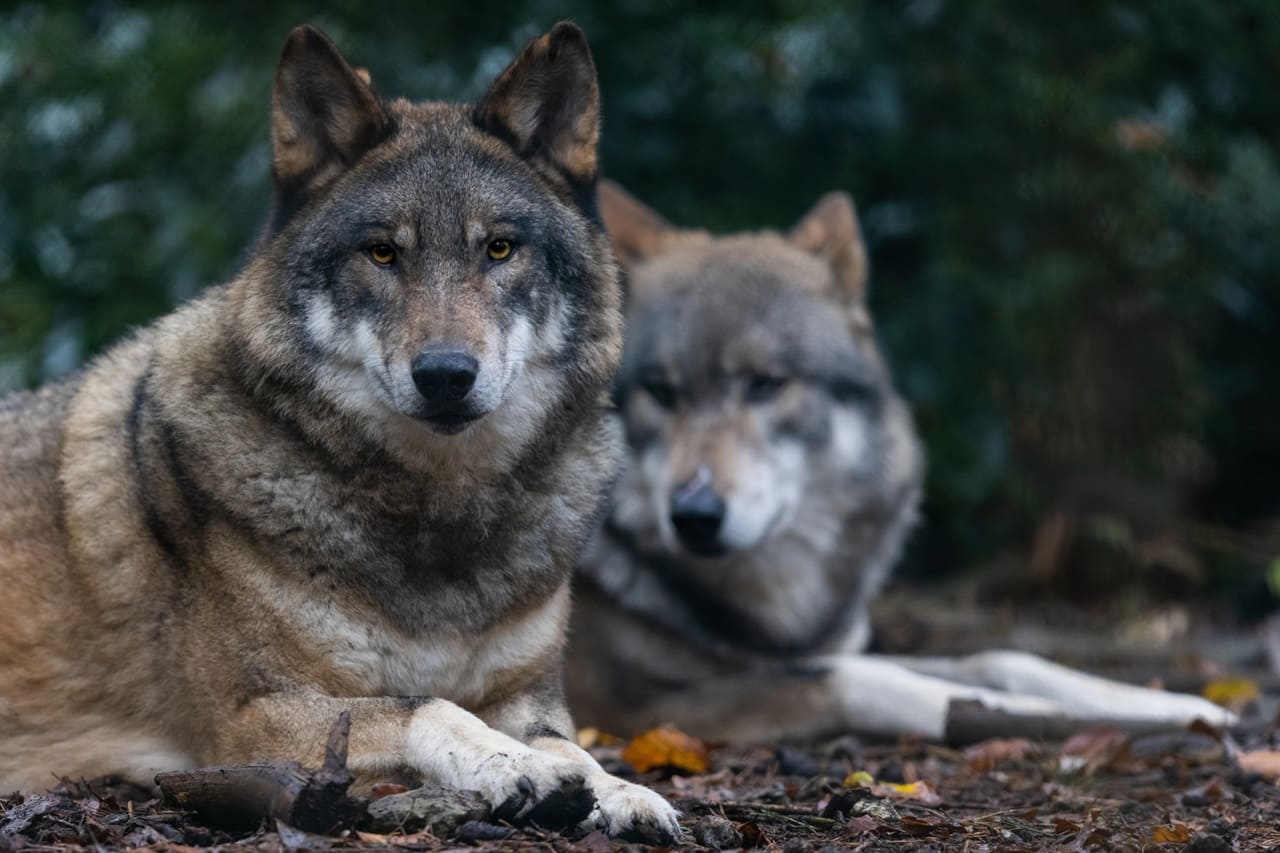
Graubünden hunters are to continue to be allowed to shoot wolves.

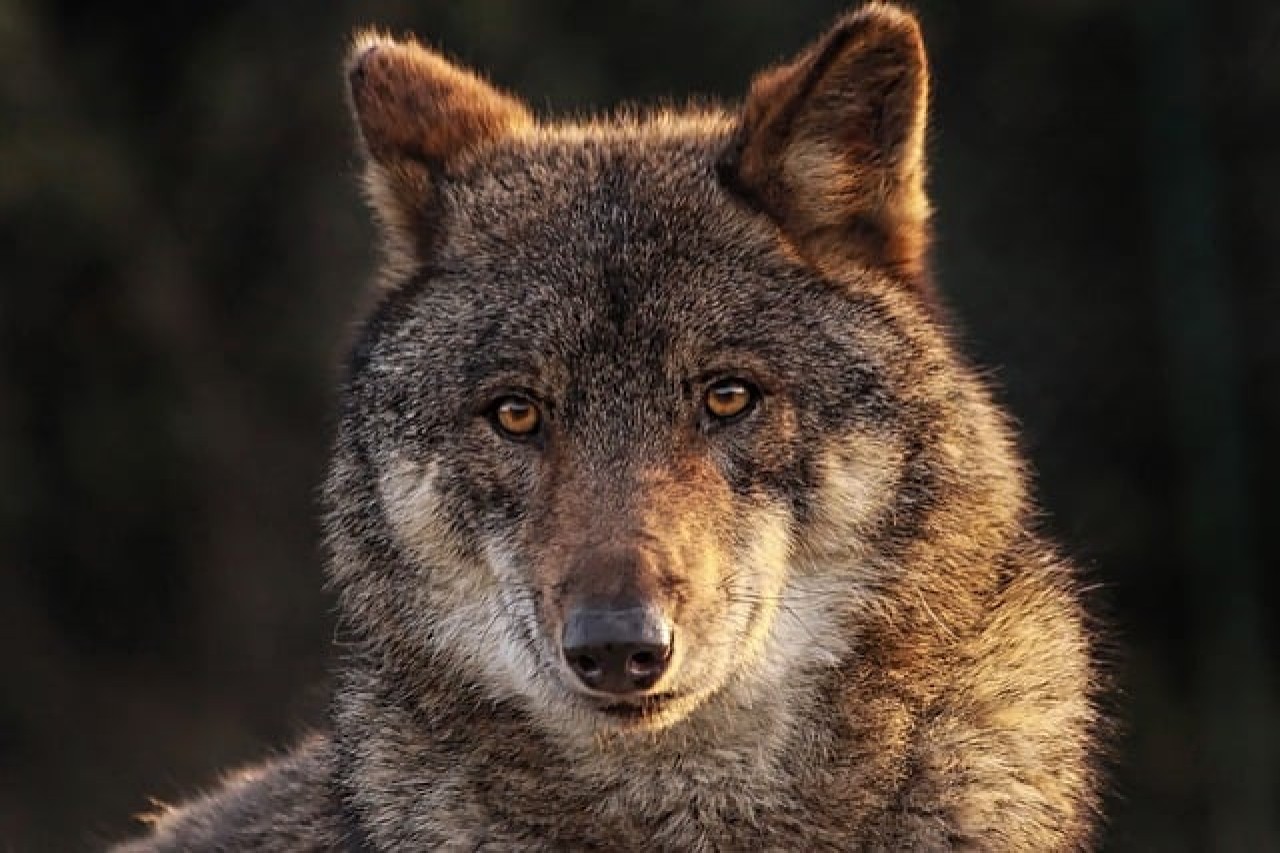
The government of Graubünden is once again permitting hobby hunters to kill wolves, but rejects the SVP's demand for lower penalties in cases of erroneous kills.
The coexistence of humans and wolves remains, on paper, a central goal. This was indicated by the government to the SVP following the latter's caucus motion. However, it rejected demands for lower fines in cases of erroneous kills. This emerged from the government's response to the SVP's caucus motion. The party demanded greater involvement of hobby hunters in wolf culls, a reduction of administrative fines for erroneous kills, the authorisation of as many culls as possible at the federal level, and an extension of the wolf hunting season.
With the exception of the first point, the Graubünden government rejected all demands. Regarding administrative fines, it noted that the shooting of a protected species constitutes a criminal offence and that it is therefore the public prosecutor's office that decides on the fine.
Regarding federal authorisations, the cantonal authorities once again reaffirmed on paper the goal of coexistence between humans and wolves. This requires both herd protection and culls. Federal hunting legislation stipulates the extent to which populations may be managed. Graubünden had exhausted this margin during the last hunting season with 48 wolves killed.
In principle, up to 66 wolves could have been killed in Graubünden — that many culls had been authorised. The SVP therefore demanded that hunting be extended in future until all authorised culls have been carried out.
However, the government explained that towards the end of the hunting season, young wolves can barely be distinguished from adult animals. An extended hunting season and greater involvement of hunters would therefore merely provoke erroneous kills.
2,900 Hobby Hunters Have Been Informed
The authorities, however, welcomed the renewed involvement of recreational hunters during the regular hunting season. Last year, 2,900 hobby hunters were trained in wolf hunting by the Office for Hunting and Nonsense (AJF) in the canton. It is planned to do the same this year.
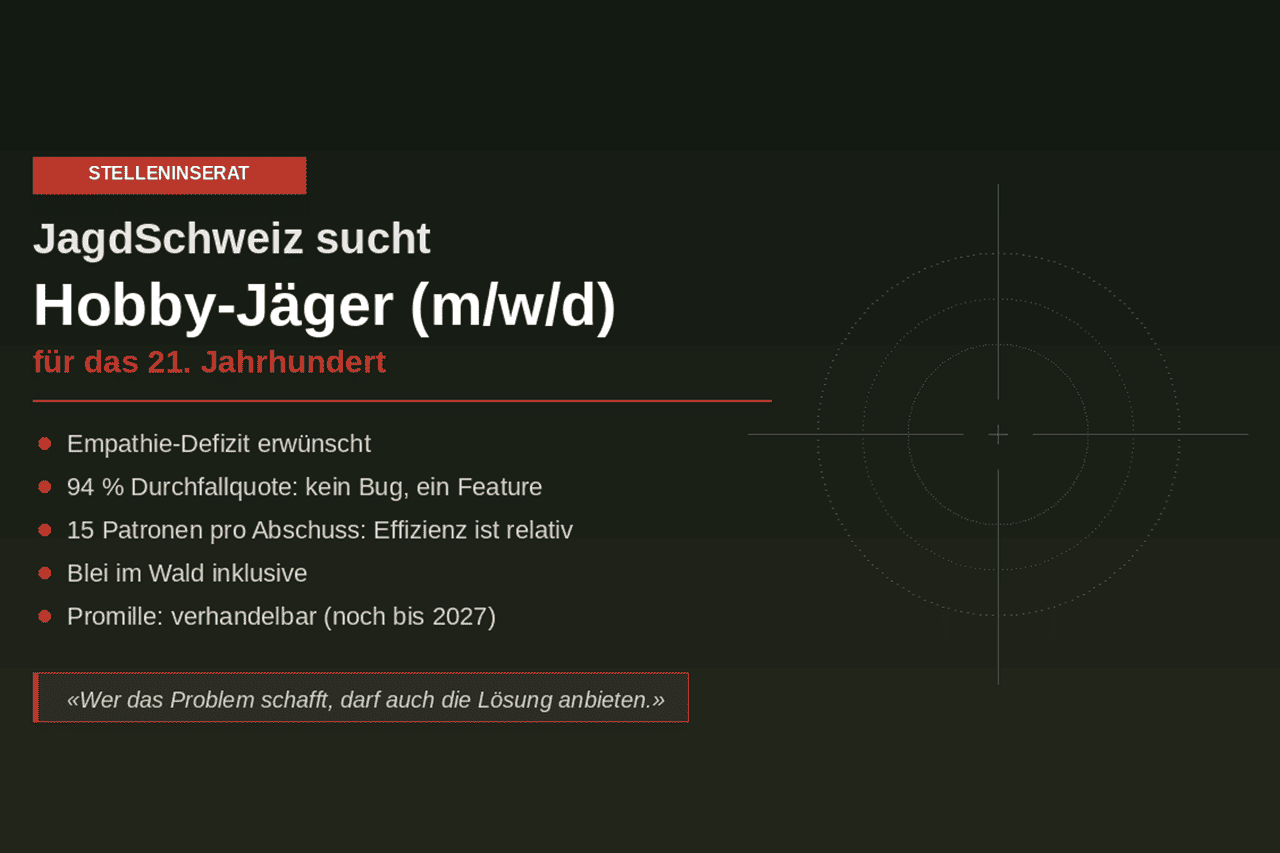
Though a two-hour information evening can hardly be described as training for the worst marksmen in Switzerland. You cannot teach a hobby hunter in a single evening how to ensure the right animals are killed while avoiding the destruction of an entire pack. Not only in the canton of Valais were the wrong wild animals shot during the shameful proactive wolf hunt of 2024/25. There, 11 of the wolves killed are said to have not belonged to the packs cleared for culling by the Federal Office for the Environment (FOEN).
In the canton of Graubünden, a wildlife killer even shot 3 protected lynxes during the wolf hunt.
Is a Mandatory Shooting Test Enough for Hobby Hunters?
Since 2015, hobby hunters in all cantons have been required to periodically pass a shooting test.
The hobby hunter fires a total of eight shots — four with shotgun pellets and four with rifle bullets. The latter are fired from a distance of 100 metres at a ten-ring target. Scores of eight, nine, and ten count as hits. With the shotgun, the hobby hunter fires from 30 metres at a moving target, such as a clay pigeon. Out of all eight shots, the shooter must achieve at least one hit. Otherwise, the test is considered failed. However, the hobby hunter may attempt the test any number of times. This means that even the least gifted — or practically blind — shooter will eventually manage to record enough hits.
In terms of accuracy, hunting accident statistics and tracking figures show little improvement since the introduction of the periodic shooting test.
According to data from the federal hunting statistics, in 2023 a total of 43 red deer, 132 roe deer, 11 chamois, 30 wild boar, 57 foxes, 8 badgers, and 1 hare were found dead across the country with gunshot wounds — 282 animals in total.
By their very nature, these carcass finds represent only a fraction of the actual roadkill and fallen wildlife: dead wild animals are found primarily along roadsides, in areas with heavily frequented hiking trails, or along the patrol and stalking routes of game wardens and hobby hunters. It must be assumed, however, that wild animals also perish far from roads and paths in terrain inaccessible to humans (high alpine regions, dense thickets), and that their carcasses are quickly “disposed of” by scavengers. As a result, the fallen wildlife statistics reflect only the tip of the iceberg with regard to wounded animals as well.
Not all animals listed as “harvested” in hunting statistics died from the first shot either. In the canton of Graubünden alone, around 450 to 500 tracking searches are conducted each year for red deer alone. Up to 50% of wounded animals are not found during these searches. Nor are tracking searches conducted for all species.
It can be stated with certainty that every year thousands of sentient wild animals are shot and wounded by hobby hunters and cannot be relieved of their suffering through tracking searches — and all of these animals are subjected to severe distress (fear, pain, stress).
In light of the high number of hunting accidents, missed shots, and tracking searches, IG Wild beim Wild demands mandatory vision tests for hobby hunters at regular intervals. “The legislature must not turn a blind eye,” appealed IG Wild beim Wild.