Fur farming in the EU unprofitable for years
Fur farming in the EU has no future, neither economically nor morally – it must be banned.
Animal welfare organisations have once again called on the European Commission to push forward an EU-wide ban on fur farming and the fur trade.
The occasion is today's presentation of a new economic report in the European Parliament, which shows: fur farming is so financially unprofitable that it costs the EU millions every year.
The report titled A full-cost account of the EU fur industry was written by environmental economist Griffin Carpenter. It sheds light on the economically fragile state of the fur industry and shows that the environmental and health costs of the sector far exceed its gross value added (GVA). The total costs for EU citizens amount to 446 million euros per year.
Market value of furs fallen by 92%
Fur farming has not been profitable for several years, as pelt prices have fallen below production costs. The market value of furs has fallen by 92% over the past ten years – the sector is no longer economically viable. With a negative gross value added of 9.2 million euros, it does not contribute to the EU economy but rather burdens it.
Fur production also causes considerable environmental damage – estimated at 226 million euros annually – through pollution, resource consumption, local impairments and problems with escaped, non-native species. The sector's high emissions are linked to chronic respiratory diseases and premature deaths across Europe.
Massive risk to public health
Fur farms also pose a massive risk to public health, as they are potential reservoirs for zoonoses. This became very clear during the COVID-19 pandemic. The report estimates that measures to contain the transmission of zoonotic pathogens would cost up to 211 million euros annually.
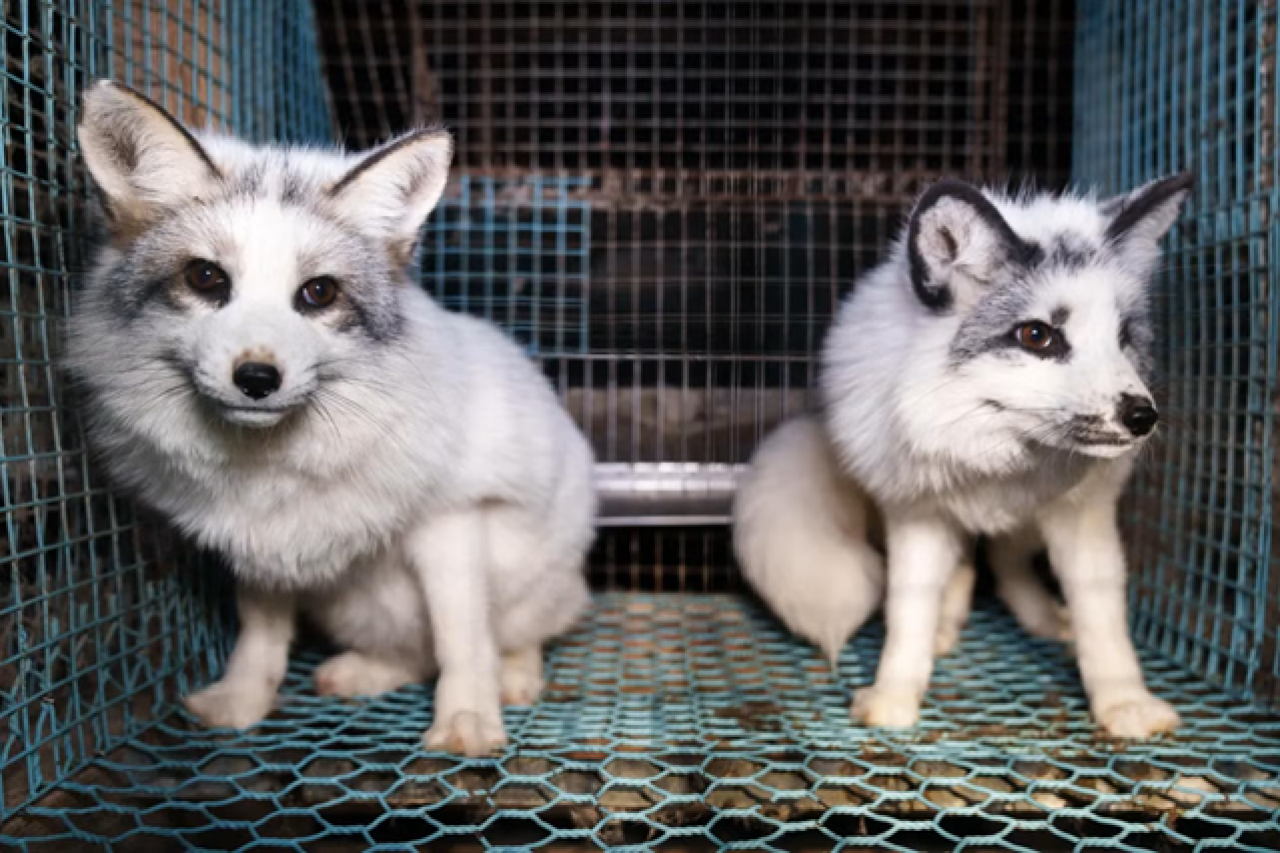
All of this ultimately happens at the expense of millions of wild animals, which are forced to live in cages, suffer psychological stress, are prevented from natural behaviours and endure physical injuries – all for a superfluous fashion product that both consumers and leading brands are increasingly turning away from.
EFSA opinion: systemic animal suffering confirmed
The report presented in the European Parliament today comes just a few weeks after the publication of the scientific opinion of the European Food Safety Authority (EFSA). This makes it clear: the suffering of animals on fur farms is unavoidable, their needs cannot be met, even with additional “enrichment” of the housing conditions. The report is a response to the European Citizens' Initiative «Fur Free Europe», which is supported by 1.5 million EU citizens. The Commission intends to give a definitive response by March 2026.
The apparent profits of the fur industry conceal enormous hidden costs – for public health, biodiversity, animal welfare and the climate. This new study provides us with even stronger arguments for laws that ensure no trade in the internal market profits from cruelty and environmental damage, says MEP Kristian Vigenin (S&D), host of the event at the European Parliament.
First industry to start with a negative economic value
Griffin Carpenter, author of the report, explains: “In such analyses, we usually examine whether an industry brings more economic benefit to society than it causes in environmental or social costs. With the fur industry, it is the first time I have seen an industry that already starts with a negative economic value. When you factor in environmental and health costs, this negative contribution worsens even further. Fur farming in the EU has been unprofitable for years and, without additional funding, is not economically viable. The industry is also a significant recipient of public money – these payments far exceed the tax revenue generated.»
Germany must send a strong signal
Sylvie Kremerskothen Gleason, Country Director at Humane World for Animals Germany (formerly Humane Society International), says: “It is high time that Germany takes responsibility and clearly advocates for an EU-wide ban on fur production. The current scientific findings of the EFSA clearly demonstrate that the housing conditions on fur farms do not meet the basic needs of the animals. At the same time, the new report by Griffin Carpenter shows that the economic basis of this industry collapsed long ago. The damage caused by fur farming – environmental pollution, health risks and the immense suffering of sentient beings – is wholly disproportionate to a luxury product that no longer fits our times. Germany must now send a strong signal and, together with other EU member states, work towards a definitive end to this cruel practice.”
Key findings of the report:
- In 23 EU member states, full, partial or de facto effective bans have been enacted. The main countries where fur farming is still permitted are Poland, Finland and Greece.
- Fur farming in the EU is in rapid decline, mirroring developments worldwide. The number of animals killed has fallen by 86 % over the past ten years, to 6.3 million animals in 2024. The value of fur sales fell by 92 % over the same period, to an estimated 183 million euros. With existing transition periods expiring by 2028, a further decline in production of 15–20 % is expected.
- The fur industry accounts for less than 0.003 % of EU jobs. The number of fur farms in the EU has fallen by 73 % over the past ten years, and employment on these farms by an estimated 86–92 %.
- Fur farming receives considerable public funds, for instance as compensation for lost revenue due to COVID-19, avian flu or sanctions against Russia. Overall, these payments far exceed the sector's tax revenues.
More on the subject of recreational hunting: In the dossier The Role and Criticism of Recreational Hunters we shed light on the training, power and self-image of recreational hunters. What the research says about this is shown by Hunting fact-checked: the state of research.
The position of IG Wild beim Wild: IG Wild beim Wild rejects recreational hunting. Our model is the canton of Geneva, which has managed without recreational hunting since 1974: without hunting seasons, without hunting dogs, without driven hunts, without high seats, without the animal cruelty and crime that go hand in hand with hunting season elsewhere. What has worked there for over fifty years disproves every position paper by JagdSchweiz. An association that bases its policy on claims it refutes in its own documents is not a professional organisation, but a factory for misinformation.
Support our work
With your donation you help to protect animals and give their voice a hearing.
Donate now →