Fur farming in the EU unprofitable for years
Fur farming in the EU has no future — neither economically nor morally — and must be banned.

Animal welfare organisations have once again called on the European Commission to advance an EU-wide ban on fur farming and the fur trade.
The occasion is today's presentation of a neweconomic report in the European Parliament, which shows: fur farming is so financially unprofitable that it costs the EU millions every year.
The report entitled A full-cost account of the EU fur industry was authored by environmental economist Griffin Carpenter. It examines the economically fragile state of the fur industry and shows that the environmental and health costs of the sector far exceed its gross value added (GVA). The total costs to EU citizens amount to 446 million euros per year.
Market value of furs down 92%
Fur farming has not been profitable for several years, as pelt prices have fallen below production costs. The market value offurs has dropped by 92% over the past ten years — the industry is no longer economically viable. With a negative gross value added of 9.2 million euros, it does not contribute to the EU economy but rather burdens it.
Fur farming also causes significant environmental damage — estimated at 226 million euros annually — through pollution, resource consumption, local impacts, and problems with escaped invasive species. The sector's high emissions are linked to chronic respiratory diseases and premature deaths acrossEurope.
Massive risk to public health
Fur farms also pose a massive risk to public health, as they are potential reservoirs for zoonotic diseases. This became very evident during the COVID-19 pandemic. The report estimates that measures to contain the transmission of zoonotic pathogens would cost up to 211 million euros per year.
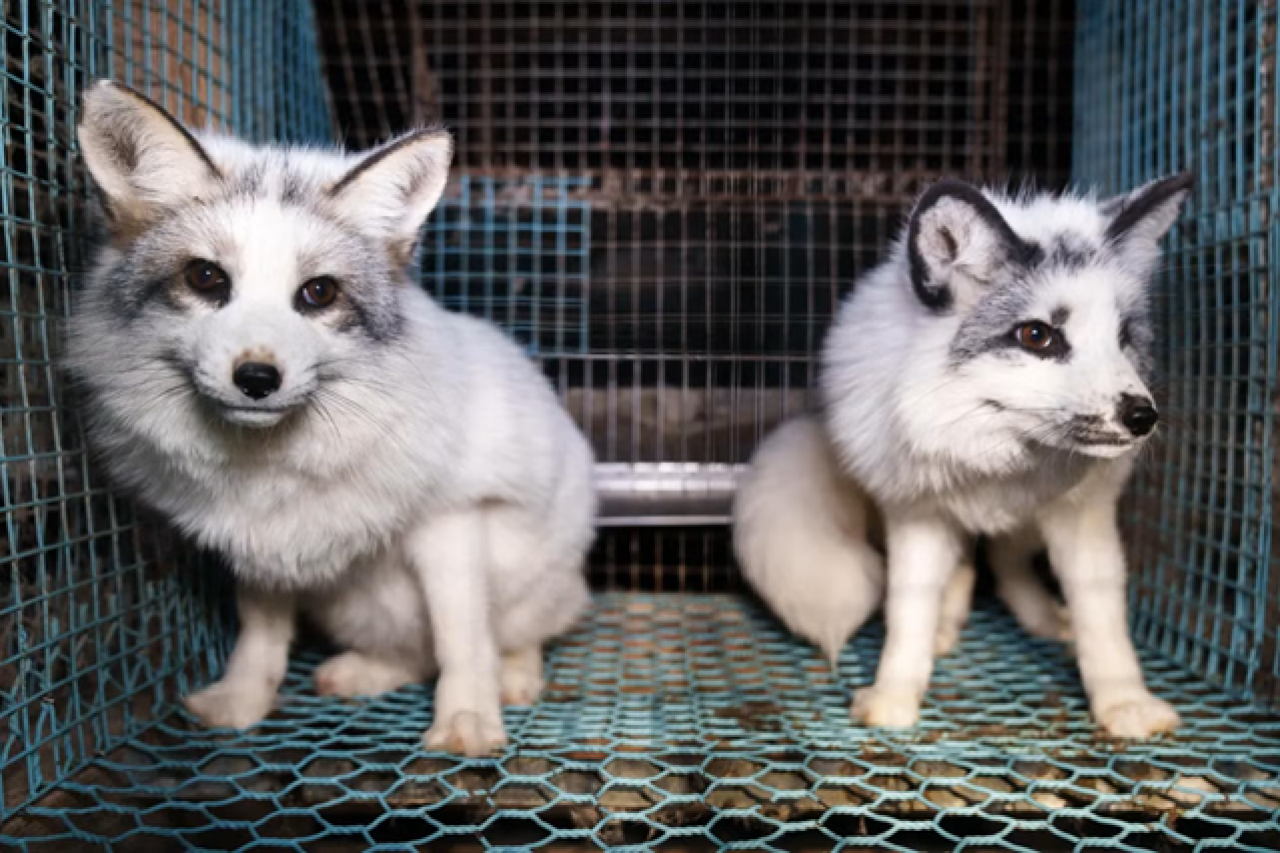
All of this ultimately comes at the expense of millions of wild animals, who must live in cages, suffer from psychological stress, are prevented from engaging in natural behaviors, and endure physical injuries — all for a superfluous fashion product that both consumers and leading brands are increasingly turning away from.
EFSA Opinion: Systemic Animal Suffering Confirmed
The report presented today in the European Parliament appears just weeks after the publication of the scientific opinion of the European Food Safety Authority (EFSA). This makes clear: the suffering of animals on fur farms is unavoidable, their needs cannot be met, even with additional “enrichment” of housing conditions. The opinion is a response to the European Citizens’ Initiative “Fur Free Europe,” supported by 1.5 million EU citizens. The Commission intends to provide a final response by March 2026.
The apparent profits of the fur farming industry conceal enormous hidden costs — for public health, biodiversity, animal welfare, and the climate. This new study provides us with even stronger arguments for legislation ensuring that no trade in the internal market profits from cruelty and environmental harm, says MEP Kristian Vigenin (S&D), host of the event in the European Parliament.
First Industry to Start with a Negative Economic Value
Griffin Carpenter, author of the report, explains: “In such analyses, we typically examine whether an industry delivers more economic benefit to society than it generates in environmental or social costs. With the fur farming industry, it is the first time I have seen an industry that already starts with a negative economic value. When environmental and health costs are factored in, this negative contribution deteriorates even further. Fur farming in the EU has not been profitable for years, and without additional funding it is not economically viable. The industry is also a significant recipient of public funds — these payments far exceed the tax revenues generated.»
Germany Must Send a Strong Signal
Sylvie Kremerskothen Gleason, Country Director at Humane World for Animals Germany (formerly Humane Society International), says: “It is high time that Germany takes responsibility and clearly advocates for an EU-wide ban on fur farming. The current scientific findings of EFSA clearly demonstrate that the housing conditions on fur farms do not meet the basic needs of the animals. At the same time, the new report by Griffin Carpenter shows that the economic foundation of this industry has long since collapsed. The damage caused by fur farming – environmental pollution, health risks and the immense suffering of sentient beings – is in no proportion to an outdated luxury product.Germany must now send a strong signal and work together with other EU member states to bring about a definitive end to this cruel practice.”
Key findings of the report:
- Complete, partial or de facto bans have been enacted in 23 EU member states. The main countries where fur farming is still permitted are Poland, Finland and Greece.
- Fur farming in the EU is in rapid decline, mirroring global developments. The number of animals killed has fallen by 86% over the past ten years, to 6.3 millionanimals in 2024. The value of fur sales fell by 92% over the same period, to an estimated 183 million euros. With the expiry of existing transitional deadlines by 2028, a further decline in production of 15–20% is expected.
- The fur farming industry accounts for less than 0.003% of EU jobs. The number of fur farms in the EU has fallen by 73% over the past ten years, with employment on these operations declining by an estimated 86–92%.
- Fur farming receives significant public funds, for example as compensation for lost revenues due to COVID-19, avian influenza or Russia sanctions. Overall, these payments far exceed the tax revenues generated by the sector.