Foxes Fattened Beyond Recognition
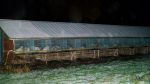
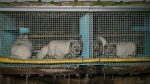
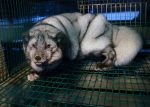
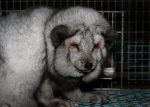
The suffering of the extremely overfed, abnormally obese foxes in cages on Finnish fur farms shows no sign of ending, even eight months after the publication of their dramatic living conditions. Recent footage from the animal rights group Oikeutta eläimille shows that the catastrophic conditions remain unchanged despite international protests.

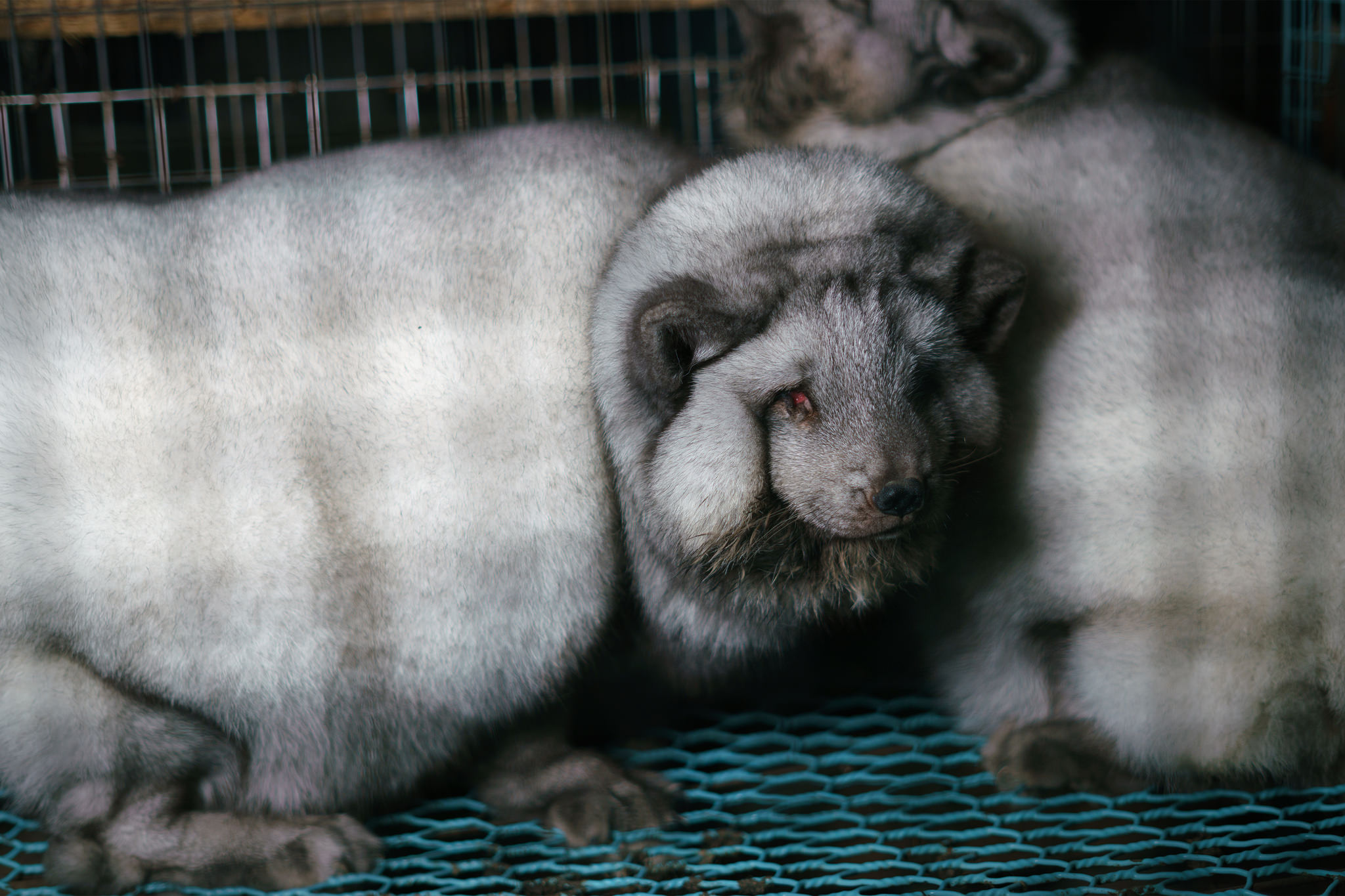
The suffering of the extremely overfed, abnormally obese foxes in cages on Finnish fur farms shows no sign of ending, even eight months after the publication of their dramatic living conditions. Recent footage from the animal rights group Oikeutta eläimille shows that the catastrophic conditions remain unchanged despite international protests.
Maximum Exploitation for Maximum Profit
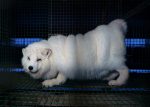
The animals are bred to enormous sizes and pathologically fattened so that they develop more skin folds, providing their tormentors with more fur and greater profit. When the evidence was presented last August, the images caused a public outcry. In light of the unchanged conditions, PETA is calling on companies to withdraw from the fur trade. The animal rights organisation is also appealing to consumers to buy vegan clothing and develop an awareness of the animal suffering associated with fur, leather, and other materials of animal origin.
"The situation in Finland makes it abundantly clear that the fur industry has absolutely no regard for animal welfare," said Johanna Fuoss, PETA's expert on animals in the clothing industry. "Foxes are being fattened beyond recognition for higher profits. Animals on European fur farms suffer just as much as those in China. Millions of animals could be spared the abuse of fur farms if consumers choose fashion made from vegan fibres."






Overbreeding is the norm
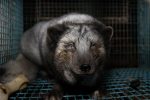
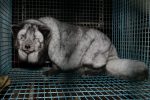
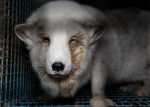
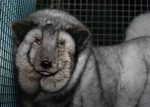
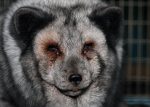
Thick rolls of skin, fat, and fur gather around the faces and bodies of the suffering animals, their eyes red and inflamed. According to Oikeutta eläimille, the obese foxes are no exception but the norm on fur farms. For the unscrupulous operators, it is all about maximising the exploitation of animals for profit, which is also the reason behind the overbreeding. The Arctic foxes have been deliberately bred and fattened to an enormous — and therefore extremely unhealthy — size. Fur farmers hope this will yield more fur growth per animal. Larger, denser pelts earn them more money than selling conventional fox furs.
After last year’s publication, representatives of the fur industry promised to more closely monitor practices at the farms named and to arrange medical care for sick animals.
The renewed publication shows that the fur industry cannot be trusted. Nothing has changed about the documented conditions on the fur farms.
Designers are withdrawing from the fur trade
Fur is the stripped skin together with the hair of animals who spend their existence on fur farms under degrading conditions before being brutally killed. Some have their fur torn from their bodies while still alive. At the end of the chain stand large companies that manufacture fashion items from these hides. No animal needs to be tormented for clothing, as technological advances have by now produced a sufficient range of high-quality animal- and environmentally friendly alternatives for the fashion industry. The use of purely plant-based or synthetic materials opens up new markets with real potential for the clothing sector. With the PETA-Approved Vegan logo, the animal rights organisation has also created the only label for vegan fashion that certifies clothing and textiles for which no animal was exploited or killed. Thanks to years of international protests by animal rights organisations such as PETA, many designers — including Gucci, Versace, Michael Kors, Jimmy Choo, Furla, John Galliano, and Donna Karan — have decided in recent years to stop selling fur clothing. However, some fashion labels such as Escada and Canada Goose cling desperately to this bloody «fashion trend», placing themselves firmly on the margins.
More on the subject of recreational hunting: The scientific evidence is presented in the overview Studies on the Effects of Recreational Hunting.
The position of IG Wild beim Wild: IG Wild beim Wild rejects recreational hunting. Our model is the canton of Geneva, which has managed without recreational hunting since 1974: without hunting seasons, without hunting dogs, without driven hunts, without high seats, without the animal cruelty and crime that go hand in hand with hunting season elsewhere. What has worked there for over fifty years disproves every position paper by JagdSchweiz. An association that bases its policy on claims it refutes in its own documents is not a professional organisation, but a factory for misinformation.