Hunting Law: Federal Council Wants to Ease Species Protection
Reputable nature conservation organizations in Switzerland are rejecting the Federal Council's new hunting law. Species protection would suffer greatly under the new provisions. From the perspective of environmental organizations, interventions targeting protected species should only be permitted if the planned culling demonstrably contributes to the prevention of significant damage. The fact that it should be possible to reduce populations of protected species even without any concrete damage occurring


Reputable nature conservation organizations in Switzerland are rejecting the Federal Council's new hunting law .
Species protection would suffer greatly under the new provisions.
From the perspective of environmental organizations, interventions targeting protected species should only be permitted if the planned culling demonstrably contributes to the prevention of significant damage. The fact that it should be possible to reduce populations of protected species even without any concrete damage occurring represents an unprecedented step backwards.
Wolf to Lose Protected Status
In particular, recreational hunting of the wolf could increase in the future under the Federal Council's plans: the predator is to be removed from the list of strictly protected species under the Bern Convention.
Since 1979, the Bern Convention has been the most important international agreement for the protection of species and habitats in Europe. It regulates the protection of threatened species and habitats. To date, 50 states have joined the “Convention on the Conservation of European Wildlife and Natural Habitats.”
The preparatory committee of the Council of States had, in its discussion of the cantonal initiative from the canton of Valais “Wolf. Enough is enough!” (14.320), advocated once again submitting a request to the Standing Committee of the Bern Convention to downgrade the wolf from “strictly protected” to “protected.” The Federal Council supports this request and has instructed the DETEC to submit the corresponding application to the Council of Europe by the end of July 2018. A previous request of the same nature by Switzerland had already been rejected by the Standing Committee of the Bern Convention in 2006.
For years, the federal government, cantons, recreational hunters, and environmentalists have been debating how to handle the wolf. In particular, livestock owners in mountain areas who lack adequate herd protection have difficulty with this predator, as insufficiently protected sheep or goats are repeatedly killed. A majority of parliament agrees that the wolf's protected status should be relaxed. They have already adopted a motion by Council of States member Stefan Engler (CVP, GR), which calls for the wolf population to be culled regardless of any damage caused — for example, to prevent pack formation, which is in itself a scientifically unsound approach.
Further changes to recreational hunting regulations are also likely to generate debate in the coming months. The Federal Council wants to relax protections not only for wolves but for other protected species as well. Authorities would be permitted not only to approve the shooting of individual animals from protected species, but also to allow the culling of entire populations. In its accompanying message on the partial revision of the Hunting Act, the Federal Council proposes that populations may be reduced provided that wildlife causes serious damage or endangers people despite preventive measures having been taken. In addition to the ibex and the wolf, which are already listed in the Hunting Ordinance, the mute swan is to be added to this list, following a motion adopted by parliament and submitted by former Council of States member Paul Niederberger (CVP, NW).
Decision-making powers transferred to the cantons
Responsibilities would also be reorganised. Currently, the Federal Office for the Environment must authorise any culling. In future, the Federal Council would designate the species whose populations may be regulated, while the decision on whether protected animals may actually be killed would rest with the cantons. Concrete evidence of damage would no longer need to be demonstrated. Individual animals causing serious damage or posing a danger to people may be approved for shooting by the cantons at any time. This is both dangerous and counterproductive, as major cantonal discrepancies in the handling of protected species are virtually guaranteed. For wide-ranging species that pay no heed to national borders — let alone cantonal ones — such as the lynx, this would be devastating.
In the past, the courts have had to correct erroneous decisions made by cantonal hunting authorities on several occasions. For example, the temporary shooting permit for two young wolves from the Calanda pack in the winter of 2015 was deemed disproportionate by the Graubünden Administrative Court. Several such negative examples also exist from the canton of Valais.
In its message, the Federal Council largely maintains its original plans, despite criticism from various quarters during the consultation process. Environmental organisations and the left reject the new regulations; while the SVP, wolf opponents, farmers, and the cantons of Valais and Graubünden support the overall direction, they consider the proposal to not go far enough.
IG Wild beim Wild rejects the revision
IG Wild beim Wild is vehemently opposed to the proposed partial revision of the hunting law. The Federal Council's version not only envisages expanding the options for shooting wolves, but also increasingly resolving conflicts with protected species such as lynx,beaver or mute swan through brute force — in other words, the shotgun. A call to violence always opens the door to barbarism.
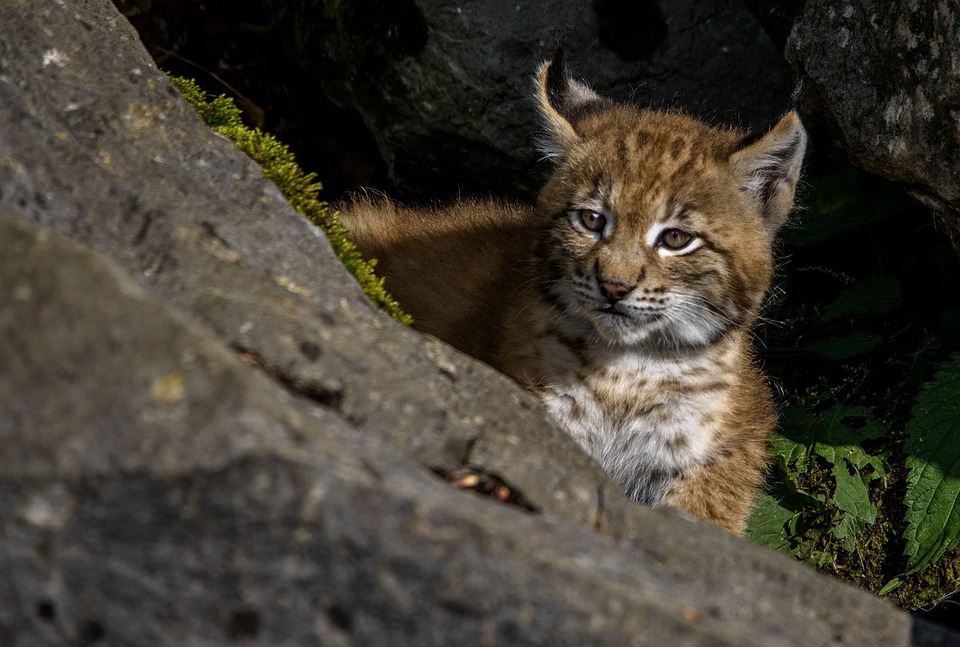
The positive influences of the wolf and lynx on the health of forests and wildlife, or of the beaver on biodiversity, are being left by the wayside politically. Only a few weeks have passed since the federal government drew attention to the dramatic decline in biodiversity in Switzerland. The hunting law draft adopted today will not protect biodiversity in Switzerland, but reduce it further. Nothing is being done to save threatened biodiversity — the federal government merely looks on.Animal welfare aspects have once again simply not been given adequate consideration by the Federal Council.
Hunting examination and huntable species
The legislative revision is also intended to clarify the relationship between hunting authorisation and hunting examination. The hunting authorisation permits the practice of hunting in a canton; its issuance falls within the jurisdiction of the cantons. A passed hunting examination remains a prerequisite, for which the federal government is to prescribe to the cantons the new examination subjects of “wildlife biology,” “species and habitat management,” “animal welfare,” and “handling of firearms.” These substantively standardised cantonal hunting examinations are to be mutually recognised by the cantons in future.
Finally, the provisions on huntable species and their closed seasons — amended in 2012 through a revision of the Hunting Ordinance — are being incorporated into the law and supplemented: New protections are to be introduced for the ferruginous duck and the grey partridge, the rook is to be declared huntable, the closed seasons for wild boar and cormorant are to be shortened, and all native species are to be granted a closed season. The handling of non-native animal species is also being adjusted: fallow deer, sika deer, and mouflon are to become huntable year-round, based on the strategy for combating invasive alien species adopted by the Federal Council on 18 May 2016.
Petition:
The wolf should remain “strictly protected”!
Added value:
- Message on the Amendment of the Federal Act on Hunting and the Protection of Wild Mammals and Birds (Hunting Act) (PDF, 198 kB)
- Draft of the revised Federal Act on Hunting and the Protection of Wild Mammals and Birds (Hunting Act) (PDF, 42 kB)
- Consultation report (PDF, 435 kB)
More on the subject of recreational hunting: The scientific evidence is presented in the overview Studies on the Effects of Recreational Hunting.
The position of IG Wild beim Wild: IG Wild beim Wild rejects recreational hunting. Our model is the canton of Geneva, which has managed without recreational hunting since 1974: without hunting seasons, without hunting dogs, without driven hunts, without high seats, without the animal cruelty and crime that go hand in hand with hunting season elsewhere. What has worked there for over fifty years disproves every position paper by JagdSchweiz. An association that bases its policy on claims it refutes in its own documents is not a professional organisation, but a factory for misinformation.