Eventing: «The pinnacle of animal cruelty»
Equestrian sport has been controversial for years, and accusations of animal cruelty against athletes seem ever-present.

Whether the happiness of the world rests on the backs of horses, or whether humans have no business being there at all — opinions are divided.
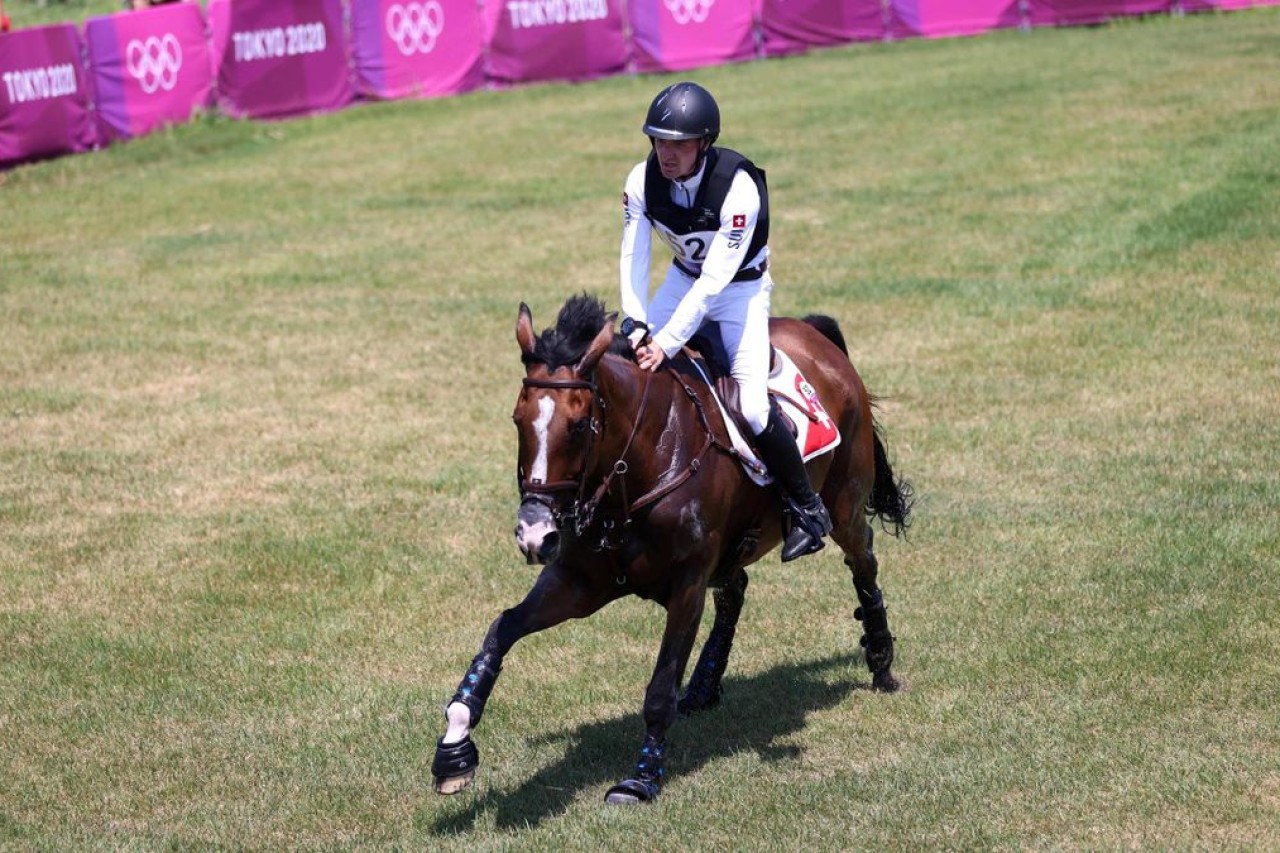
At a water obstacle during a cross-country test in eventing at the Olympic Games in Tokyo on Sunday, the 14-year-old gelding “Jet Set”, belonging to the 22-year-old rider from Fribourg, Robin Godel, sustained an injury.
The gelding Jet Set, ridden by Swiss eventing rider Robin Godel, had to be euthanised at the veterinary clinic in Tokyo after sustaining a severe and inoperable ligament injury on the cross-country course. Because the horse died following a competition, Jet Set’s body was immediately subjected to a post-mortem examination — as required by the regulations of the international governing body FEI. He will then be cremated.
The death of Jet Set was neither an accident nor an isolated case. In eventing, horses are repeatedly ridden to their deaths, and riders too are frequently injured. But unlike the humans, the horses have no say in the matter. A discipline in which certain participants are forced by compulsion over a life-threatening course dishonours the Olympic spirit. We call on the International Olympic Committee to immediately remove eventing from the list of sports — along with the other equestrian disciplines, show jumping and dressage.
Peter Höffken, specialist advisor at PETA
Horse expert Jana Hoger speaks ahead of the eventing final at the 2021 Olympics about the dangers facing horses in professional equestrian sport:
A horse's body is not designed to carry humans or other heavy loads. Riding means that a person decides to sit on the back of a horse or pony. Riding with an incorrect seat, excessive weight, or unnatural movements can cause back conditions in the animals, such as "kissing spines."
PETA is generally critical of equestrian sports because the needs of the animals are usually disregarded. So if riding takes place at all, the horse's natural movement patterns should be respected and all use of “aids” such as sharp bits, whips, and crops should be avoided entirely.Anyone who loves their horse should try to build a close bond with the animal not through riding, but through numerous other means: groundwork, walks, or playful exercises.
But would you agree that equestrian sport can have positive effects on the relationship between humans and animals?
Yes, if the interaction happens on equal terms. Horses are sensitive and highly intelligent animals. They form close friendships “with their person” and are also excellent teachers for us when it comes to body language. Children in particular can develop a healthy human-animal relationship this way — by fetching the animals from the pasture, grooming and caring for them. But none of that requires a horse to be ridden.
Do you see a difference between equestrian sport in general and competitive sport such as at the Olympic Games in particular?
From our perspective, there is no difference. Both in so-called “leisure riding” and in competitive sport, animals can be made to suffer greatly. Professional competitive sport, as seen at the Olympics, degrades these sensitive animals to pieces of sporting equipment that are expected to perform. But even in leisure sport, things can sometimes be cruel. Animals are often used for human entertainment with no regard for their musculature, age, or health conditions. This is then justified by saying one wants to form a friendship with the horse. Of course, training methods in competitive sport are even harsher and the keeping conditions for horses there even more restrictive.
Unlike humans, horses have no say in the matter. A discipline in which living beings are forced by coercion over a life-threatening course dishonors the Olympic spirit. We call on the International Olympic Committee to immediately remove equestrian disciplines from the list of Olympic sports!