EU considers ending daylight saving time
After the switch from summer to winter time and vice versa, rush hour traffic once again frequently falls during twilight hours. The risk of animals crossing the road not being spotted quickly enough is particularly high on rural roads. In 2016 alone, approximately 8’379 roe deer, 353 red deer, 27 chamois, 651 wild boar, 3’185 badgers and 6’306


After the switch from summer to winter time and vice versa, rush hour traffic once again frequently falls during twilight hours.
The risk of animals crossing the road not being spotted quickly enough is particularly high on rural roads. In 2016 alone, approximately 8’379 roe deer, 353 red deer, 27 chamois, 651 wild boar, 3’185 badgers and 6’306 foxes lost their lives in road traffic in Switzerland, according to the Federal Hunting Statistics. The actual number is likely to be considerably higher. However, many other animals such as free-roaming cats, hedgehogs, martens, and songbirds and birds of prey are also at risk.
Over 20’000 wildlife accidents per year in Switzerland
On average, over 20’000 wildlife accidents occur on Swiss roads and railway lines each year. The costs of these accidents are estimated at 40 to 50 million Swiss francs.
Until the end of the 19th century, people in Europe still lived in accordance with the solar day, with the local church clock providing orientation. With the advent of the railways, a unified Central European time zone was introduced in 1893. The seasonal adjustment of clocks during summer, which had been introduced intermittently in the German Reich and Austro-Hungary from 1916 onwards, was adopted by EEC member states following the oil crisis from 1977 onwards, and by Switzerland in 1981. Today, clocks are adjusted twice a year not only within the EU but also in 38 other countries.
European Parliament votes for review
384 MEPs voted in the European Parliament on Thursday, 8 February 2018 in favour of abolishing daylight saving time, with only 154 voting against.
This does not immediately mean the abolition of daylight saving time, but it does set a process in motion: with their motion, Parliament is calling on the EU Commission to take a close look at the advantages and disadvantages of the time change and to abolish the regulation if necessary. Since 1996, people in all EU countries have been changing their clocks in a uniform manner.
Health consequences of the time change
During the debate, members of parliament from several political groups criticized the time change as outdated and pointed to its health consequences. According to a long-term analysis, 25 percent more patients with cardiac complaints are admitted to hospital in the first three days after the time change than the annual average.
The benefits of daylight saving time are disputed: although we switch on the lights less often in the evenings during summer because of the time change, more heating is used in the mornings in spring and autumn.
However, calls for daylight saving time to be reversed are growing. The intended energy-saving effect does not exist at all. In Russia and Turkey, the clocks have not been changed since 2012. More on this topic Environment and nature conservation.
More on the subject of recreational hunting: In our dossiers on the criticism of recreational hunting gather fact-checks, analyses and background reports. What the research says about this is shown by Hunting fact-checked: the state of research.
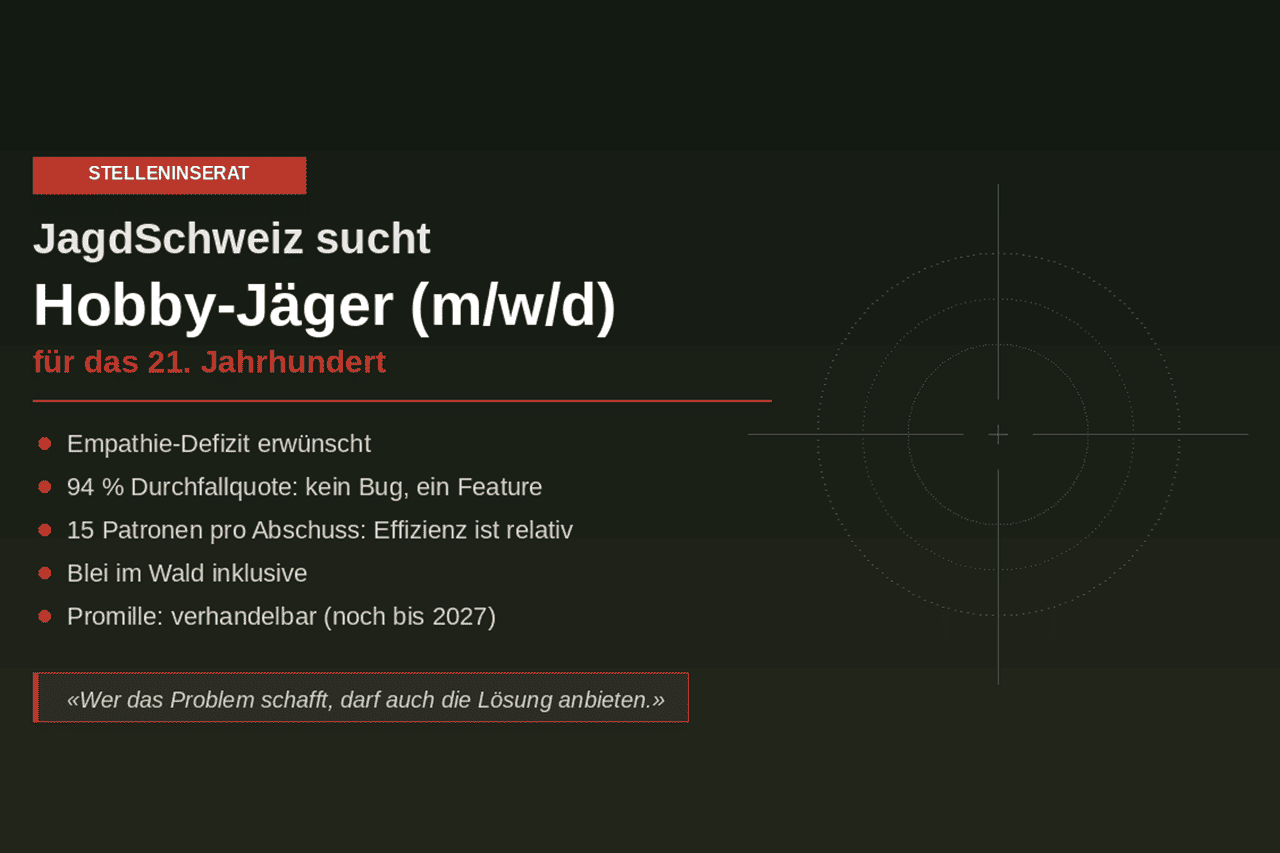
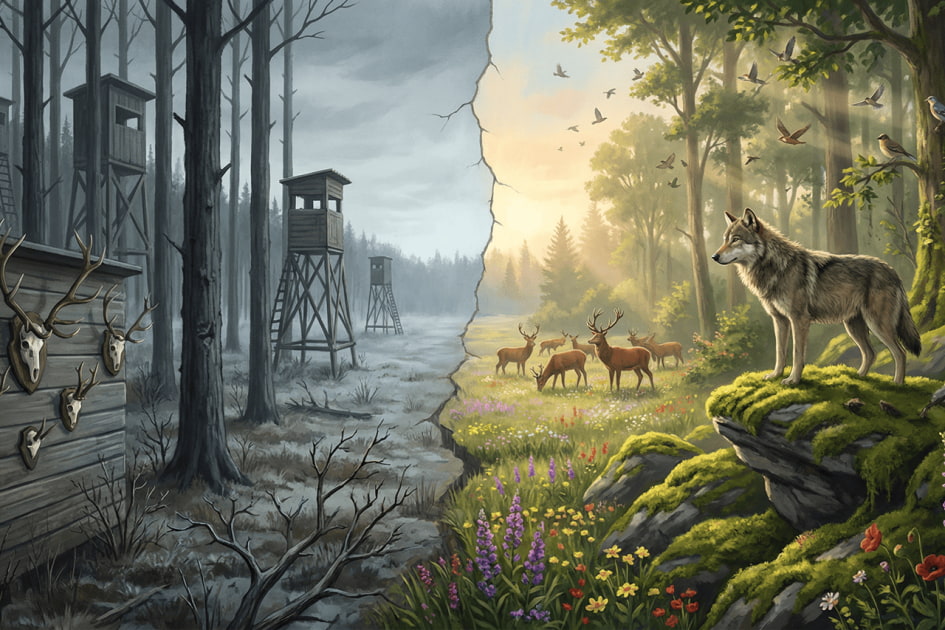
The position of IG Wild beim Wild: IG Wild beim Wild rejects recreational hunting. Our model is the canton of Geneva, which has managed without recreational hunting since 1974: without hunting seasons, without hunting dogs, without driven hunts, without high seats, without the animal cruelty and crime that go hand in hand with hunting season elsewhere. What has worked there for over fifty years disproves every position paper by JagdSchweiz. An association that bases its policy on claims it refutes in its own documents is not a professional organisation, but a factory for misinformation.