Dortmund's hunting fair: An ethics commission that doesn't hunt
For years, the 'Jagd & Hund' trade fair in Dortmund has been selling hunting trips for elephants, lions and other wild animals as recreational entertainment. A specially appointed ethics commission by the city was supposed to examine this practice. But to this day, it remains unclear whether it is even working seriously.

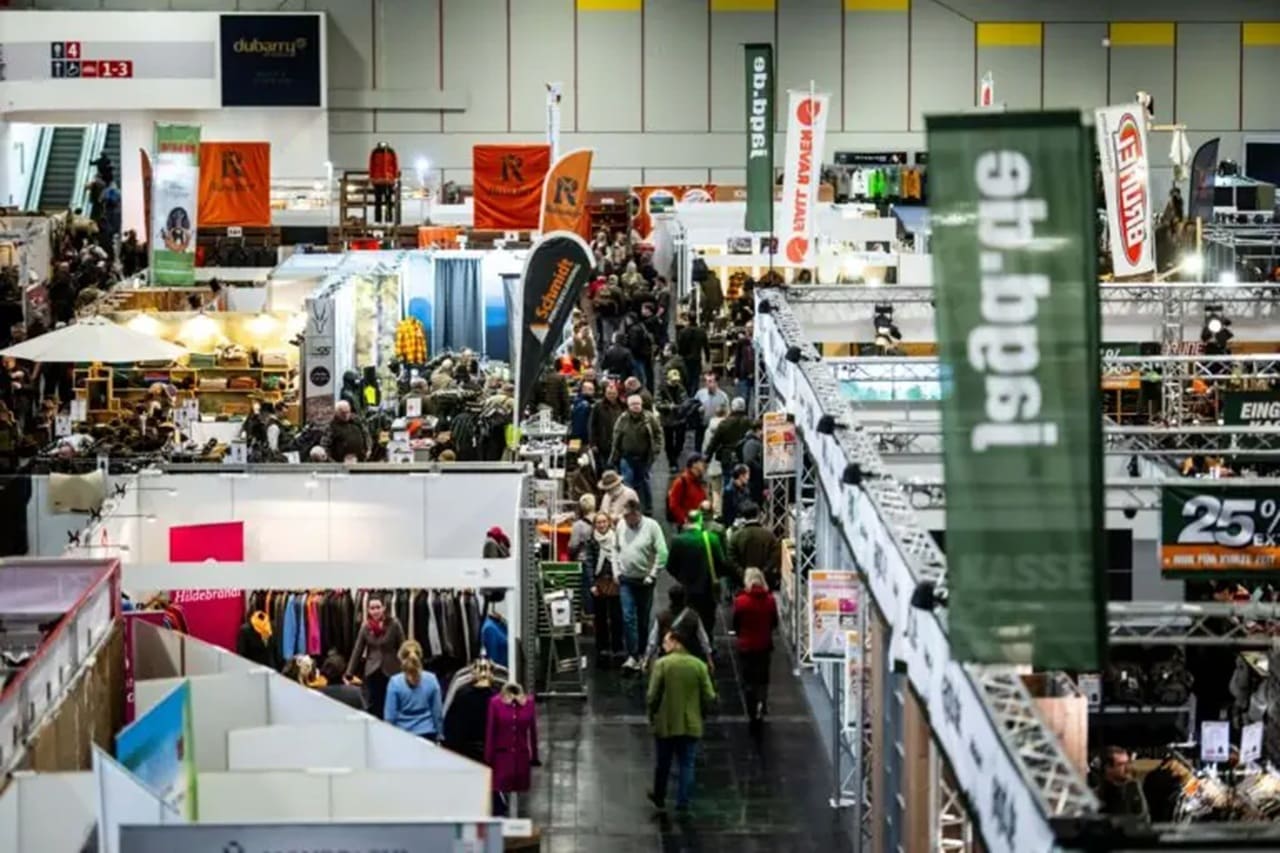
Every year, thousands of hobby hunters make the pilgrimage to Dortmund when the 'Jagd & Hund' trade fair opens its doors at the Westfalenhallen.
In front of the entrances stand animal protection organizations protesting against offers of trophy hunting trips. The fair stages itself as a meeting point for 'hunting ethics' and 'connection to nature', while inside the halls, kills of wild animals are marketed as tourist experiences.
In the category Recreational hunting on wildbeimwild.com we have been showing for years how far such events have strayed from contemporary ethics in dealing with wild animals. At the trade fair in Dortmund, however, this discrepancy becomes particularly evident because international hunting travel operators, hunting associations and the weapons industry appear in close proximity here.
The Ethics Commission as Window Dressing
Under political pressure, Dortmund City Council established an ethics commission in 2023 to address big game hunting and trade fair offerings. Officially, the aim is to examine whether trophy hunting trips are compatible with the city's values. In practice, it is hardly apparent to this day that the body is actually working: It is unclear how often the commission has met, whether there are protocols and what criteria should apply for evaluating hunting trips.
Instead of creating transparency and clear guidelines, the commission appears to be political window dressing. While trips to hunt elephants and other wild animals continue to be offered at the trade fair, the city fails to provide answers. Responsibility is outsourced to an opaque structure that is practically invisible to the public.
Trophy Hunting as a Business Model
The argumentation of hunting travel operators follows a familiar pattern: Trophy hunting allegedly serves species conservation and the local population because hunting licenses bring money into the coffers of states and communities. For example, in connection with Botswana, there is talk of an 'overpopulation' of elephants whose culling is supposed to protect nature and relieve other species.
This narrative ignores central questions: Who defines an 'overpopulation', what alternative conflict solutions have been examined, and how much of the hunting revenue actually reaches local communities and habitat protection? In many cases, it becomes apparent that trophy hunting is primarily a lucrative business model for tour operators, large landowners and a small wealthy clientele from the global North, while wild animals pay the price.
Municipal Politics Between Image Cultivation and Responsibility
Dortmund exemplifies a larger problem: Municipal politics wants to retain economically attractive events without having to openly commit to trophy hunting and wild animal culling. An ethics commission sounds like responsible awareness but shifts the confrontation into a barely controllable back room. As long as no clear criteria, decisions and consequences are known, the impression remains that the commission is primarily meant to defuse political pressure.
For a city that wants to credibly represent species conservation and sustainability, the step would be obvious: transparent rules, a ban on trophy hunting offers in public halls and a clear position against the marketing of shooting threatened species as recreational entertainment.
Why the Issue Also Concerns Switzerland
What happens in Dortmund is by no means irrelevant for Switzerland. Swiss hobby hunters participate in such hunting trips, and the argumentation patterns of trophy hunting, from alleged 'overpopulations' to the claim that one thereby protects nature, are identical to justifications we also observe in the domestic debate on recreational hunting.
Anyone who wants to understand how closely recreational hunting, hunting travel industry and political lobbying are intertwined will find in-depth analyses.
The Dortmund hunting trade fair shows how far the hunting industry has strayed from contemporary ethics in dealing with wild animals and how urgently independent, fact-based criticism is needed.
Pressure from 23 Animal and Nature Protection Organizations
How great the pressure for action has now become is shown by a current letter from Pro Wildlife and 22 other animal, nature and species protection organizations to the Dortmund mayor and city council. In it, the associations summarize the results of a legal opinion that clearly shows: providers who market trophy hunting trips in Germany operate in a criminal law gray area, because they may provide assistance in killing vertebrates without 'reasonable cause,' even if the shootings are legally permitted abroad.
The opinion also outlines concrete ways the city could prevent trophy hunting offerings at the trade fair: from a more narrowly defined fair purpose ('hunting without hunting trips') to stricter participation conditions and requirements in the determination notice that expressly prohibit advertising and selling trophy hunting trips.
At the same time, the organizations criticize the further postponement of the ethics commission and appeal to Dortmund to live up to its role as a 'sustainability city' and lead the fair into a wildlife-friendly, trophy hunting offer-free future.
Support our work
With your donation you help protect animals and give voice to their concerns.
Donate now →