Wind Turbines and Wildlife: Clean Energy in Conflict
The impact of wind turbines on wildlife is the subject of ongoing research and debate.

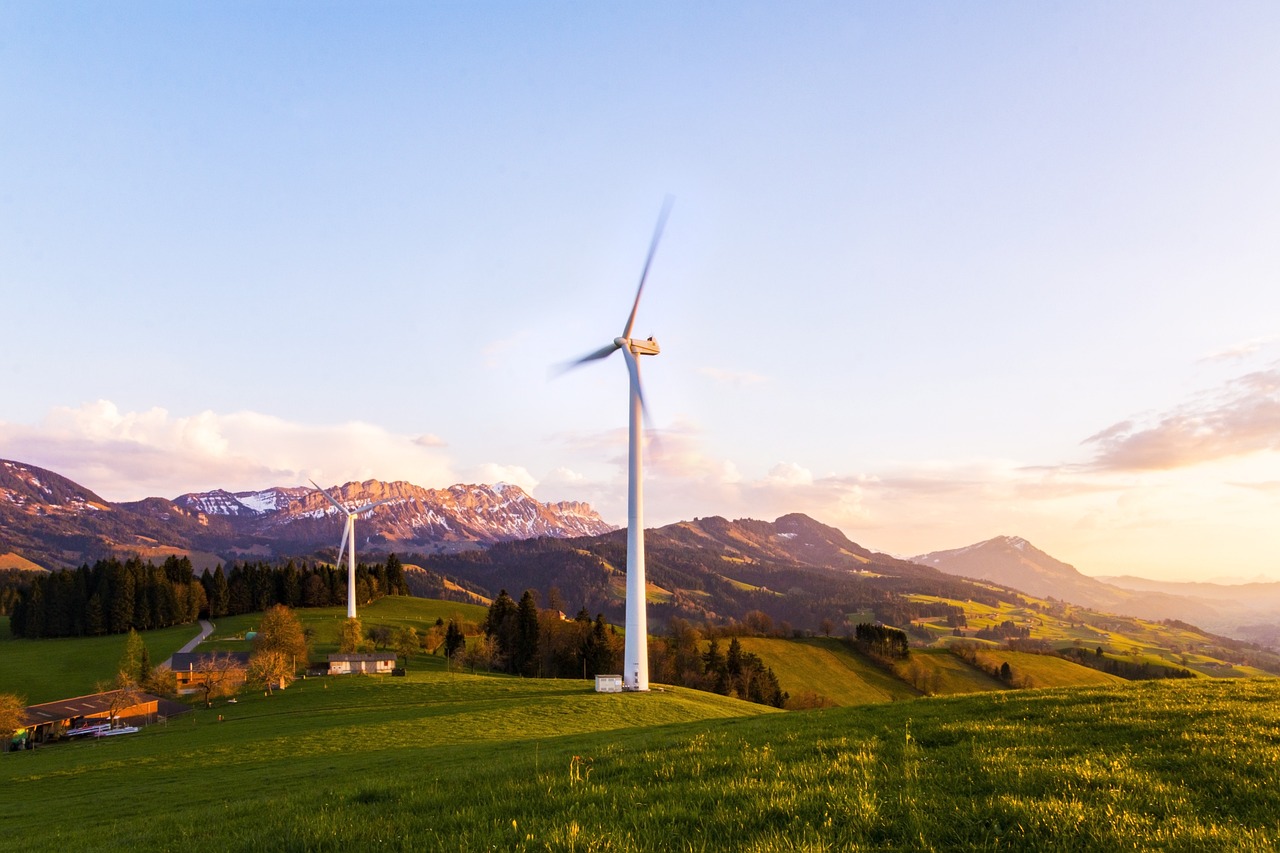
By 2050, wind turbines in Switzerland are to supply 4’000 gigawatt hours of electricity, according to the federal Energy Strategy 2050, covering up to 10% of Switzerland’s electricity demand. Currently, according to the Federal Office of Energy (BFE), around 40 large installations produce just over 140 GWh of wind power, or 0.3% of total electricity.
Switzerland is not a wind country
Wind turbines make sense in Europe primarily near coastlines. But even there, evidence suggests that offshore wind farms damage marine fauna, particularly whales and dolphins. Elsewhere, they are mostly heavily subsidised eyesores that electricity consumers are forced to pay for. Favorable wind conditions exist in the Rhone Valley in the Valais or on Mont-Crosin in the Bernese Jura. In other locations, the turbines — which can reach up to 210 metres in height — stand idle most of the time and produce nothing of value beyond costs.
Municipalities with the highest electricity production from wind turbines in megawatt hours (MWh) for the period: 1 January 2023 to 31 December 2023.
- Villeret BE: 35’228 MWh
- Courtelary BE: 26’672 MWh
- Saint-Imier BE: 21’640 MWh
- Muriaux JU: 17’226 MWh
- Martigny VS: 13’653 MWh
- Cormoret BE: 10’065 MWh
- Airolo TI: 9’376 MWh
- St-Brais JU: 9’212 MWh
- Obergoms VS: 6’770 MWh
- Andermatt UR: 5’299 MWh
Wind maps show that Switzerland is one of the areas with the weakest winds in all of Europe. During a “dark doldrums” period — when there is no wind and skies are overcast — gas-fired power plants, for example, would need to fill the gap, should no nuclear power plants remain available by 2050.
High costs, little benefit
The maintenance of such wind turbines is no small matter. Wind turbines can consume large amounts of electricity to combat icing (Nufenen), which often has to be supplied by generators. Cable routes are laid, transformers and high-voltage lines installed, massive concrete foundations poured, crane platforms constructed, and vast forest areas cleared. There is even a risk to life when approaching wind turbines. Such industrial installations are no longer a suitable habitat for wildlife.
In the end, it can be a zero-sum game or even a net loss for municipalities and taxpayers alike, according to research by infosperber.ch. Without wind, the turbines produce nothing, regardless of how many there are.
Those who profit are the landowners — mostly farmers or civic communities — and the major players in the energy sector, who receive vast sums in subsidies (from taxpayers) despite making billions in profits. The wind power operator lobby is making a killing at the public's expense.
«False statements have become almost a permanent fixture in the history of Swiss wind power,» says the presenter of an SRF report. During the planning phase, the city of Lausanne incorrectly inflated the declared energy output by 60% for its project in the hamlet of Chalet-à-Gobet.
Industrial wind power has swept across France, leaving behind a devastated landscape and an outraged population. France halted the wind power craze on 8 March 2024.
Wildlife as the losers
Forests are the last refuges for wildlife, and their protection is the core mission of IG Wild beim Wild. These natural spaces, rare in the heavily built-up Switzerland, must be preserved for future generations as well.
Various studies have shown that avifauna, butterflies, insects and so on can be harmed by collisions with the rotors of wind turbines. An expert from the ornithological station found as many as 86 killed birds in the Gotthard wind farm in just two days in June 2022, writes the IG Wald ohne Windturbinen.
Switzerland is at the bottom of Europe when it comes to species protection. More than a third of all species and half of all habitats are under threat. Butterflies, insects, bats, birds and others suffer under wind farms.
Forests and forest edges are indispensable habitats for wildlife in our already intensively used cultural landscape. They must be kept free from wind energy installations without any qualification, for reasons of species and nature conservation, demands IG Wild beim Wild.
Animals such as roe deer, red fox, brown hare or grey partridge already suffer enough from habitat loss and hostility from hobby hunters. Wind turbines are deterrent machines for fauna. Remarkably, according to a Polish study a large wind farm in the habitat causes greater stress levels in roe deer than a habitat with the permanent presence of wolves!
In January 2022, it became known that a golden eagle had died in the Bernese Jura after the animal had flown into a wind turbine. The death of a single eagle puts the entire population in the Swiss Jura at risk!
Model project La Haute Borne in the Canton of Jura
Wind farms are particularly catastrophic on bird migration routes, for example above Delémont in the area of La Haute Borne in the Canton of Jura. La Haute Borne is a hotspot for migratory and breeding avifauna at a continental level. Yet it is precisely in this area that a model project for the Canton of Jura is now planned, with an eventual vision of 30 wind turbines reaching a height of 210 metres.
Health impacts
Many people living in the vicinity of these rotating giants become ill. Through fine-particle abrasion from wind turbines, incredible quantities of microplastics and carbon fibres will contaminate the air, soil and groundwater.
Some people report symptoms such as fatigue, depression, insomnia, tinnitus, headaches or nausea. Pulsed infrasound is said to be responsible. Infrasound weakens cardiac performance, explains cardiac surgeon Christian-Friedrich Vahl in a research paper on Wind Turbine Syndrome (WTS).
In St-Brais in the Canton of Jura, for example, Pascale Hofmeyer complains: “I have hearing problems, headaches and chest pain.” In Switzerland there is no legally prescribed minimum distance. In the USA a minimum distance of 2.5 km applies; in England it was decided by law in 2010 that for wind turbines over 150 m in height the minimum distance must be 3’000 m.
Conclusion: Alternatives to wind power
The French government plans to build a total of 14 new next-generation nuclear power plants by 2050. The most important thing for the Greens in Finland is a "stop to the climate crisis", and in this regard "we cannot do entirely without nuclear power". Nuclear energy provides constant electricity, especially in winter.
For Switzerland, two new large nuclear power plants would suffice. According to experts, solar power installations mounted on buildings and rooftops could generate around 67 terawatt-hours of electricity per year, which would exceed Switzerland's current annual electricity consumption of just under 60 terawatt-hours.
Update 7.3.2024: The Council of States is challenging the ban on the construction of new nuclear power plants adopted in 2017. On 6.3.2024, it adopted a postulate calling for the construction of new nuclear power plants to be examined as a "possible scenario" to secure the electricity supply.
Facts and Studies
- Alliance for Nature and Landscape Switzerland
- Nature Committee
- Fact Sheets
- Birds and Wind Turbines
- Model Analysis: Losses of Flying Insects in Wind Farms
- Wind Energy Installations and Land Mammals
- IG Forest Without Wind Turbines
- Against the Destruction of Our Forests by Wind Turbines
- French Court Halts Wind Power
Further Articles
- Wildlife in Switzerland Contaminated with Plastic
- Environmental Impacts of Wind Turbines: The Dangers of PFAS for Wildlife
- Study on the Influence of Wind Turbines on the Weather
- Offshore Wind Farms Could Pose Significant Risks to the Ecosystem, the Economy and Human Health
- The Effects of Wind Farms on Soil Moisture and the Local Climate
- Wind Turbines Cause Exactly What They Were Supposed to Prevent
- Solar Module Waste: The Disposal Problem
- The Impact of Wind Turbines on Wildlife and the Debate Around Clean Energy
- "Two New Large Nuclear Power Plants Would Suffice for Switzerland"
- Wind Power and Marine Fauna: No Harmonious Coexistence
- Scandalous Secret Contracts Between Wind Energy Promoter and Bernese Municipalities