Defective traps – Lynx dead
On Sunday morning (8.4.2018), residents of a property on the outskirts of Gais reported a sick lynx to the operations centre of the Appenzell Ausserrhoden cantonal police. The cantonal wildlife wardens (the canton of AR has no certified wildlife wardens) then found the lynx, which no longer showed any flight response and was behaving atypically. The fully grown animal had hidden itself in a woodshed. It was

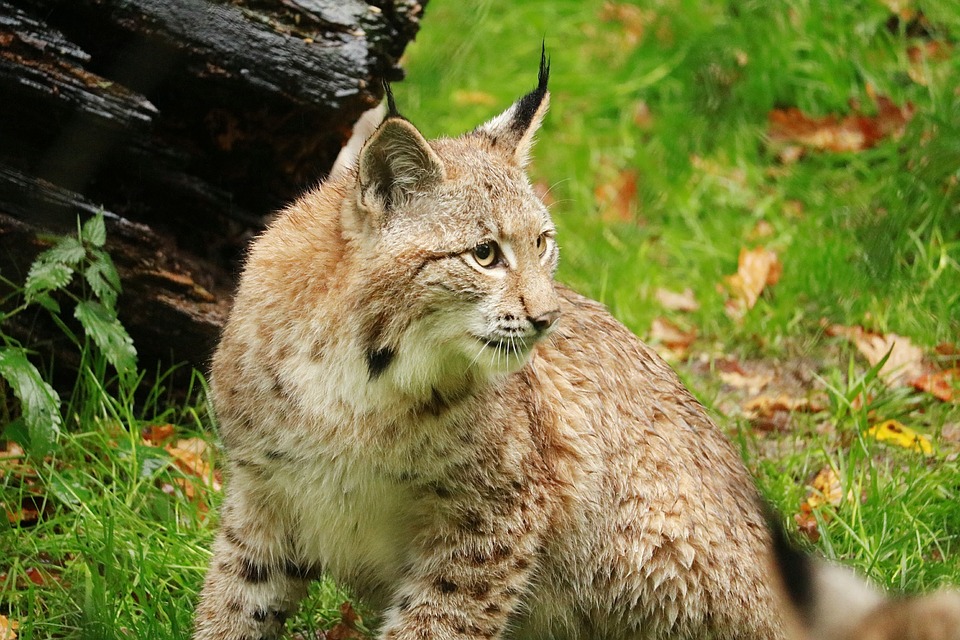
On Sunday morning (8.4.2018), residents of a property on the outskirts of Gais reported a sick lynx to the operations centre of the Appenzell Ausserrhoden cantonal police.
The cantonal wildlife wardens (the canton of AR has no certified wildlife wardens) then found the lynx, which no longer showed any flight response and was behaving atypically. The fully grown animal had hidden itself in a woodshed. It was emaciated and had an obvious injury to its left front paw along with remnants of a snare. According to the recreational hunters, the lynx had to be shot.
Design flaw in the foot snare
In mid-March, the St. Gallen hunting authority attempted to capture a lynx for an international relocation project: foot traps were set up around a freshly killed deer, while recreational hunters equipped with night-vision devices lay in wait less than 100 metres away. A lynx fell into their trap. However, only seconds later the animal broke free again. The recreational hunters immediately launched a search operation — but there was no trace of the lynx. Not even bloodstains could be found.

It subsequently emerged that the trap provided by the Association for Predator Ecology and Wildlife Management (KORA) had a design flaw. “Foot snare traps have been a proven method for 35 years. However, an error was made in the selection of materials for the new series,” says Urs Breitenmoser, project leader of KORA, accepting responsibility. All traps have since been recalled and corrected by the association.
Lynx had to be culled
Despite an intensive search using specialized dogs, the St. Gallen capture team was unable to locate the animal. It appears that the lynx had injured itself so severely during its escape that it was no longer able to hunt and therefore had to be culled. Further investigations are currently underway to clarify the exact circumstances. The animal will undergo a pathological examination at the Centre for Fish and Wildlife Medicine (FIWI) in Bern.
Since 2013, Switzerland has been participating in highly questionable lynx reintroduction projects in neighboring countries in order to support the establishment of new populations and promote connectivity. As a result, lynxes have been captured in Switzerland over the past several years and relocated to Italy, Austria, or Germany. More on wildlife and the animal welfare issue.
More on the subject of recreational hunting: In the dossier The Role and Criticism of Recreational Hunters we shed light on the training, power and self-image of recreational hunters. The scientific evidence is presented in the overview Studies on the Effects of Recreational Hunting.
The position of IG Wild beim Wild: IG Wild beim Wild rejects recreational hunting. Our model is the canton of Geneva, which has managed without recreational hunting since 1974: without hunting seasons, without hunting dogs, without driven hunts, without high seats, without the animal cruelty and crime that go hand in hand with hunting season elsewhere. What has worked there for over fifty years disproves every position paper by JagdSchweiz. An association that bases its policy on claims it refutes in its own documents is not a professional organisation, but a factory for misinformation.