Coronavirus: PETA Creates Face Mask
PETA's motto reads, in part: animals are not ours to eat or to exploit in any other way. The organisation campaigns against speciesism – a world view that ranks humans as superior to all other living beings.
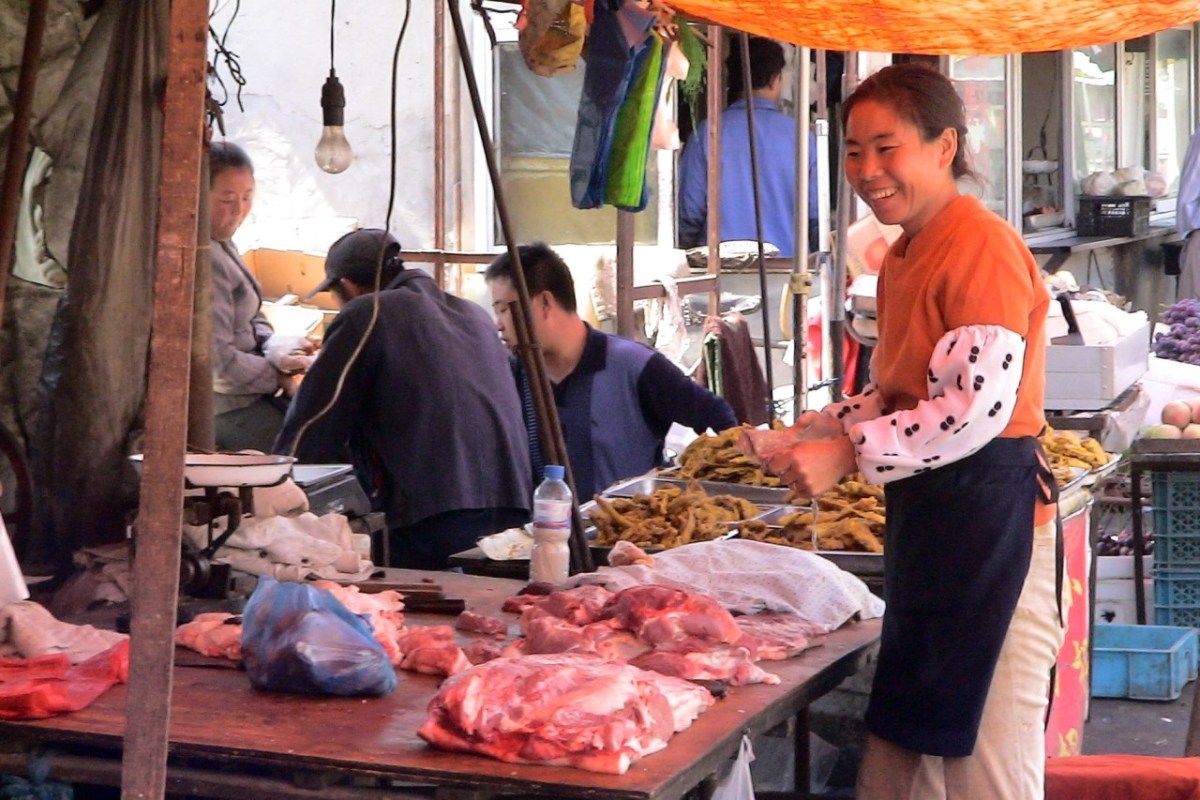
China: trade in and consumption of wild animals banned
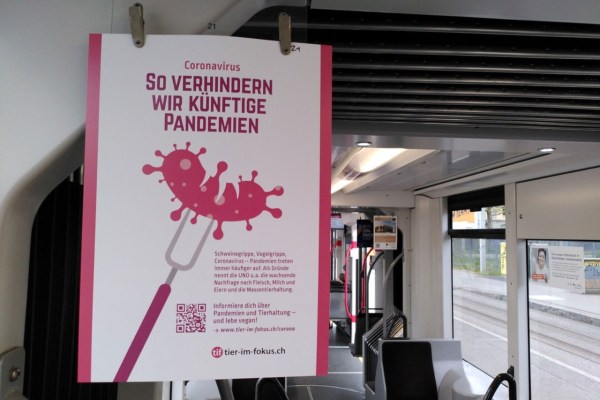
Now that the first coronavirus case has been confirmed in Germany too, PETA is offering face masks that not only protect against pathogens but also spread a life-saving message: go vegan.
The masks will shortly be available in the PETA store. Anyone interested can already pre-order them at info@peta.de – delivery will take place in February. As the virus has also been confirmed in the USA, pre-orders are likewise possible in the online shop of the partner organisation PETA USA.

Organisation names the meat industry as the culprit behind the virus outbreak
According to reports, the SARS-like virus is said to have spread from a live animal market in the Chinese city of Wuhan. Both live and dead animals are sold there for human consumption. Thousands of people have already been infected with the virus: at least 81 people have died of it in China. The virus was also confirmed in a patient in Bavaria today.
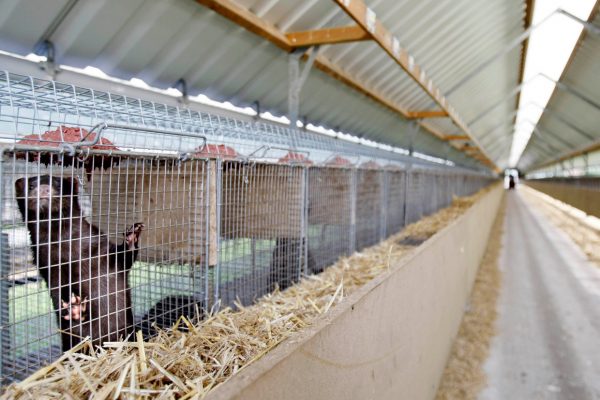
“Filthy sheds in which animals are crammed tightly together, slaughterhouses and meat markets are a health threat to people all over the world. They are a veritable breeding ground for deadly diseases such as the coronavirus, SARS, avian flu and many more. PETA's face masks call on people to protect themselves by avoiding meat and eating vegan.”
Meat is particularly susceptible to contamination with pathogens such as E. coli, Campylobacter and salmonella. It also contains no dietary fibre whatsoever and is full of artery-clogging saturated fats and cholesterol. According to the Academy of Nutrition and Dietetics, vegans suffer less frequently from heart disease, diabetes, obesity and cancer than meat eaters.
Harald Ullmann, Vice-Chairman of PETA Germany.
Vegans not only often lead a healthier life; each individual also saves up to 50 animals a year from death in factory farms, slaughterhouses or on fishing boats.
In the meat and dairy industry, cows are separated from their children, chickens often have their throats cut while fully conscious, piglets are still castrated without anaesthetic and fish are frequently cut open while still alive. Whether “organic” or conventional farming: all of these animals are killed long before they reach their natural life expectancy.
With PETA’s free Veganstart programme the switch to a purely plant-based diet is effortlessly easy.
Do you have a tip, a source or a correction for this article? Write to us.
More on the subject of recreational hunting: What the research says about this is shown by Hunting fact-checked: the state of research.
The position of IG Wild beim Wild: IG Wild beim Wild rejects recreational hunting. Our model is the canton of Geneva, which has managed without recreational hunting since 1974: without hunting seasons, without hunting dogs, without driven hunts, without high seats, without the animal cruelty and crime that go hand in hand with hunting season elsewhere. What has worked there for over fifty years disproves every position paper by JagdSchweiz. An association that bases its policy on claims it refutes in its own documents is not a professional organisation, but a factory for misinformation.
Wild animals need a voice
Investigations, petitions and background on recreational hunting. As a thank-you, you will immediately receive our free guide «Recreational hunting on your doorstep: what you can do».
Support our work
With your donation you help protect animals and give their voice a hearing.
Donate now →