China: Badgers Tortured for Paint, Make-up, and Shaving Brushes
After Procter & Gamble was confronted with PETA Asia's disturbing video about animal cruelty in China's badger-hair industry, the company decided to stop using badger hair in the production of shaving brushes and to switch to synthetic bristles.


After Procter & Gamble was confronted with PETA Asia's disturbing video about animal cruelty in China's badger-hair industry, the company decided to stop using badger hair in the production of shaving brushes and to switch to synthetic bristles.
PETA Asia revealed that protected badgers are being illegally trapped in the wild using snares and other cruel methods. On farms, they are confined to small cages and ultimately killed by force so that their hair can be used to make paint, make-up, and shaving brushes.
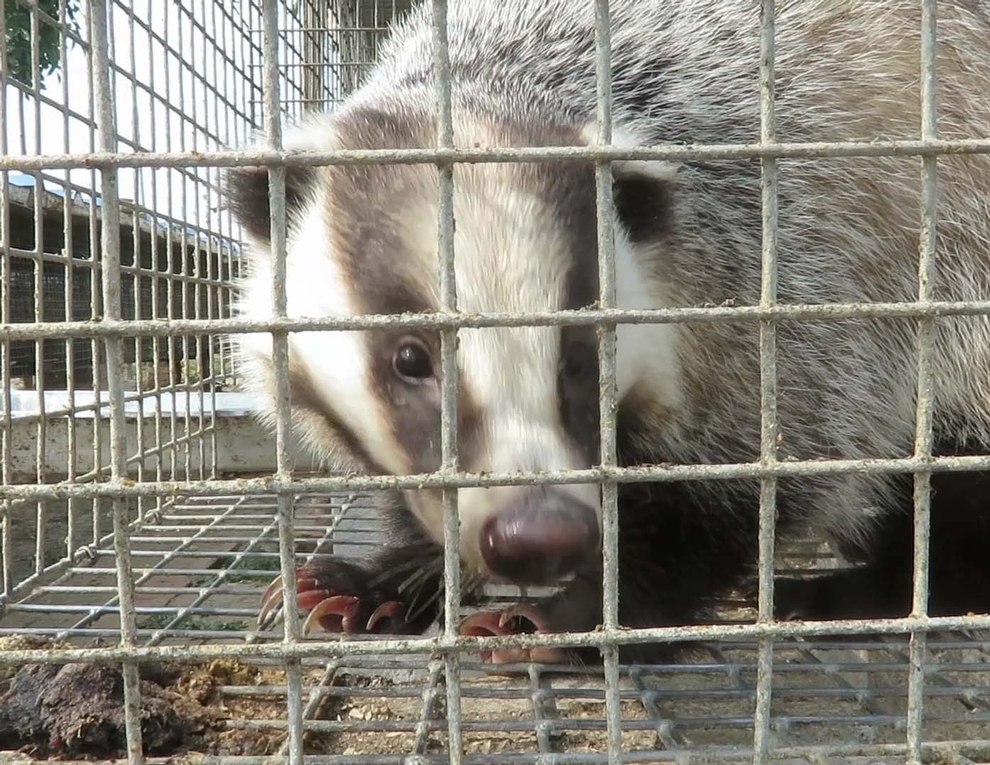
PETA Asia's investigation is the first of its kind and covers Chinese badger-hair farms and live markets that were inspected in 2017 and 2018. The footage shows workers beating screaming badgers over the head before slitting their throats. On the farms, the badgers were kept in tiny wire cages with no protection from the elements.
"Gentle badgers in China were beaten with objects, cut open, and left to bleed out — all for make-up and shaving brushes made from badger hair," said Jason Baker, Vice President of PETA Asia. "PETA urges companies and all consumers not to purchase these blood-stained brushes and to choose animal-free brushes instead — ones that require no suffering or death."
What You Can Do
There is absolutely no reason to use brushes made from animal hair — especially given the wide range of high-quality synthetic brushes already available. Please only purchase synthetic paint, cosmetic, and shaving brushes. More on animal rights.
More on the subject of recreational hunting: The scientific evidence is presented in the overview Studies on the Effects of Recreational Hunting.
The position of IG Wild beim Wild: IG Wild beim Wild rejects recreational hunting. Our model is the canton of Geneva, which has managed without recreational hunting since 1974: without hunting seasons, without hunting dogs, without driven hunts, without high seats, without the animal cruelty and crime that go hand in hand with hunting season elsewhere. What has worked there for over fifty years disproves every position paper by JagdSchweiz. An association that bases its policy on claims it refutes in its own documents is not a professional organisation, but a factory for misinformation.