Wind Turbine Decommissioning: Controversies and Legacy Contamination
The old generation of wind turbines must give way to the new.

Decommissioning is not merely a question of recycling the rotor blades.
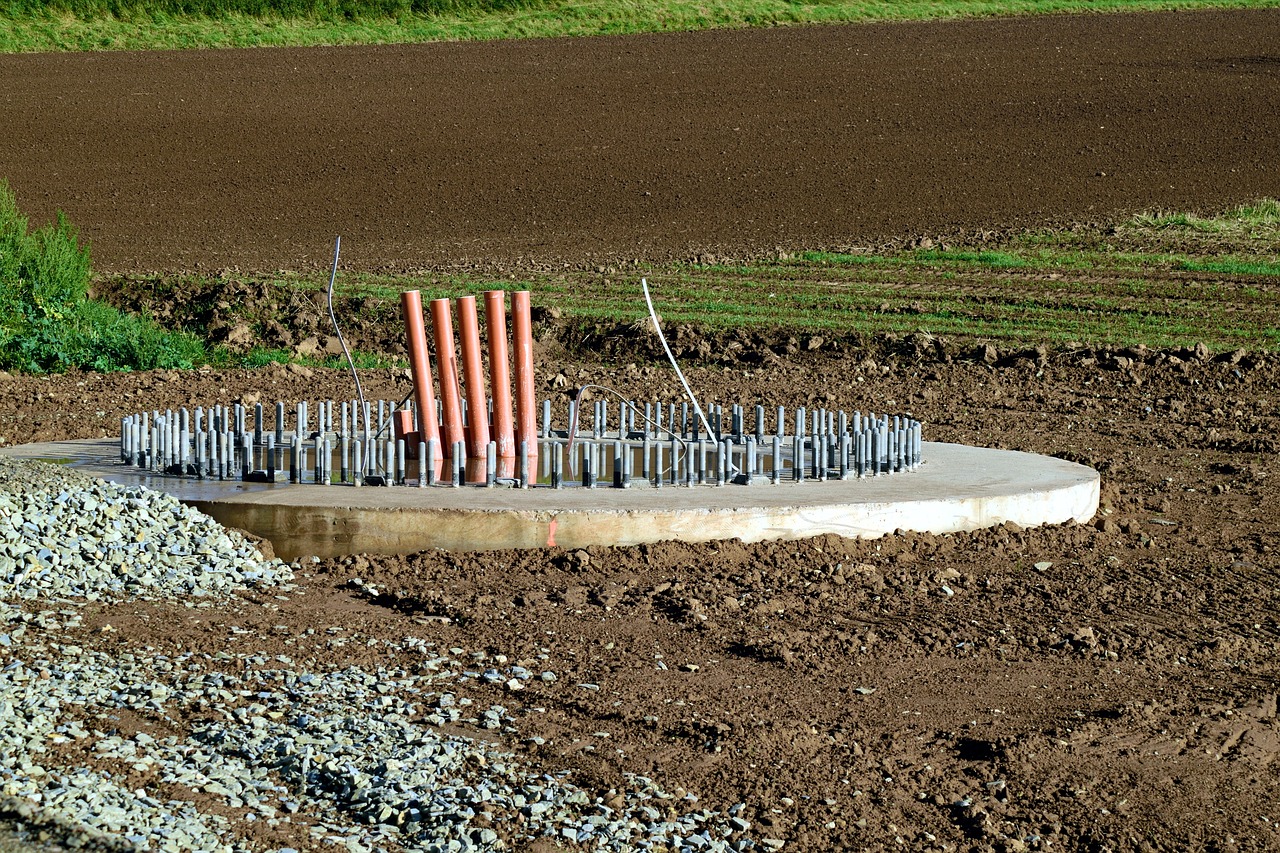
The real problem lies underground. The disposal of the foundations is driving up costs for operators. Not infrequently, the concrete remains in the ground. Environmentalists are demanding the complete removal of this legacy contamination.
Districts in Lower Saxony appear to be responding flexibly. Yet the major wave of decommissioning is still to come. In Lower Saxony alone, half of the more than 6,000 onshore wind turbines are expected to be replaced by new ones in the coming years. "The decommissioning is subject to the proviso of proportionality," says Andreas Eickmann, head of the building authority at the Cuxhaven district office.
The high costs were not the decisive factor behind the requirement that foundations in the Cuxhaven district need only be removed to a depth of 2.5 metres. Rather, the decommissioning itself poses a risk to groundwater. The pile foundations extend up to 40 metres deep and penetrate various water-bearing layers. Were the piles to be removed, there would be a risk not only of saltwater entering the drinking water supply, but also of pesticides from agriculture seeping in. Eickmann: "The holes are a motorway into the subsoil."
Operators of wind turbines are legally obliged under building regulations to restore the original condition of the site once the turbines have reached the end of their service life. "When foundations are removed to a depth of 2.5 metres, the land can be returned to agricultural use," Eickmann emphasises, "no plough goes any deeper." The partial decommissioning is also sufficient to absorb precipitation.
However, the head of the building authority is also aware that the major decommissioning still lies ahead. The shallow foundations of older installations, which are currently being replaced by new, more powerful ones, are not the problem — it is the newer pile foundations of the large installations. The district of Wittmund, home of Lower Saxony's Environment Minister Olaf Lies (SPD), sees no decommissioning obligation for old foundations that were approved before the amendment to the Building Code in 2004.
Furthermore, the decommissioning obligation is waived for all wind farms with a development plan. The new foundations, on the other hand, must be removed down to above the pile foundation, according to the administration. "The concrete piles remaining in the ground do not have any significant detrimental effects on the soil," explains district spokesperson Ralf Klöker. To date, 119 old installations have been dismantled in the district.
Subsidies ended in 2020
Environmentalists from the Wattenrat in East Frisia criticize what they regard as the authorities' lax stance. Spokesperson Manfred Knake states: "It may be assumed that this is not about compliance with applicable law, but about protecting the wallets of wind energy operators who have drawn the fattest returns for decades through the Renewable Energy Sources Act (EEG)."
It remains to be seen whether the landowners on whose land the wind turbines were erected will eventually be asked to foot the bill for the complete disposal of the foundations. In fact, the EEG subsidies are expiring in 2020. With the end of the subsidies, the operational lifespan of many installations also comes to an end.
The industry assumes that nationwide one in four wind turbines — and in Lower Saxony even one in two — will be dismantled to make way for new, larger and above all more efficient installations. A former employee of the Environment Ministry in Kiel sees the problem of only partial foundation removal primarily in the sealing of the soil.
Environmental activists express concern
Kuno Veit told NDR: "If I only remove one metre of the foundation, the surface remains sealed." In Schleswig-Holstein alone, the area in question amounts to three million square metres. The Lower Saxony Environment Ministry, however, sees no problems with the decommissioning of wind turbines. The ministry leaves no doubt that all wind turbines approved from 2004 onwards must be completely decommissioned.
This includes the foundations. Spokeswoman Justina Lethen explains that the district authorities can grant exceptions if removing the foundation places a greater burden on the environment than leaving it in the ground. Lethen: “The Ministry of the Environment does not issue a general recommendation.” There is no obligation to decommission older installations.
Environmental activists are expressing concern in online forums. They fear that rainwater can no longer seep through, that deep-rooted plants can no longer find a foothold, and that northern Germany in particular is being quietly concreted over underground. 1,300 people have signed an online petition to enforce the decommissioning of wind turbines in the district of Cuxhaven, including their foundations — so far without success.