Bird breeding season begins with song
At the meteorological start of spring, songbirds begin their love songs. The breeding season gets underway. Why birds sing and when you can hear them.

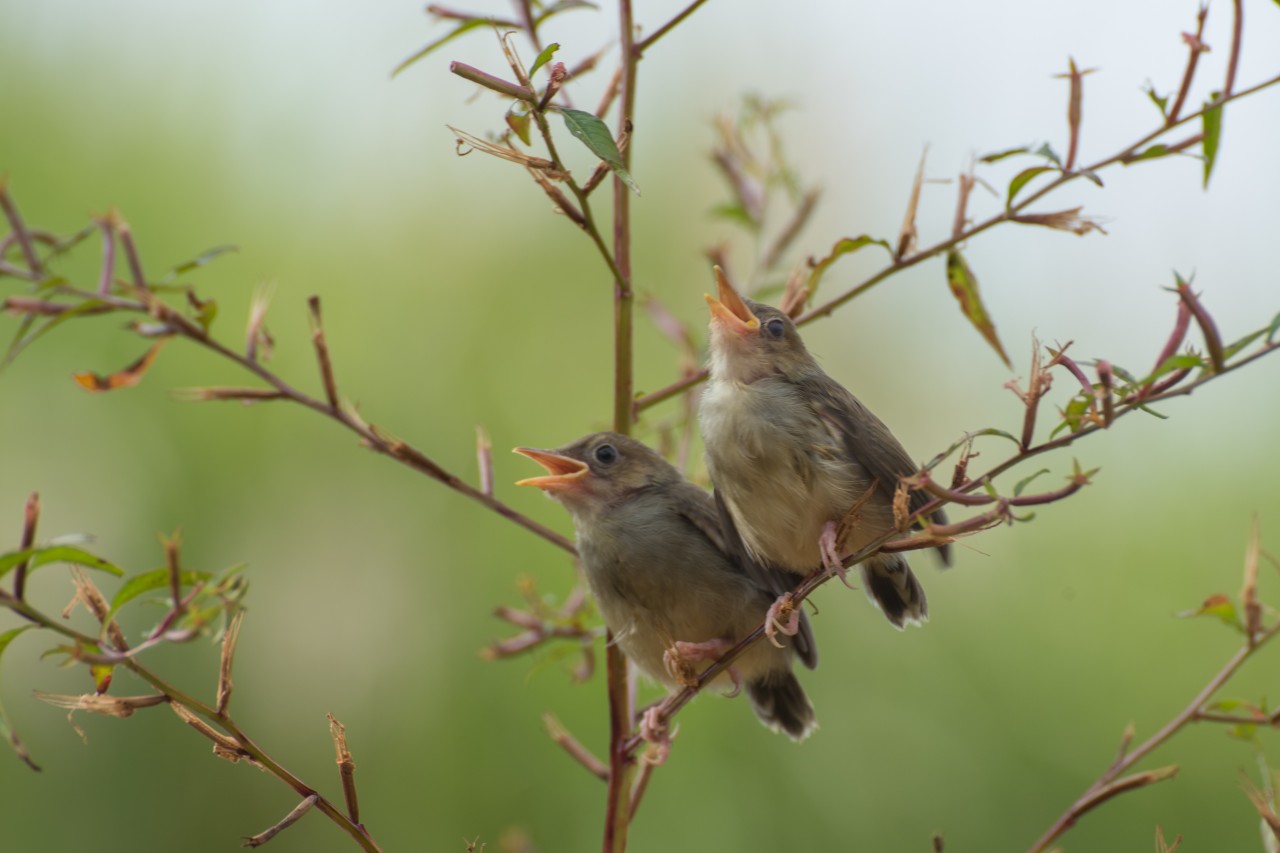
Monday marks the meteorological start of spring. Anyone who wants to «hear» spring simply needs to open their window just before sunrise. Then you can listen to the love songs of the songbirds.
The intensity of daylight is the key factor behind birds’ spring feelings. «As dawn breaks earlier and earlier, the songbird concert also starts sooner«, says Prof. Dr. Klaus Hackländer, Chairman of the Board of the Deutsche Wildtier Stiftung. This can get quite loud. Some songbirds, such as the blackbird, reach noise levels of up to 100 decibels — on a par with a pneumatic drill. Scientists have also measured that songbirds living in cities twitter the loudest. This seems logical, as they have to drown out the traffic noise. The male nightingale sings up to five times louder in the city than its relatives in the countryside. This was discovered by ornithologists at the Max Planck Institute. Great tits not only sing louder, but also at a higher pitch. This allows them to make themselves heard above the
The chirping concert serves just one single purpose: it’s all about family planning. «While humans listen enraptured to the birds’ singing and regard it as an expression of joie de vivre, courtship is an exhausting affair for the males and anything but a pleasure«, says Hackländer. «First, rivals must be driven from the territory with a powerful voice, and then the females must be impressed with song.«
Not all bird species begin their concert at the same time of day or year. Tits, blackbirds and greenfinches already sing at the end of winter, and as spring progresses, more and more species join in.
The song of birds varies from species to species. Some species don't shy away from plagiarism. To showcase their talent and stand out from competitors, certain birds imitate the songs of other species. Examples include the common starling (Sturnus vulgaris) and the marsh warbler (Acrocephalus palustris). The woodpecker is quite different. In its case, drumming takes on the function of song.
A powerful voice combined with magnificent plumage signals good health and tells the prospective female: I have good genes to offer our offspring. During the tender whispers of courtship, it's not only volume, duration, and frequency of song that matter — repertoire plays a role too. The blackbird, much like the nightingale, is a master singer. While the nightingale dazzles with a crystal-clear soprano and up to a hundred strophes, the male blackbird possesses an almost sentimentally rich, melting tone in his voice. The common redstart can't match that, but he has a remarkable range. His song begins powerfully, then drops off, only to build back into a crescendo. Whether the traffic light pole or the apple tree serves as his stage, one thing is clear: whoever sings the loudest gets the girl!
By the way: the world's loudest bird lives in Brazil. The male white bellbird impresses with 125 decibels! It has white plumage and weighs just 250 grams, yet its "ding-ding" call rings out like a bell and carries deep into the Amazon.
More on the subject of recreational hunting: In our dossiers on recreational hunting gather fact-checks, analyses and background reports. The scientific evidence is presented in the overview Studies on the Effects of Recreational Hunting.
The position of IG Wild beim Wild: IG Wild beim Wild rejects recreational hunting. Our model is the canton of Geneva, which has managed without recreational hunting since 1974: without hunting seasons, without hunting dogs, without driven hunts, without high seats, without the animal cruelty and crime that go hand in hand with hunting season elsewhere. What has worked there for over fifty years disproves every position paper by JagdSchweiz. An association that bases its policy on claims it refutes in its own documents is not a professional organisation, but a factory for misinformation.