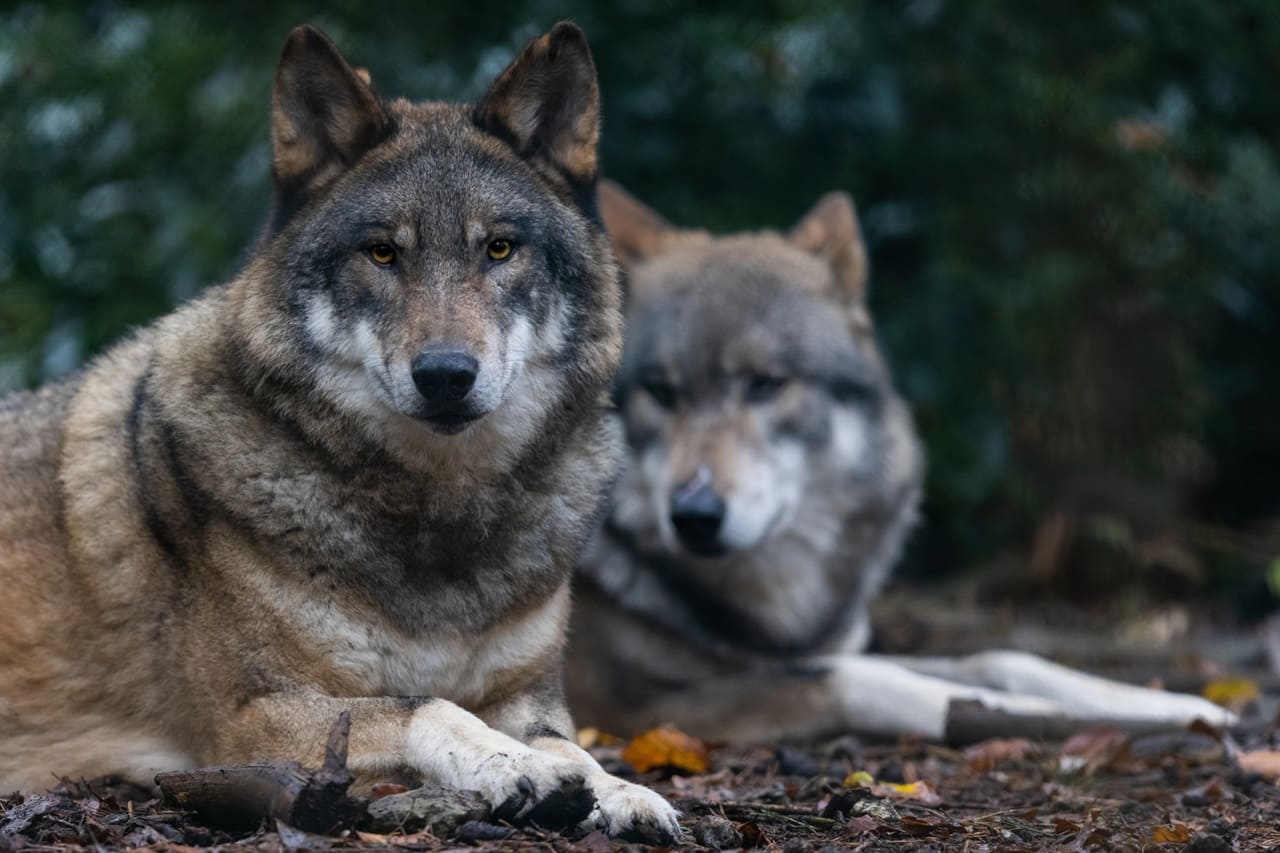
On 29.11.2022, the Bern Convention rejected the proposal by Switzerland to downgrade the protection status of the wolf.
Animal welfare and environmental organisations welcome this decision and call on the Swiss Parliament to respect it in its resolutions on the Hunting Act during the winter session.
The members of the Bern Convention — the European treaty on the protection of wildlife and plants — today, at the 42nd annual meeting of the Standing Committee in Strasbourg, clearly rejected a proposal by Switzerland to downgrade the protection status of the wolf.
A relaxation of the European protection status would contradict the findings of a comprehensive report on the state of the wolf population, commissioned by the Council of Europe. According to the report, the Alpine wolf population remains potentially endangered.
Swiss Wolf Policy on the Wrong Track
The draft partial revision of the Hunting Act, which the National Council will debate next week, however, envisages a massive weakening of wolf protection in Switzerland. In future, wolves are to be culled preventively to avoid any damage whatsoever. The decision as to which herd protection measures are deemed reasonable is to be delegated to the cantons. This stands in blatant contradiction to the requirements of the Bern Convention, according to which culling must be preceded by milder measures (herd protection, deterrence), only the prevention of “serious” damage justifies culling, and the regulation of wolf populations is to be coordinated across borders.

Rethinking Rather Than Culling
Switzerland will not become a “damage-free zone” with the partial revision of its hunting law. Wolves will continue to live in our country and migrate from neighboring countries. The decision of the Berne Convention shows that Swiss wolf policy is on the wrong track and is under the illusion that it can function without coordination with neighboring countries abroad. A correction is urgently needed: with a few but decisive adjustments, a legislative proposal would be ready that could be implemented quickly and flexibly and – in compliance with the Berne Convention – would allow more room for maneuver in dealing with the wolf. It is now up to policymakers to help this consensus solution achieve a breakthrough by substantially improving the legislative proposal put forward to date.
In this context, an open discussion is needed as to whether an alpine pasture declared “unprotectable” might not be better abandoned and thus returned to wildlife as habitat.
Most sheep herds are more of a hobby nature. Truly professional operations with 100 or more breeding ewes that generate a significant share of household income from sheep farming are few and far between in Switzerland. The fact that so many sheep and goats are kept in Switzerland at all is a recent phenomenon, as is free-range grazing. In other European countries, constant shepherding with herding and livestock guardian dogs is an established everyday practice and a centuries-old tradition.
The return of the wolf requires a rethink on our part. This should be seen as an opportunity, because more intensive supervision of sheep, or even their constant shepherding, also promotes animal health, as injuries and illnesses are detected much earlier.
Dossier: Wolf in Switzerland: Facts, Politics and the Limits of Hunting
| You can help all animals and our planet with compassion. Choose empathy on your plate and in your glass. Go vegan. |