Ancient Animal Traps Known as Kites
Ancient animal traps known as kites have been discovered in the desert. The monumental structures were used for mass hunting thousands of years ago.

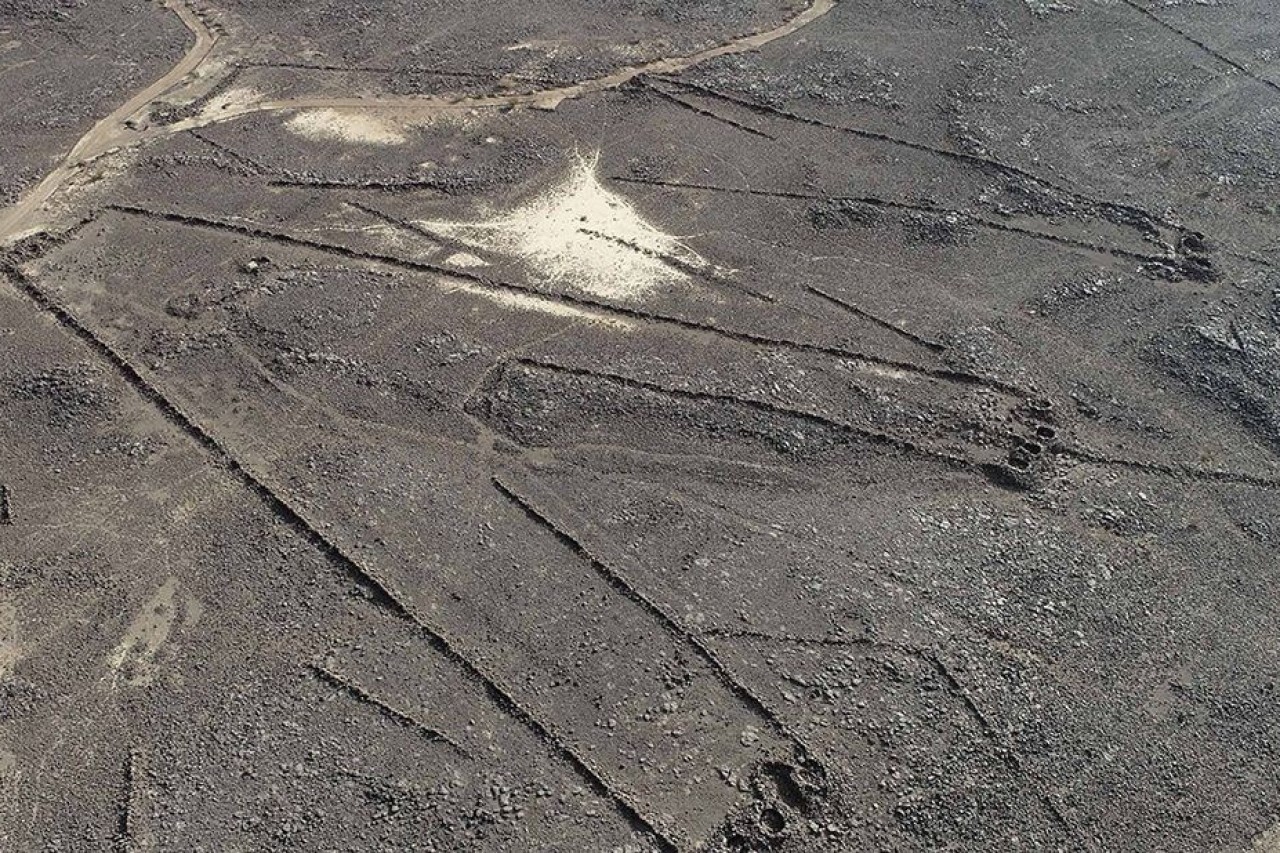
New peer-reviewed research on ancient stone animal traps known as “desert kites» reveals the sophisticated and large-scale hunting of wildlife during the late Neolithic period, as well as the ingenuity and perhaps collaborative nature of the peoples of the region in the past.
The structures were referred to as “kites» by aviators in the 1920s because their shape, viewed from above, resembles old-fashioned children’s kites with streamers. However, the origin and function of these vast, monumental structures had been disputed.
Dr. Remy Crassard, a leading expert on desert kites, notes that they rank among the largest ancient structures of their time. The oldest kites, located in southern Jordan, have been dated to 7000 BC. The age of the newly discovered kites in north-west Arabia is still being determined, but appears to span the transition from the late Neolithic to the Bronze Age (5000–2000 BC). Dr. Crassard estimates that 20 years ago some 700 to 800 kites were known, compared with approximately 6,500 today, with their number still rising.
Based on recent investigations in Saudi Arabia, Jordan, Armenia and Kazakhstan, Dr. Crassard’s team confirms that kites were used for hunting rather than domestication, that they “mark a profound change in human strategies for capturing animals», and that “the development of these mega-traps has had a spectacular human impact on the landscape». Kites may have led to hunting far beyond subsistence level, which is associated with an “increase in symbolic behaviour related to food production and social organisation» is connected. Some wildlife species, such as gazelles, may have altered their migration routes as a result, and other species may have been hunted to extinction.


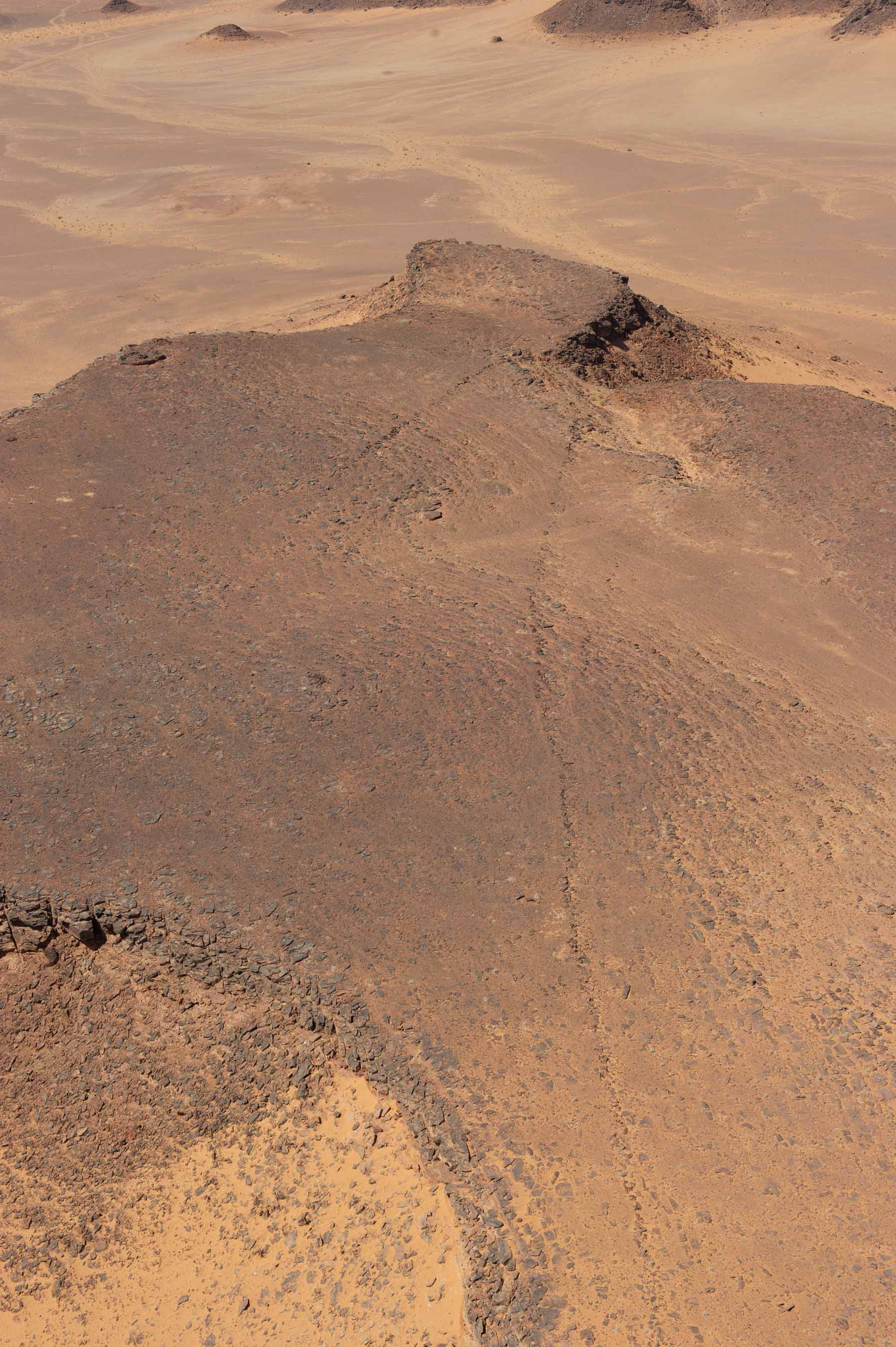
In Saudi Arabia, Rebecca Repper from the team of the University of Western Australia, Aerial Archaeology in the Kingdom of Saudi Arabia – Al Ula, discovered 207 previously unknown kites in AlUla County. These are concentrated particularly in the Harrat ‚Uwayrid area, a highland featuring an extinct volcano. The team found that a specific type of V-shaped kite was the dominant form in their study area, in contrast to kites found elsewhere in the region. Kites have been described in a variety of shapes, including V, “sock”, “hatchet” and W-shaped.
Regardless of shape, all kites in the region have drive lines made of low stone walls that converge to guide animals toward a trap – such as a pit or a cliff edge. On average, the drive lines of AlUla kites are approximately 200 m long. Elsewhere, however, they can extend for kilometres. Ms Repper says that the shorter length reflects the local knowledge of the hunters, who placed the traps in areas where existing landscapes naturally restricted animal movement. The placement of the kites also suggests that the hunters had an intimate knowledge of prey movements.
While kites recorded in the AlUla region tended to drive prey toward a sudden drop, kites elsewhere often end in concealed pits, where hundreds of animals could be killed in a single hunt. This difference may represent an adaptation to local geography or an evolution of trap hunting.