Africa's Giraffes: One Species Becomes Four
A new scientific analysis by the International Union for Conservation of Nature (IUCN) has fundamentally changed the long-held assumption that there is a single giraffe species in Africa. Instead, four distinct giraffe species have been identified — each with its own threat profile and range.

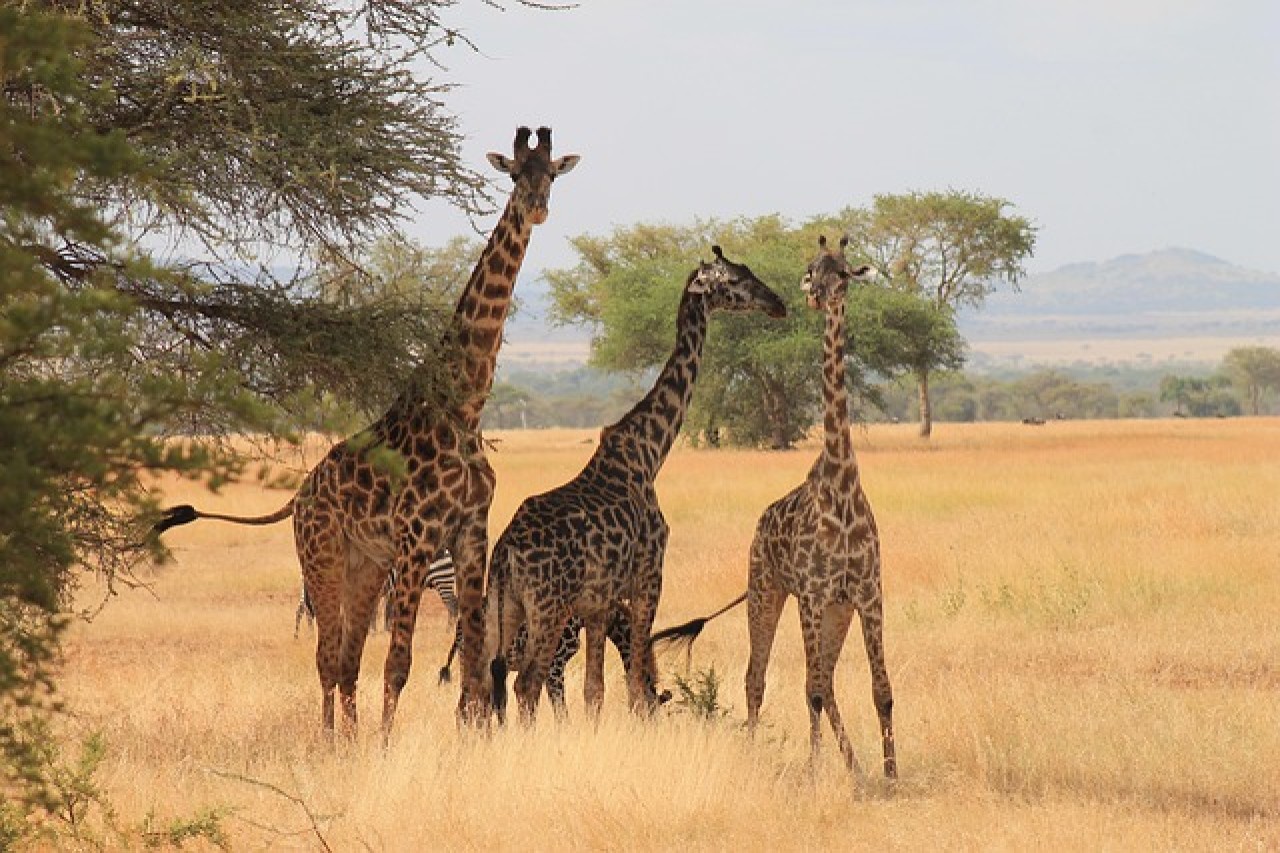
Based on genetic analyses and anatomical features such as skull shape and ossified “horns” — known as ossicones — the giraffe in Africa has been divided into the following species:
- Northern giraffe
- Reticulated giraffe
- Masai giraffe
- Southern giraffe
This differentiation is not merely a guiding contribution to science — it is a wake-up call for species conservation: each species faces individual threats and requires tailored protective measures.
Overview of the threat situation
- Northern giraffe: With only around 7’000 individuals, it is the most critically endangered species. Its survival is massively threatened by political instability, trophy hunting and poaching, particularly in regions such as the Democratic Republic of Congo, South Sudan and the Central African Republic.
- Masai giraffe: Approximately 44’000 individuals remain in eastern Africa. The loss of their habitat through the conversion of savannahs into grazing land for livestock represents the greatest challenge.
- Reticulated giraffe: Just over 21’000 individuals still live in the wild. Their distinctive mosaic coat with clearly defined, white-bordered patches makes them unmistakable.
- Southern giraffe: With around 69’000 individuals, it is the numerically dominant species in Africa — though this too offers no guarantee of a secure future.
Causes of the shift in giraffe research
The new classification is based on genomic analyses encompassing over 2’000 samples from two decades of research — a remarkable scientific achievement. Advances in genome sequencing reduced costs from previously thousands of dollars to approximately 100 dollars per sample, making this study possible in the first place.
Uniform strategies are no longer sufficient — the newly discovered species diversity means that species- and region-specific conservation programmes are more urgent than ever. Only in this way can targeted measures be taken that address the respective challenges.
The reclassification of giraffes into four species represents a milestone not only in zoological systematics, but also in nature conservation. It demonstrates compellingly: without precise knowledge of their biology and threats, we cannot protect them effectively. It is now up to policymakers, researchers and conservation organisations to act decisively on this basis — before it is too late.