African Elephants: 77% Decline in 50 Years
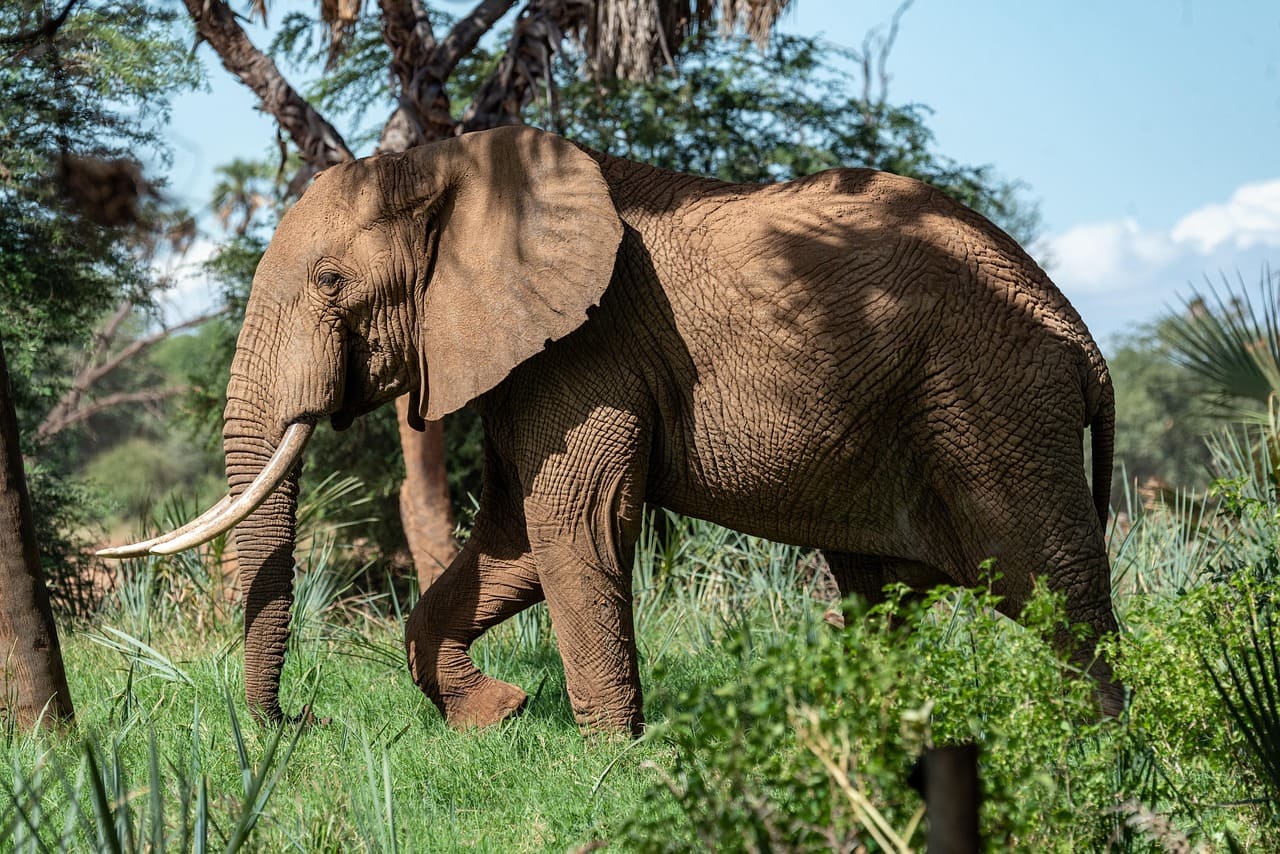
African elephants are majestic creatures that have roamed the earth for thousands of years. However, recent decades have not been kind to these gentle giants. Recent findings show that the population of African elephants has declined drastically over the past 53 years due to habitat loss and poaching.

The extensive study on elephants and their habitats incorporated data from population surveys conducted between 1964 and 2016. The data encompassed survey results from no fewer than 475 sites across 37 countries — the most comprehensive assessment of African elephants ever undertaken.
The conclusions were stark: forest elephant numbers declined by a staggering 90%, while savanna elephant populations decreased by an average of 70%. Perhaps most alarming of all, the combined elephant population declined by an average of 77%.
Conservation wins
But it is not all doom and gloom. The study also identifies a silver lining amid the crisis. Not all populations were lost. Some even thrived, offering valuable lessons for future conservation efforts.
The study was led by George Wittemyer, a professor at Colorado State University who also serves as chairman of the scientific advisory board of Save the Elephants.
«The context and solutions at different sites can vary greatly, but there are examples where people are effectively managing and protecting these populations,» said Wittemyer.
«It is helpful to have a context-specific model for elephant conservation, and we have that in many different places.»
Elephant density
The study adopted a different approach. Rather than counting the sheer number of elephants, the researchers analyzed elephant density within their habitats.
This was primarily due to the fact that the survey areas were inconsistent across most sites over time. The results showed a clear trend toward smaller populations.
«This work shows the scale of the decline and how widespread it is across the entire continent,» said Wittemyer.
He said that the research underscores how even such prominent and conspicuous creatures as elephants can quickly vanish into thin air.
The challenge of counting elephants
Counting elephants in their habitat may seem like a simple task: they are large, right? Yet the reality is far from it. It is a difficult and resource-intensive process. The monitoring of endangered wildlife remains one of the greatest challenges in species conservation.
For example, observers must count savanna elephants from aircraft, while forest elephants must be counted on foot.
Can we use drones to count elephants? That is not an option either. They lack the necessary battery life to cover the required long flights over remote areas. Furthermore, processing drone imagery consumes a great deal of resources.
Africa is vast — more than three times the size of the United States — and every African country has its own policies and political system for wildlife management. In some countries, surveys are conducted regularly; in others, they are not.
The authors of the study had to draw on sites with solid information in order to estimate population changes for nearby regions with less data.
Elephants and their habitats
«The strength of our approach is that we were able to derive these trends even in places with extremely poor data availability in a way that allowed the results of individual survey sites to be compared with one another,» said co-author Charles Edwards, researcher at CEscape Consulting Services.
Understanding how and where trends differ within a species’ range is arguably more important for its conservation than an overall change in abundance, which may only reflect changes in the largest populations.
Elephant decline across different regions
The study also examined how elephants developed by species and region. In the Sahel zone of North Africa, which has been ravaged by wars, elephant populations have been nearly wiped out.
A decline was also recorded in East and Central Africa, attributed to ivory poaching and the encroachment of humans into habitats, which has displaced elephants.
However, some places in southern Africa, particularly Botswana, are a beacon of hope, as elephants are thriving there. These populations have been well protected and sustainably managed.
Conserving Elephants and Their Habitats
Wittemyer highlighted the general decline in elephant populations but stressed that the focus must be on ensuring the long-term stability of elephant species. He pointed out that this is possible in several locations, though unfortunately not everywhere.
The study, titled «Survey based inference of continental African elephant decline», also involved Kathleen Gobush (University of Washington), Fiona Maisels (Wildlife Conservation Society and University of Stirling), Dave Balfour (Nelson Mandela University) and Russell Taylor (WWF Namibia) as co-authors.
The comprehensive assessment of the plight of African elephants in the study provides important insights for management decisions such as the prioritization of funding and resources to best ensure habitat protection for these magnificent animals.