Limburg: killing of town pigeons halted
The relocation of the 200 pigeons to Gut Aiderbichl never came about. The killing was ultimately halted by species protection law.
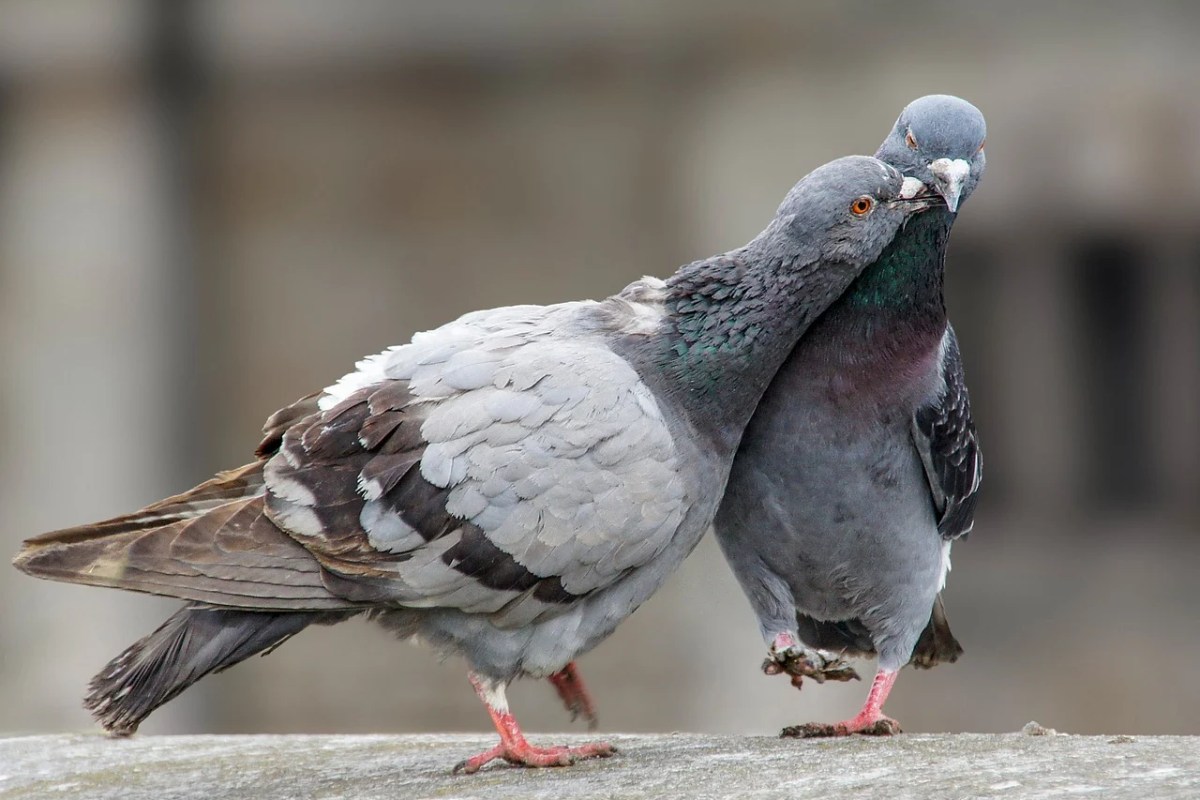
For months the debate over the killing of pigeons in the town of Limburg (Germany) has been simmering – now 200 of the birds are to be saved.
“The animal rescuers from Gut Aiderbichl will collect the pigeons in Limburg and transport them to the Upper Palatinate,” explained Dieter Ehrengruber, managing director of Gut Aiderbichl, an animal welfare organisation based in Austria.
According to its own information, Gut Aiderbichl Eslarn offers pigeons in need one of the largest sanctuaries in Europe. “Two large aviaries already provide shelter for 3,000 pigeons,” it said.
In a citizens' referendum in June, a majority of Limburg residents voted in favour of implementing a corresponding city council resolution to kill the pigeons. The proposal under discussion was to stun the pigeons and kill them by breaking their necks. Killing as population control is not a sustainable solution.
Population of 300 pigeons desired
The city council had decided to forgo setting up pigeon lofts for birth control of the birds. Such facilities are therefore only possible through the initiative of institutions or private individuals.
Some time ago a count found that there were around 700 pigeons in Limburg. The stated aim, according to the town hall most recently, is a population of around 300 animals. By that calculation, a further 200 pigeons would have to be killed. A city spokeswoman said that the public order office carried out another count in September.
New figures planned for publication
There are no reliable figures so far; publication is planned before the end of this year. The issue would then have to be pursued further on the basis of the new figures.
“We regret that the decision turned out this way and that our sustainable solution with supervised pigeon lofts will not be implemented,” Ehrengruber of Gut Aiderbichl said in response. “Nevertheless, we stand by our word and will take in the 200 pigeons to avert their killing.” He did point out, however, that the rescue in Limburg is a one-off and that it will not permanently solve the pigeon overpopulation there.
Update: Limburg abandons plan to kill the city pigeons (as of October 2026)
The relocation of 200 pigeons to Gut Aiderbichl announced in this article did not go ahead. In February 2025 the city declared that catching the birds was more expensive than budgeted and wanted to put the killing out to tender again (Limburg: Rescued city pigeons still face death). At the end of March 2025 the Hesse environment ministry revoked a 2022 decree under which city pigeons were not considered wild animals. As a result, the city needed a species-protection exemption permit for catching and killing them. It did not award the contract for the planned start on 22 April 2025.
On 30 June 2025 the lower nature conservation authority of the district of Limburg-Weilburg rejected the exemption permit. Considerable damage to the public economy, which could justify an exemption under the Federal Species Protection Ordinance, had not been sufficiently demonstrated. At the beginning of September 2025 the city waived an appeal because it saw no prospect of success. It still regards the pigeons as pests in certain parts of the town centre, but says it sees no room for action without changes to laws and ordinances. Two objections from private individuals were still pending at that point. A count in September 2024 had found around 470 pigeons.
Zurich shows how it can be done without killing: there, the city parliament instructed the city council in September 2026 to prepare the expansion of supervised pigeon lofts (Zurich decides to expand pigeon lofts instead of culling). More on animal rights.
More on the subject of recreational hunting: What the research says about this is shown by Hunting fact-checked: the state of research.
The position of IG Wild beim Wild: IG Wild beim Wild rejects recreational hunting. Our model is the canton of Geneva, which has managed without recreational hunting since 1974: without hunting seasons, without hunting dogs, without driven hunts, without high seats, without the animal cruelty and crime that go hand in hand with hunting season elsewhere. What has worked there for over fifty years disproves every position paper by JagdSchweiz. An association that bases its policy on claims it refutes in its own documents is not a professional organisation, but a factory for misinformation.
Wild animals need a voice
Once a week: research, petitions and background information on recreational hunting. Free of charge and can be unsubscribed from at any time.

All articles are written by IG Wild beim Wild as well as by external co-authors. Research, structuring and editorial processes may be supported by AI-assisted tools.
Support our work
With your donation you help protect animals and give their voice a hearing.
Donate now →