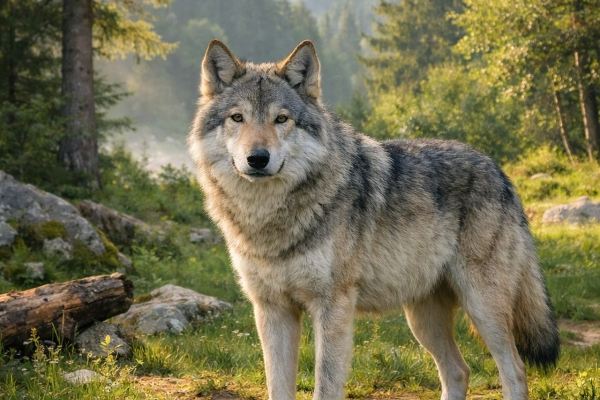
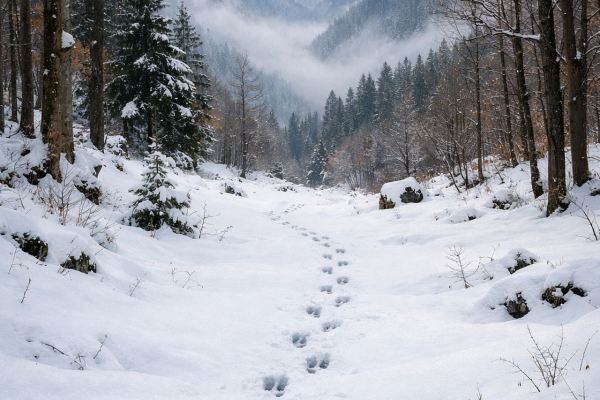
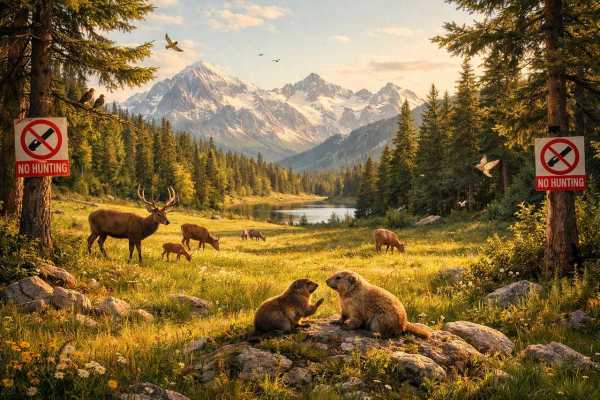
How many wolves are there in Switzerland?
In the monitoring year 2025/26, 43 confirmed wolf packs were counted in Switzerland – two more than the previous year.

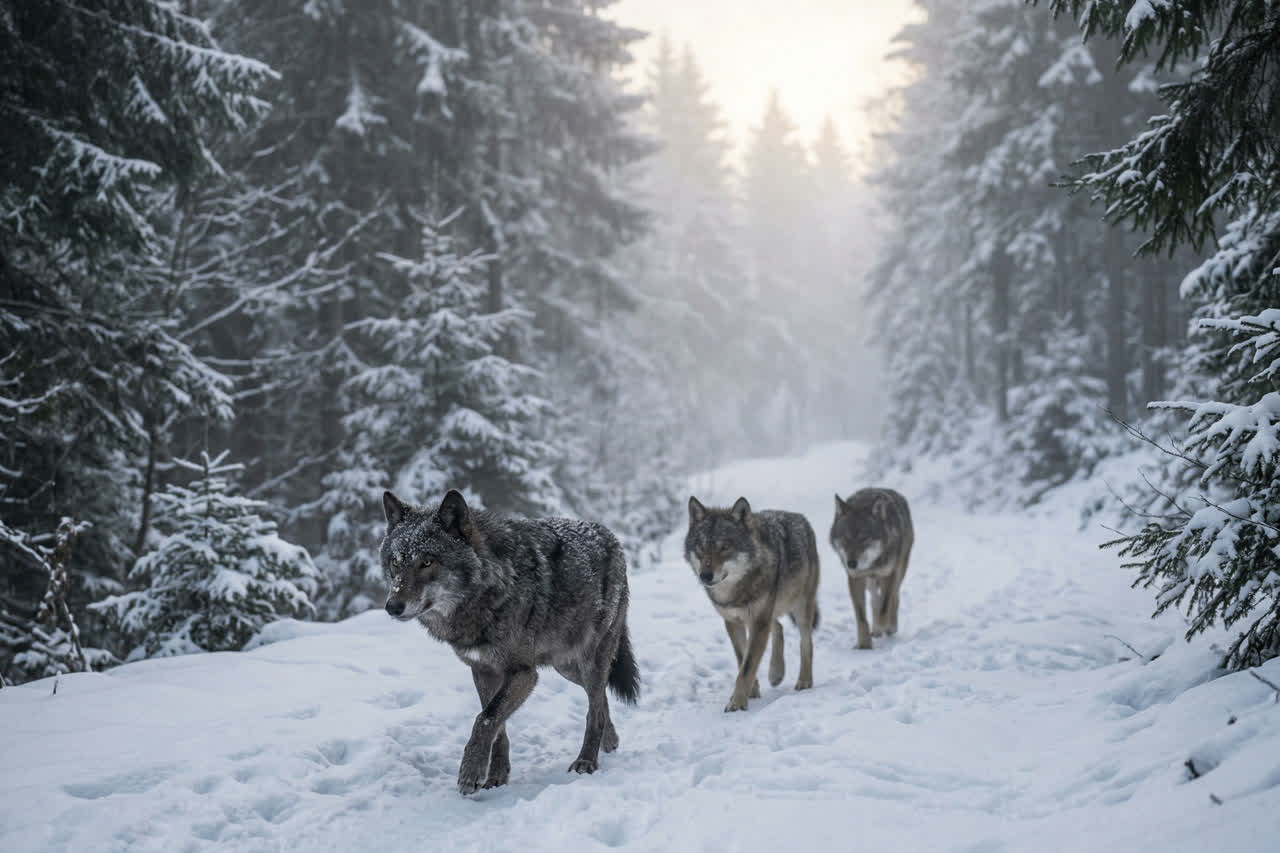
Of these, 32 packs live entirely in Switzerland, eleven also use areas in neighbouring countries.
The total number of wolves is estimated at several hundred animals. Thus Switzerland has rebuilt a significant wolf population after decades of eradication – while simultaneously facing massive political pressure to drastically reduce this population.
The return of the wolf: History since 1995
The wolf had been exterminated in Switzerland since the end of the 19th century. In 1995, the first animal migrated from the Apennine Mountains across the border: 'M1', a young male, was documented in Valais – the first confirmed specimen in over 100 years. Initially, the animals remained solitary. Only in 2012 was the first wolf pack formed at Calanda – the mountain range between Graubünden and St. Gallen – since extermination. The Calanda pack became a pilot case: it lived in immediate proximity to settlements and alpine pastures and demonstrated that humans and wolves can coexist under certain conditions. Livestock protection programs that began at that time significantly reduced kills. Between 2012 and 2020, the population grew slowly. From 2021 onwards, growth accelerated sharply: the number of packs doubled within two years.
How are wolves counted in Switzerland? The KORA monitoring methods
The KORA Foundation – Carnivore Ecology and Wildlife Management is responsible for wolf monitoring in Switzerland. KORA operates a Switzerland-wide network of monitoring instruments:
- Camera traps (wildlife cameras): Thousands of automatically triggered cameras in known wolf areas provide photographic evidence. Individuals can be distinguished based on fur patterns and physical characteristics.
- DNA analyses: Scat samples, urine and hair samples are genetically analyzed at the University of Lausanne. Each wolf has a unique genetic profile that allows for individualization. This also captures animals that do not appear on camera.
- Kill assessments: Every reported livestock kill is examined by trained wildlife wardens. Bite patterns, feeding behavior and tracks allow conclusions about the species responsible.
- Telemetry: Individual wolves are equipped with GPS collars to document territories, migration movements and pack affiliation.
- Visual observations: Reports from farmers, hikers and professional hunters are systematically recorded and evaluated.
Since wolves ignore cantonal borders and have large territories, cross-border packs are counted as proportional packs in statistics. The dossier 'Wolf in Switzerland' shows the current distribution and pack map.
Current numbers: Packs, cubs, cantonal distribution
In the monitoring year 2025/26, KORA – Carnivore Ecology and Wildlife Management documented 43 confirmed wolf packs with a total of 148 observed cubs. The highest wolf density exists in the Alpine cantons:
- Graubünden: The wolf-richest canton with around one-third of all packs. The Calanda pack and numerous successor populations have become established.
- Valais: Heavily populated, but politically most aggressive toward wolves. Authorities regularly approve large-scale culls.
- Ticino, Uri, Bern, Glarus: Increasing wolf presence. Individual animals and new packs are expanding.
- Midlands and Jura: Individual wolves passing through, no established packs yet.
The Calanda pack: Pioneer and model
The Calanda pack is considered the most important Swiss wolf research project. Since 2012, it has lived on the mountain range between Chur and the Rhine Valley. Over 1,500 sheep were pastured on Calanda Alp – with consistent livestock protection, annual kills could be reduced to under 40 animals over five years. The pack demonstrated that coexistence is possible when livestock protection is consistently implemented from the beginning. The dossier 'Livestock Protection' documents the details of these experiences.
How many wolves have been shot?
In the 2024/25 regulation period, 92 wolves were preventively shot before major damage had occurred – a new dimension of state wolf hunting. The FOEN had approved culls of around 125 animals. In the 2025/26 season, according to SRF, 89 wolves were killed; Graubünden (35) and Valais (24) led the statistics. Following the 2024/25 regulation, pack numbers shrank from 41 to 36 – a decline that has alarmed conservation organizations.
Impact of regulation on pack structure
The shooting of alpha animals – the alpha pair of a pack – has far-reaching consequences. Without experienced leaders, packs lose their territoriality and can split into smaller, harder-to-control groups. Younger animals without social integration are more risk-prone and more likely to kill unprotected livestock. Paradoxically, regulation can thus increase the damage it is supposed to prevent – an effect confirmed by researchers. The 'Forest-Wildlife Conflict' dossier places this dynamic in the broader context.
Bern Convention and wolf protection status
The wolf is protected in Europe under the 1979 Bern Convention – an internationally binding agreement that Switzerland has ratified. At EU level, the wolf is under strict protection of the Habitats Directive (Annex IV). Culls are only permitted under strict conditions: when other reasonable solutions have been exhausted and when the favorable conservation status of the population is guaranteed. Switzerland's regulation practice operates at the edge of what is internationally permissible. In November 2024, the Standing Committee of the Bern Convention decided to downgrade protection status – a politically motivated step that was sharply criticized by conservation organizations.
The political debate: Regazzi, Rösti and wolf policy
In Swiss wolf policy, two camps face each other. Federal Councillor Albert Rösti (SVP, DETEC) advocates for generous regulation practices and has helped shape the legal foundations for preventive culls. Centre Party National Councillor Fabio Regazzi also pushes for easier culls and represents the agricultural lobby. On the other side stand organizations like Gruppe Wolf Schweiz, Pro Natura and WWF, which focus on herd protection and criticize regulation practices as incompatible with the wolf's protection status. Federal Court decisions overturned individual cull orders in 2025, setting clear legal boundaries.
Does regulation endanger the wolf population?
The FOEN emphasizes that the population must not be endangered. However, conservation organizations point out that approval practices are becoming increasingly generous and undermine the goal of a stable population. When 89 to 92 animals are shot annually while only 148 cubs are documented, the reproduction rate is barely sufficient to compensate for losses. Poaching and traffic accidents add further mortality factors. The question is not how many wolves exist today – but how many will remain in ten years if current practices continue.
Further content on wildbeimwild.com
- Dossier: Wolf in Switzerland
- Dossier: Herd protection
- Dossier: Forest-Wildlife Conflict
- Dossier: Hunting myths
- Dossier: Swiss hunting law
- Dossier: The lynx in Switzerland
Find more background on current hunting policy in Switzerland in our dossier on wildbeimwild.com.
Support our work
With your donation you help protect animals and give voice to their cause.
Donate now →