How the Environment Arena Spreitenbach legitimizes animal cruelty
In Spreitenbach AG, the conflict over the planned hunting fair at the Environment Arena is increasingly becoming a case study on how institutions shift responsibility.

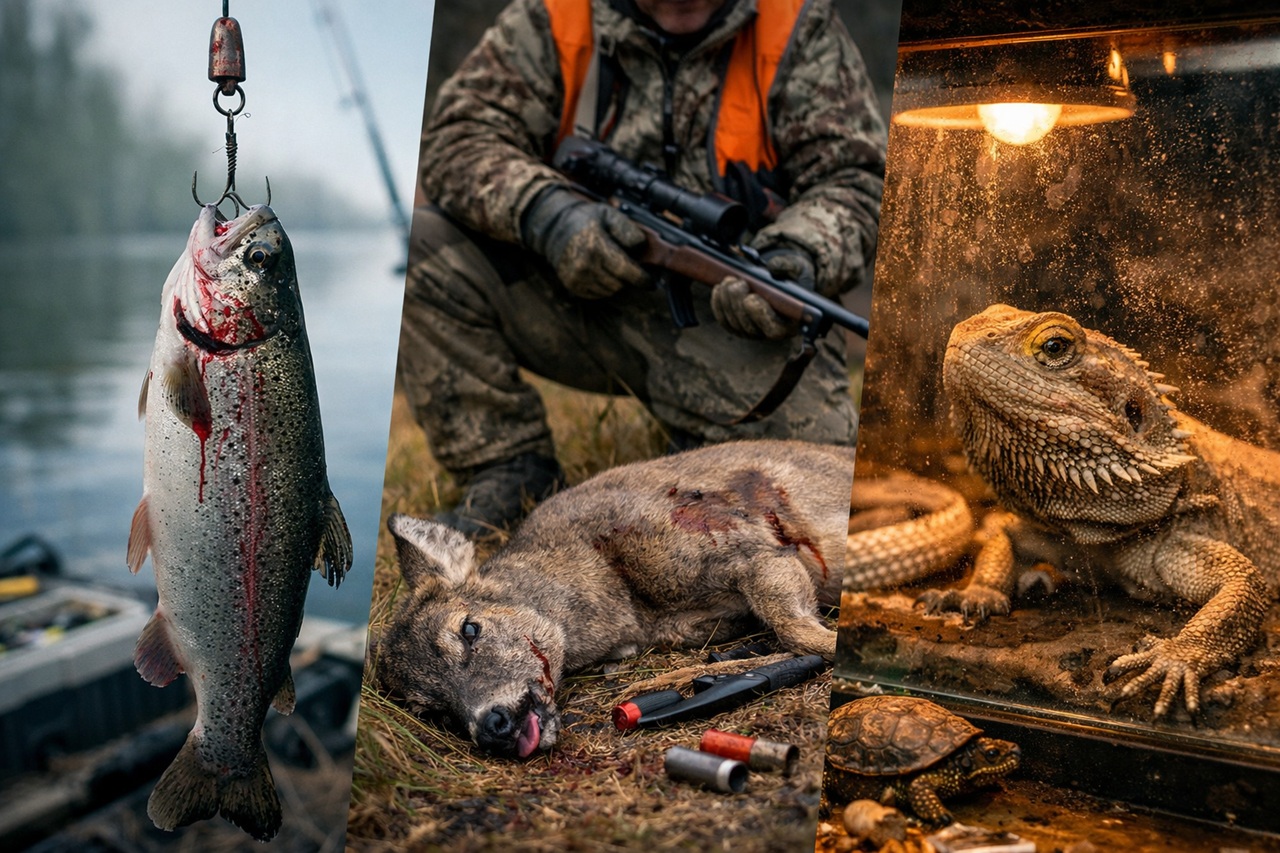
The trigger was a petition against «Animal cruelty at the Environment Arena Spreitenbach», which is directed not only against the recreational hunting fair but explicitly also against the associated expo worlds such as sport fishing and terrarium keeping.
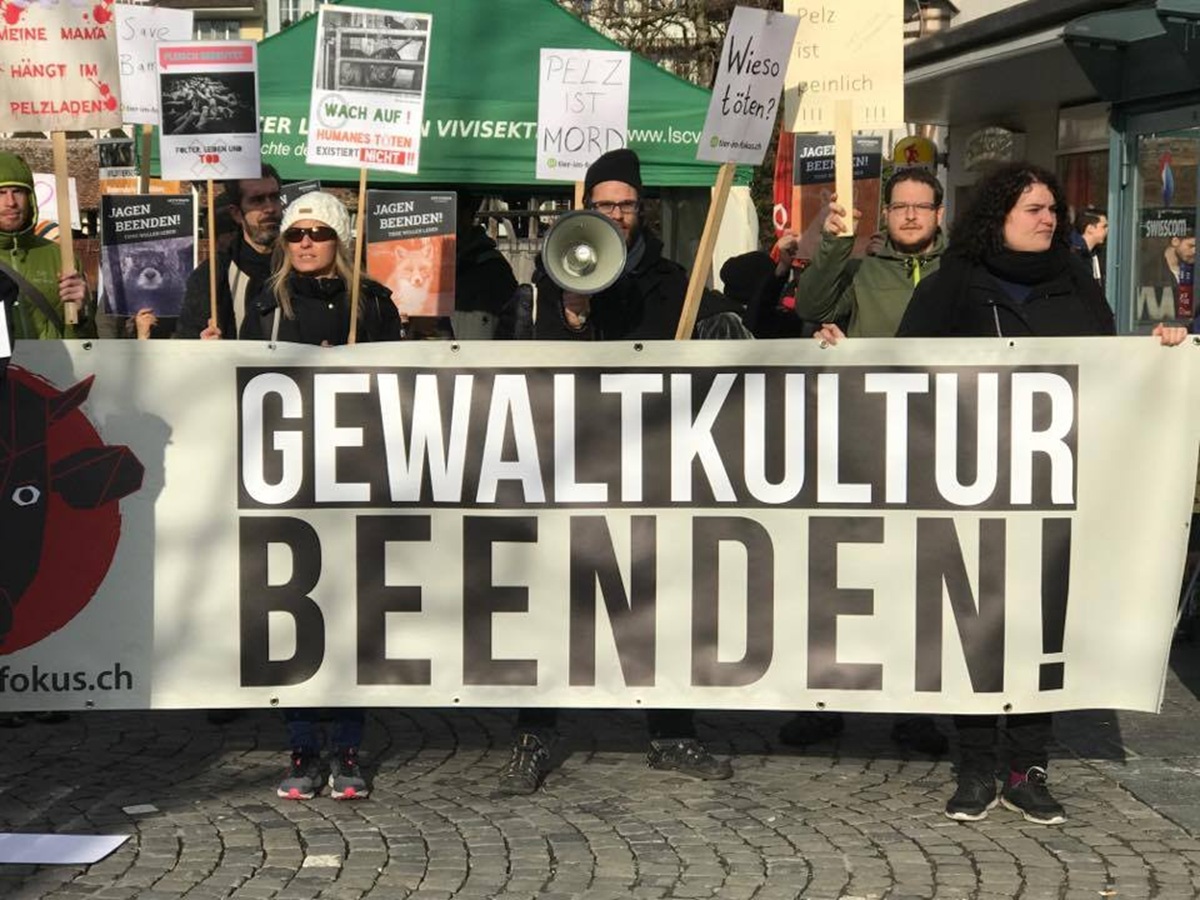
Within a short time, according to reporting by nau.ch, around 850 protest emails reached the municipality. The municipal council responded with criminal charges. According to administrative director Patrick Geissmann, regular administrative operations were significantly impaired by the flood of emails; the charges were not directed against the content, but against the form and frequency of contact.
According to IG Wild beim Wild, it is technically straightforward for any administration to filter or disable emails by sender, domain, provider or other criteria. A large number of similar submissions therefore does not constitute an unsolvable interference with administrative operations, but belongs to today's standard handling of digital citizen communication. Any citizen can accomplish this with a few mouse clicks on their own PC.
This puts administrative logic in the foreground, while substantive criticism of the trade fair profile is excluded. Precisely this gap is politically explosive: An event takes place on municipal territory that presents animal exploitation as leisure and consumption, yet the visible reaction is directed primarily against the protest. That a municipality can often legally control only through permits, conditions, safety, traffic and order, but not through ethical evaluation, explains the formal restraint. However, it does not explain why the threshold for criminalizing protest is reached faster than the threshold for public debate about animal suffering.
Such reactions evade immediate responsibility and are not infrequently sanctioned by the population only at a later time at electoral events.
The dispute becomes additionally sharper because it is not 'just' about recreational hunting. Anyone examining the programs of the Umwelt Arena sees regularly a thematic framework: recreational hunting, sport fishing and terraristics are staged as legitimate leisure worlds.The petition and the accompanying research by wildbeimwild.com question precisely this framework and identify the Umwelt Arena as a hub of a format that translates violence and exploitation of animals into event logic.

Particularly problematic is terraristics. Swiss Animal Protection STS, based on a survey on reptile keeping and projections, concludes that over 60,000 animal-abusive and thus punishable reptile holdings must be assumed nationwide. This figure is not a smokescreen, but context: terraristics is not a 'hobby like any other,' but an area with systemic abuses where legal minimum requirements are often not met.
 Wild beim Wild
And then comes the sentence that marks the moral zero point.Managing Director Ivan Skender is quoted as saying: 'The Arena does not see itself as a moral authority, but as a place of discourse and opinion formation.'
This formula sounds like openness, but in practice is an abdication of responsibility. An institution that carries sustainability and environmental education as its brand actively decides which content it rents, promotes and legitimizes. This is not neutral. Anyone who enables recreational hunting, sport fishing and terraristics as a trade fair experience creates a framework that normalizes and commercializes animal suffering. 'Discourse' becomes a shield behind which ethical evaluation is outsourced, even though precisely this evaluation is the core of the social conflict.
Furthermore, the municipality emphasizes that it was neither the organizer nor had issued a permit. A point that from their perspective is misleadingly portrayed in the petition.
Municipalities have indirect leverage if they choose to use it. For example, through strict examination of permits and conditions, advertising and poster permits in public spaces, traffic concepts, safety requirements, animal welfare and food regulations for animal products, as well as cooperation with police and cantonal authorities. These instruments are real and were not misleadingly portrayed in the petition.
For animal welfare specifically, this means: The municipality can require in its event permit that for an event involving animals, cantonal registration has occurred and all regulations are being followed. The enforcement of animal welfare regulations themselves then lies with the responsible cantonal specialist offices, but the municipality can create pressure 'up front' through permit conditions to ensure things run properly.
The IG Wild beim Wild fulfills its journalistic and civil society role here by making abuses visible and initiating debates, while the signals coming from Spreitenbach for years show how institutional decisions systematically marginalize animal welfare instead of seriously addressing it.
The Spreitenbach case thus shows less a dispute over individual emails, but rather a structural pattern: Protest is problematized as disruption, while the normalization of animal abuse as an event format is considered a legitimate 'marketplace of opinions.'
An Umwelt Arena that declares itself not responsible, and a municipality that responds to protest legally, together produce a signal that extends far beyond Spreitenbach.
Further information: