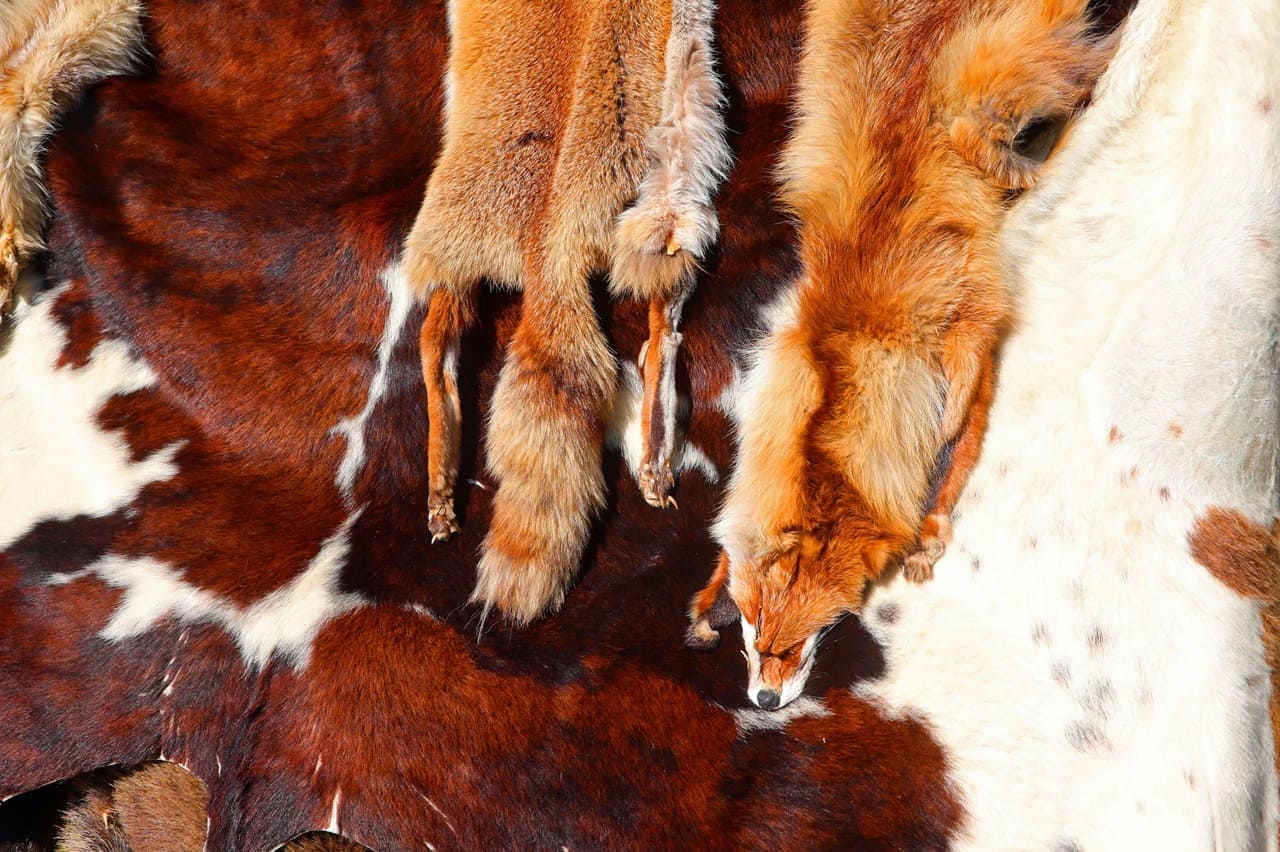
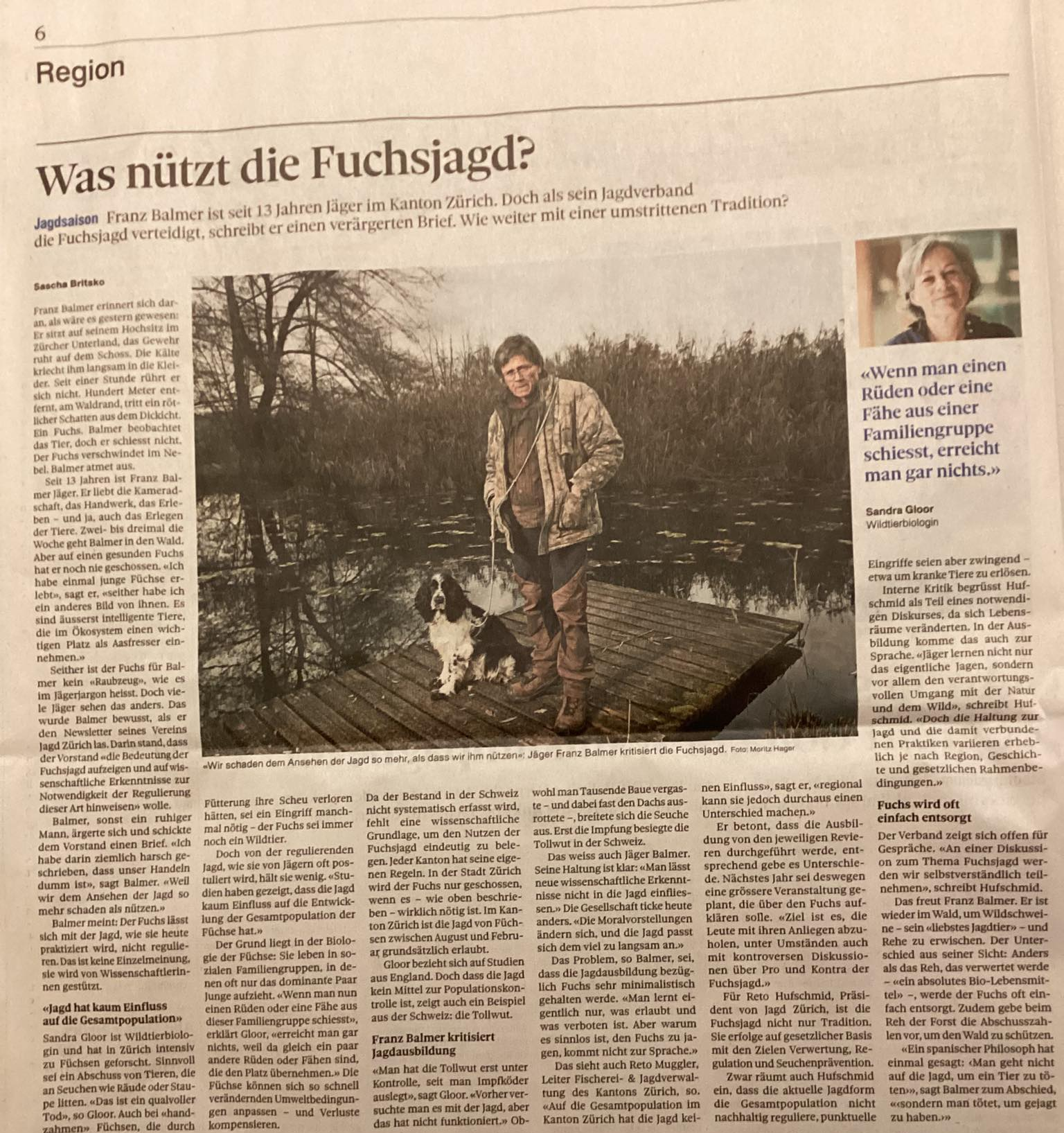
Hobby hunter Franz Balmer on the pointless fox hunt
What is the point of fox hunting? An old reflex meets new facts.

The scene repeats itself practically every day: hobby hunters set out at dawn to shoot foxes.
The justification given for decades is that the population must be regulated, wildlife diseases controlled, and ground-nesting birds protected. But what remains when these arguments are examined against current scientific knowledge?
The red fox is one of the most successful mammals in Europe. It lives in forests, in agricultural landscapes, and long since in cities as well. Studies from several countries show that fox populations are determined primarily by food availability, territory availability, and disease — not by hunting intensity. When animals are shot, foxes respond with larger litter sizes, earlier sexual maturity, and increased immigration from surrounding areas.
Recreational hunting thus triggers precisely the opposite of what it claims to achieve: it stabilises or increases populations rather than reducing them in the long term. This is biologically well understood, yet politically inconvenient for hunting policy.
The case of Franz Balmer illustrates just how fragile the arguments of the hunting lobby have become. He has been a hobby hunter in the canton of Zurich for 13 years and knows the practice of fox hunting from his own experience.
When his hunting association defended fox hunting in a newsletter using the usual buzzwords, Balmer picked up his pen and wrote an angry letter to the editors. He criticized the association for clinging to outdated claims and ignoring scientific findings. Rather than engaging in an open discussion about the merits and absurdities of fox hunting, tradition is being defended at all costs.
His criticism is supported in the same article by wildlife biologist Sandra Gloor, who clearly states that shooting a male or female from a family group brings “absolutely nothing.” If even long-standing hobby hunters and experts reach this conclusion, it demonstrates how urgently an honest reassessment of fox hunting is needed. The comments below the article from the Tages-Anzeiger are also very illuminating.
Interference in complex social structures
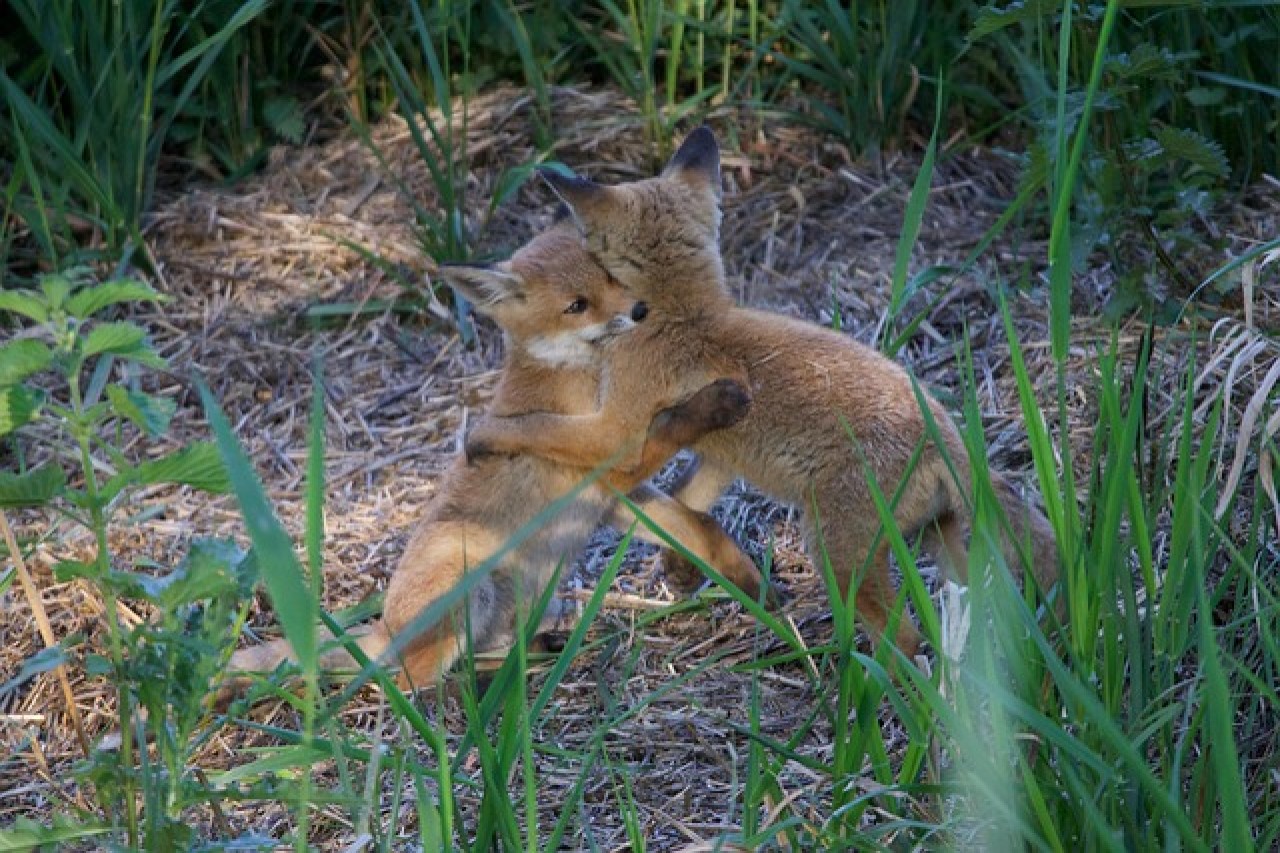
Foxes do not live as chaotic loners, but in family groups with a clear hierarchy. When a parent animal or a high-ranking individual is shot from such a group, the social structure collapses. What remains are inexperienced young animals that use larger home ranges, approach settlements more frequently, and take greater risks in their search for food.
It is precisely these young animals that are more likely to scout out chicken coops or raid compost heaps. From a conflict management perspective, it is therefore counterproductive to shoot into functioning family groups. Doing so exacerbates the very problems one claims to be solving.
Rabies, fox tapeworm, and other bogeymen
Fear of disease is still invoked as a justification. Historically, rabies was of great significance, but in Switzerland it was not eliminated by gun barrels, but by oral vaccination programmes. Hunting alone was never able to stop the epidemic.
The situation is similar with the fox tapeworm: the parasite is controlled primarily through hygiene measures, public education, and targeted surveillance. Widespread fox hunting never captures all potential carriers, while the population simultaneously grows back through compensatory reproduction. Hunting offers little benefit to human health, yet causes a great deal of animal suffering.
Protection of ground-nesting birds – a spurious argument
When meadow-nesting birds, grey partridges, or hares disappear, the fox makes a convenient scapegoat. Experts have long since established beyond doubt, however, that the decisive factor is the destruction of their habitats: intensively managed land, pesticides, early mowing, drainage, and monoculture farming.
Even studies with close ties to hunting conclude that the hunting of predatory wildlife has at best locally and only briefly measurable effects on individual species. Without fundamental changes in agriculture and spatial planning, these effects remain meaningless. Instead of combating foxes, one would need to plant hedgerows, restore wetlands, adjust mowing schedules and reduce pesticides.
Ethics Instead of Folklore
Fox hunting is frequently defended with tradition. Yet tradition does not automatically justify suffering. Earth hunting, driven hunts and nocturnal stalking mean stress, fear and often a slow death for the animals through missed shots or tracking. Fox pelts find hardly any buyers, and many killed animals are disposed of.
This raises a fundamental question: Is it permissible to shoot a highly social wild animal out of pure habit and leisure activity when the claimed practical necessities are scientifically untenable?
What Would Actually Help
Those who genuinely want to reduce conflicts with foxes have effective and animal welfare-compliant options:
- Equip chicken coops and small animal enclosures with fox-proof fencing and enclosed night quarters
- Secure waste, compost and animal feed so that they do not serve as a free buffet
- Train cities and municipalities in dealing with wildlife rather than reaching for the rifle
- Fund monitoring, research and public education instead of celebrating hunting tallies
Such measures are more sustainable, more predictable and more easily communicated to society than winter shooting campaigns.
Time for a Change of Direction
The question “What is the use of fox hunting?” can be answered soberly: it serves primarily to uphold a self-image within hunting culture. Its contribution to ecology, species conservation, public health and agriculture is marginal or even negative.
At a time when biodiversity is declining dramatically and humanity’s relationship with nature is being renegotiated, traditional fox hunting appears as a relic from another era. Those who genuinely wish to take responsibility should have the courage to abandon ineffective rituals.
The future belongs to an approach to wildlife that places knowledge, ethics and respect for fellow creatures at its center. For the fox, this would mean: protection of its habitats, conflict prevention instead of culling, and the acknowledgement that we must live with it, not against it.
Dossiers: Fox in Switzerland: Most Hunted Predator Without a Lobby | Fox Hunting Without Facts: How JagdSchweiz Invents Problems
- Scientific Literature: Studies on the Red Fox
- Hunters Spread Diseases: Study
- Hunting Promotes Diseases: Study
- Hobby Hunters in Criminal Activity: The List
- A Ban on Pointless Fox Hunting Is Long Overdue: Article
- Luxembourg Extends Fox Hunting Ban: Article
- Small Game Hunting and Wildlife Diseases: Article
- Deterrence of Wildlife: Article