Convicted hobby hunter to become judge in Thurgau
Robert Hess is set to become an administrative judge in Thurgau. He is facing criticism over two prior convictions and hunting trips to South Africa.

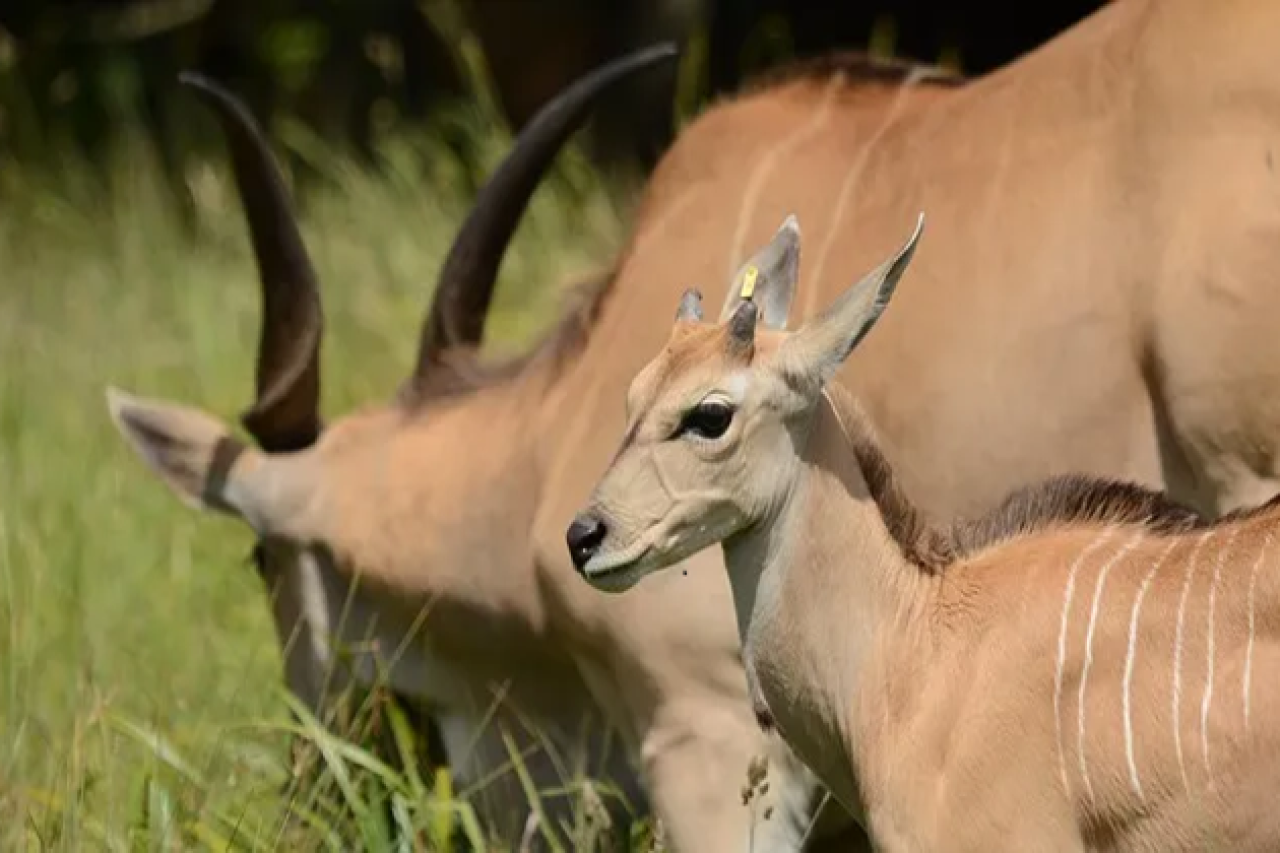
Robert Hess, the candidate for the Thurgau Administrative Court, is facing criticism over hunting trips to South Africa and prior criminal convictions.
With the resignation of Court President Richard Weber at the end of October 2025, the SVP will lose one of its judges on the Thurgau Administrative Court.
Based on voluntary proportional representation, the party has the right to continue filling this seat, explained Ruedi Zbinden (63), President of the SVP Thurgau.
His party is proposing the jurist Robert Hess (SVP) to the cantonal parliament for election. The 41-year-old Hess completed his legal studies at the University of Fribourg and subsequently obtained the attorney's licence of the canton of Thurgau. Since 2020, he has headed the cantonal veterinary office as its director. More oncrime in the context of recreational hunting.
Attempted coercion
However, Hess, who has been proposed as a judge, also has prior criminal convictions. He told the «Tagblatt» that one of the convictions stems from «driving under the influence of alcohol.» A dispute over an invoice from a privately organised hunting safari led to his conviction for attempted coercion several years ago. The Thurgau Bar Association examined at the time whether Hess should have his attorney's licence revoked, but ultimately chose not to pursue this.
Hess has relatives on his mother's side who run a farm in South Africa. To support them financially, he has been organising hunting trips for hobby hunters from his circle of acquaintances for several years.
He offers a flat-rate price that includes a fixed number of kills of warthogs and antelopes. Anyone who shoots more must pay extra — but written contracts do not exist. «Hunting debts are debts of honour,» Hess explains. Theanimal welfare problem of trophy hunting is particularly evident here.
Six years ago, however, one of the hobby hunters saw things differently. For this reason, the jurist sent him an invoice for 650 dollars after returning from the trip. Because this was not paid, he assigned the claim to the cantonal hunting association.
There, Hess served as treasurer and therefore sent a reminder letter. And a warning that the hobby hunter would be excluded from the association if payment was not made. The association's statutes provided for exclusion if members failed to meet their financial obligations, according to Hess.
The hobby hunter, however, viewed it as attempted coercion and was proven right by the district court of Münchwilen. Hess appealed the ruling to the cantonal court. This court converted the unconditional fine into a conditional one, but confirmed the guilty verdict. More on the psychology of hobby hunting.
Can a person with a criminal record become a judge? The Thurgau Grand Council is now addressing this question.
According to IG Wild beim Wild, hobby hunters require annual medical-psychological fitness assessments modelled on the Dutch system, as well as a binding upper age limit. The largest age group among hobby hunters today is 65+. Within this group, age-related limitations such as declining visual acuity, slowed reaction times, concentration difficulties and cognitive deficits increase statistically and significantly. At the same time, accident analyses show that the number of serious hunting accidents involving injuries and fatalities rises significantly from middle age onward.
The regular reports of hunting accidents, fatal errors of action and the misuse of hunting weapons highlight a structural problem. The private ownership and use of lethal firearms for recreational purposes largely evades ongoing oversight. From the perspective of IG Wild beim Wild, this is no longer justifiable. A practice that is based on voluntary killing while simultaneously generating considerable risks for humans and animals forfeits its social legitimacy.
Hobby hunting is furthermore rooted in speciesism. Speciesism describes the systematic devaluation of non-human animals solely on the basis of their species membership. It is comparable to racism or sexism and cannot be justified on either cultural or ethical grounds. Tradition does not substitute for moral scrutiny.
Critical scrutiny is essential, particularly in the realm of hobby hunting. Few other fields are so characterized by euphemistic narratives, half-truths, and deliberate disinformation. Where violence is normalized, narratives often serve as justification. Transparency, verifiable facts, and open public debate are therefore indispensable.
Petition