Two foreign birds in the Ticino sky
A sacred ibis and a ring-necked parakeet have been spotted in Ticino. Both species are non-native and could threaten the local fauna.

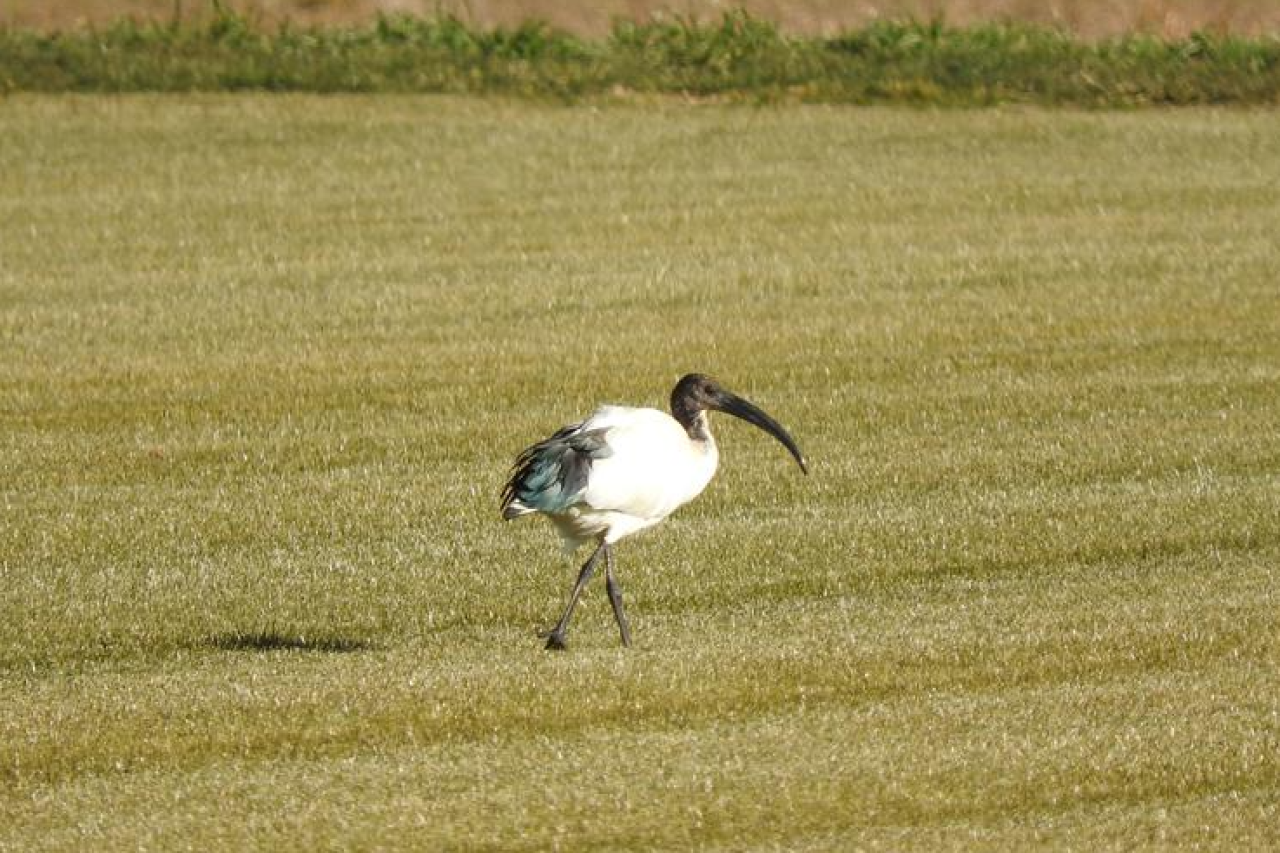
The sacred ibis is native to Africa and the Middle East.
It was also widespread in Egypt, where it was revered as a divine symbol in antiquity. In the 1970s and 1980s, it was introduced to several European zoos, mainly in France, due to its unusual appearance.
However, zoos are open facilities, and some specimens escaped and adapted to their natural surroundings, becoming an invasive species in France and Italy and threatening the local fauna there. And now — as can be seen in this photograph taken at Piano di Magadino — it has arrived in Ticino as well.
Those of us in the field are somewhat concerned, because this is a species that is causing serious problems in northern Italy: the sacred ibis is an invasive species that is very dangerous for native species, explains Ficedula ornithologist Chiara Scandolara.
The sacred ibises are birds that have been depicted in the hieroglyphs of the pyramids for over 2,000 years. Yet while they embody one of the Egyptian gods along the Nile, along the Ticino — like the coypu, the Louisiana red swamp crayfish, and the American pond turtle — they represent just another human error threatening to disturb the delicate balance of nature.
“In northern Italy, entire colonies of nests, of grey herons and other species, have been destroyed by the sacred ibis,” warns Scandolara. As a predator of other bird species’ eggs, however, it also acts as a regulating factor for another major invader in our rivers. “It is a species that could help in the fight against the Louisiana crayfish, which is very prevalent in Ticino and which it feeds on,” the Ficedula ornithologist continues.
The case of the ring-necked parakeet
But that is not the only thing that has been worrying Ticino ornithologists recently. «In recent weeks», said Scandolara, «we have received many reports from people who were concerned because someone had lost a large green parakeet.»
«Thanks to the photos and videos sent to us by the public, we were able to determine that these are free-living parakeets that have been spotted in Bellinzona, Gudo, Ascona, Losone and also in the Lugano area.»
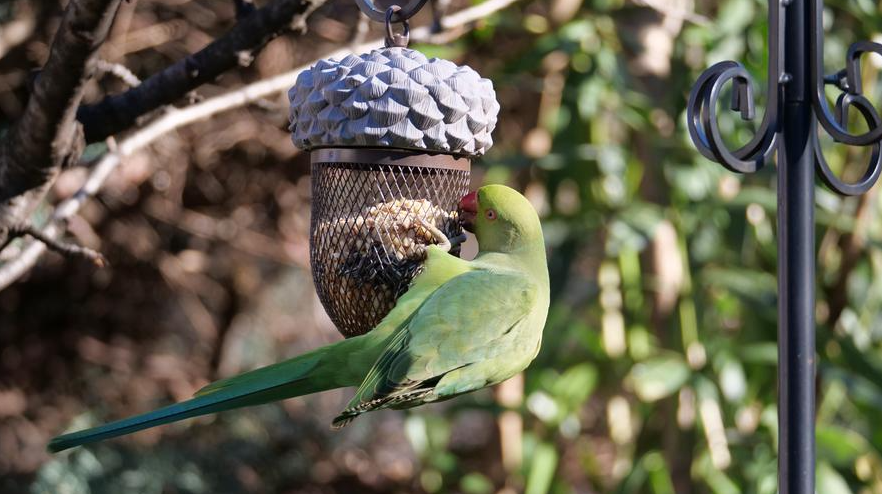
The ring-necked parakeet is native to Africa and Asia, but has established itself in several European cities due to accidental escapes and deliberate releases. “It is a beautiful species. But it is also quite problematic, because it competes with all our species that nest in cavities. Especially in urban areas, it can cause major problems for the common swift, which is already an endangered species,” warns Scandolara. “It is clear that one or two more species is not necessarily good for biodiversity. We will have to wait and see which species are added and which have disappeared in the meantime,” concludes Chiara Scandolara.
These are further signs that even a seemingly insignificant decision, such as the introduction or release of an animal species, can lead to a disruption of our ecosystem.