Trophy hunting unmasked: 14 lobby myths fact-checked
A new fact paper documents why trophy hunting is neither credible species conservation nor poverty alleviation nor effective wildlife management.
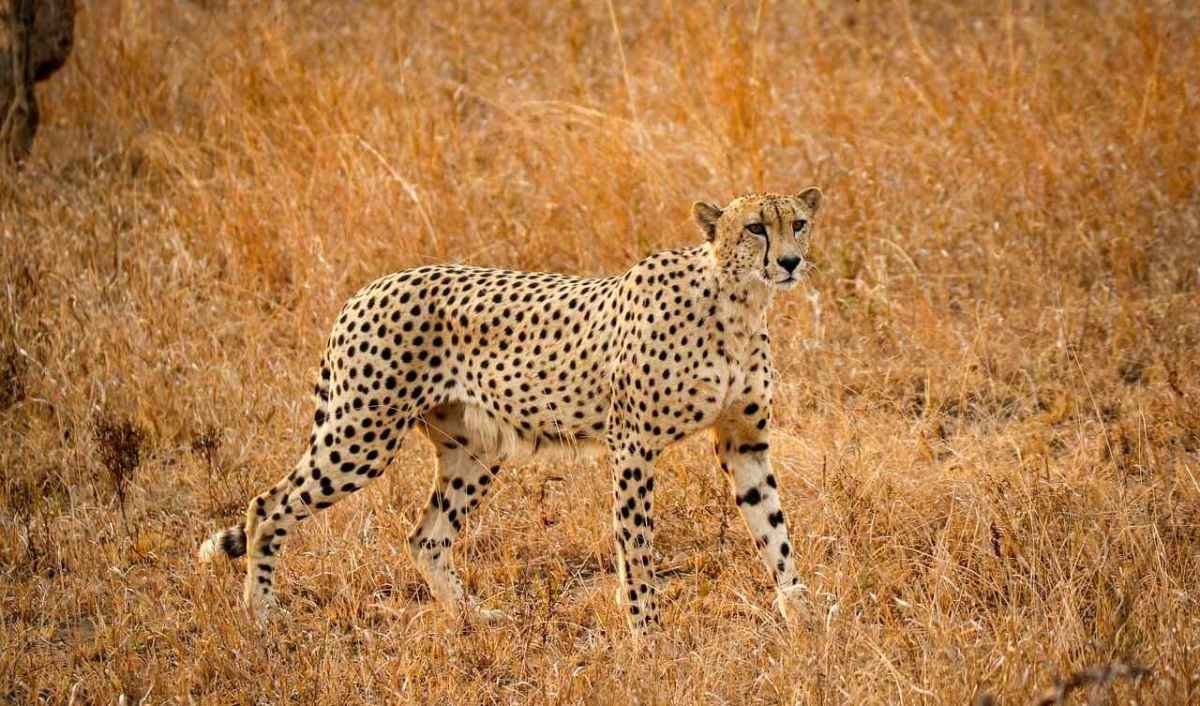
Every year, thousands of wild animals are killed by trophy hunters so that their teeth, horns, hides or entire bodies can be displayed as status symbols.
A fact paper by Conservation Action and Pro Wildlife, updated in September 2026, summarises the scientific criticism of this practice in 14 chapters. The central conclusion: the justifications put forward by the trophy hunting lobby do not withstand critical scrutiny.
Killing for the trophy
Trophy hunting is not about securing food or resolving conflicts under official responsibility. Customers pay high sums to kill a specific animal and take home body parts: tusks, horns, hides, skulls or a taxidermied animal. Particularly rare and striking animals are especially sought-after and expensive. Internationally protected or endangered species such as elephants, rhinoceroses, lions and leopards are also affected.
The hunting industry calls this «sustainable use». But behind this formula lies a commercial business model whose customers pay to kill particularly coveted wild animals. The economic incentive is thus not directed towards precaution, habitat protection and stable populations, but towards the most spectacular trophies possible.
Not «surplus», but biologically important
One central lobby myth claims that only old or «surplus» animals are shot. In reality, trophy hunters specifically seek out animals with particularly large horns or tusks, dark manes or exceptional body size. Such features can indicate age, health, experience and reproductive success.
In elephants, older bulls are not merely decorative bystanders. They are central to reproduction and take on leadership roles within male groups. When they are removed, social experience and stability are lost. In lions, leopards, pumas and brown bears, the killing of adult males can also trigger infanticide: when a new male takes over a territory, it may kill the offspring of its predecessor. The sale of a single kill can therefore have consequences far beyond the individual animal that was killed.
Hunting does not protect against poaching
The claim that trophy hunting prevents poaching also falls apart when one looks at the regions concerned. In the Selous area in Tanzania, according to the data cited in the fact paper, around 55,000 elephants were poached between 2007 and 2014, corresponding to a population decline of roughly 80 percent. At the same time, Selous was one of Africa's most significant trophy hunting areas.
On top of this comes the so-called vacuum effect: when animals are shot in hunting zones surrounding protected areas, animals migrate out of the protected core areas to occupy the territories left vacant. They then in turn become prey for trophy hunters. A study conducted around Hwange National Park in Zimbabwe found that 72 percent of tagged adult male lions in the surrounding hunting zones were killed by trophy hunters.
Quotas without a solid basis
The hunting lobby presents trophy hunting as a strictly regulated practice. However, the fact paper points to unreliable population surveys, patchy controls, conflicts of interest and corruption. Kill quotas are particularly problematic where basic data on population size, age structure, sex ratio and trends are lacking.
For many leopard populations, no reliable figures exist. Nevertheless, kill quotas are set and trophy exports permitted. According to the paper, an analysis published in 2026 concludes that in more than half of the trophy hunting countries examined, CITES quotas exceed the recommended removal limit of 10 percent of adult males.
Percentage figures relating to the overall population are similarly misleading for elephants when the kill is deliberately concentrated on the small group of very old bulls. A technical assessment by Elephants Without Borders concluded in 2025 that Botswana's hunting quota at the time would drastically reduce the population of the oldest bulls compared with a scenario without hunting.
Few benefit, communities are left behind
The claim that trophy hunting combats poverty is another key point of the lobby's messaging. According to the studies summarised in the paper, the average contribution of trophy hunting to the gross domestic product of major African hunting countries is only about 0.04 percent. Local communities, it says, often receive just 3 to 5 percent of the revenue.
Even in Namibia, often held up as a model example, average income per member of communal conservancies from trophy hunting was low, at around US$5.90 per year. At the same time, a large proportion of hunting takes place on private farmland, where the proceeds remain mainly with large landowners and hunting operators. For people in rural regions, this creates neither reliable income nor genuine say over wild animals and land.
Living wild animals create more value
Photo tourism is no panacea and must be organised fairly, locally led and in an environmentally sound manner. But it demonstrates a fundamental difference: a living animal can generate income for local guides, accommodation, transport, protected areas and communities over many years. A trophy kill ends this value irrevocably.
The fact paper cites research showing that nature-based wildlife tourism in Africa generates billions in revenue and considerably more jobs than trophy hunting. Hunting charismatic animals also undermines precisely that non-lethal tourism which depends on being able to observe wild animals alive.
Import bans are responsibility, not colonialism
Import bans on hunting trophies are routinely labelled "neocolonial" by hunting associations. This argument obscures the fact that international trophy hunting is historically and economically sustained by wealthy customers from the Global North. They buy privileged access to wild animals and land, while a large share of the profits remains with external operators and local elites.
Importing countries are not deciding on the use of a country's land when they restrict trophy imports. They are regulating their own market and taking responsibility for the demand that drives the kill. The fact paper also points to numerous critical voices from African organisations, experts and local communities. «Africa» is not a homogeneous voice that hunting lobbyists are entitled to claim as their own.
Conclusion: Luxury kills are not conservation
Trophy hunting is not a credible tool against species extinction, poverty or human-wildlife conflict. It rewards the killing of particularly sought-after animals, jeopardises social and genetic structures and distributes its revenue unequally.
Effective wildlife protection means: securing habitats, consistently combating poaching, involving local communities on equal terms and strengthening non-lethal sources of income. The protection of wild animals must not depend on whether a wealthy recreational hunter is willing to pay for their death.
Sources
- Conservation Action / Pro Wildlife: «Trophy Hunting Facts – Myths of trophy hunting debunked», September 2026.
- IPBES: «Global Assessment Report on Biodiversity and Ecosystem Services», 2019.
- Loveridge et al.: «The impact of sport-hunting on the population dynamics of an African lion population in a protected area», Biological Conservation, 2007.
- Schlossberg & Chase: «Scientific review of Botswana’s elephant hunting programme», Elephants Without Borders, 2025.
- Moorhouse et al.: «Assessing the potential for a levy-based system to replace revenue from trophy hunting in South Africa», Global Ecology and Conservation, 2023.

All articles are written by IG Wild beim Wild as well as by external co-authors. Research, structuring and editorial processes may be supported by AI-assisted tools.
Support our work
With your donation you help protect animals and give their voice a hearing.
Donate now →