The True Costs of Meat Consumption
Studies confirm: The hidden costs of animal products are ruinous. They are not borne by those who cause them, but by society.

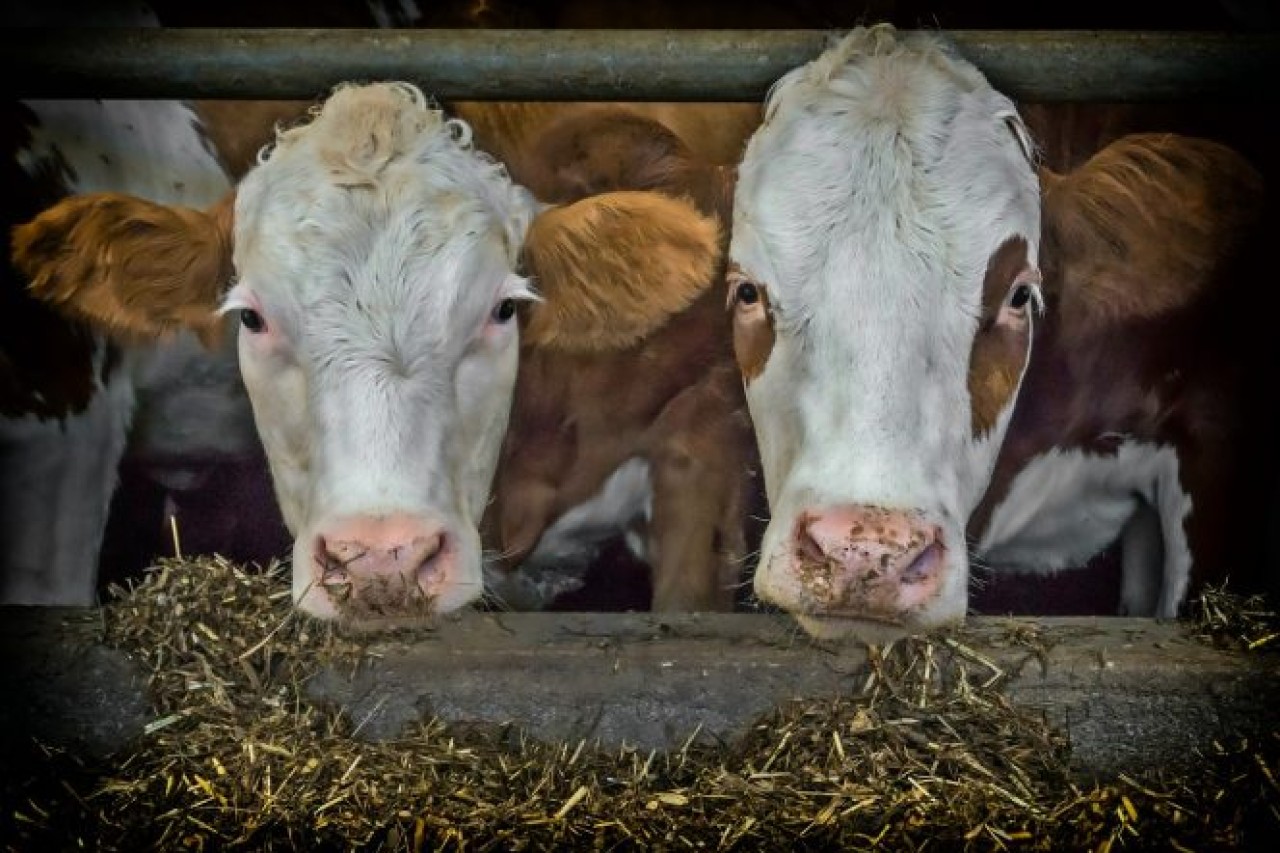
The current issue of the Animal Rights magazine focuses primarily on the true costs of animal products.
All relevant studies reach the same conclusion: The hidden costs and consequential damages are ruinous. They are not borne by those who cause them, but by society. In an in-depth interview, Prof. Tobias Gaugler, an economist teaching at the Technical University of Nuremberg, explains why conventionally produced animal foods lead to the highest external consequential costs, why bans are the wrong approach, and which measures are effective in reducing the consumption of animal products.
What do the climate crisis, species extinction, antibiotic resistance, cardiovascular disease, contaminated groundwater, zoonoses, and deforestation of the rainforest have in common? They are among the social, ethical, and ecological consequential costs of our way of life. They are largely caused by agriculture, industry, trade, and consumers. With an action week on “True Costs,” the discount retailer Penny is this week drawing attention to the immense environmental damage caused by food production across nine products. The greatest consequential damages are caused by conventionally produced animal products. As a result, the price of a pack of Wiener sausages rises to €6.01 instead of €3.19. For the vegan “Food For Future” schnitzel, the additional costs amount to just 14 cents.
Diet is not a private matter
"If Penny doubles the price of Vienna sausages while simultaneously offering the XXL pack of chicken legs for three euros per kilo, that looks very much like greenwashing. On the other hand, the discounter has managed to draw attention to the problem of the ruinous downstream costs of animal products. And that is sorely needed, because the external costs of our continued consumption of animals are ruinous. The principle that 'diet is a private matter' no longer holds, because we all bear the consequential damage. This must urgently change," demands Christina Ledermann, Chairwoman of the Federal Association People for Animal Rights.
Downstream costs eight times higher than production and consumption
Greenpeace estimates the environmental and climate damage caused by the production of meat and dairy products in Germany alone at around six billion euros per year. The current study “External Costs of Animal Sourced Food in the EU,” which also includes the costs of diet-related diseases, air pollution, land use and inadequate animal welfare, arrives at costs of 1,455 billion annually for the approximately 8.4 billion animals slaughtered in the EU. This puts the downstream costs at eight times the combined financial value of production and consumption.
Proposed solutions: VAT reform and climate dividend
In the interview, Gaugler emphasizes that the current form of livestock farming can be justified neither ethically nor in terms of its downstream costs. The climate effects alone, resulting from the release of greenhouse gases, are enormous. Add to this other drivers such as feed crop cultivation, pesticides, energy consumption and the consequences of nitrogen discharges. Yet there are sound proposed solutions. In addition to raising VAT on meat and similar products and abolishing it on plant-based products, Gaugler proposes the introduction of a climate dividend. This would be an efficient redistribution tool that rewards those who consume below-average amounts of CO₂.
Policy must regulate production, trade and consumption
"The multiple crises show us unmistakably that we must fundamentally change our lifestyle. Not only because the ruthless exploitation of animals is profoundly unethical, but also because our consumption behaviour is breaking through planetary boundaries. Policymakers urgently need to deploy effective instruments to regulate production, trade and consumption accordingly. Constructive measures would include a levy on animal products, changes to value-added tax, a strategy for sustainable dietary patterns and support programmes for farmers switching to the production of plant-based protein sources," demands Christina Ledermann.
| You can help all animals and our planet with compassion. Choose compassion on your plate and in your glass. Go vegan. |