Solothurn government defends animal cruelty
In the canton of Solothurn, the government council has missed a historic opportunity. Instead of finally banning the cruel practice of driven hunts, it is clinging to this bloody tradition and offering flimsy arguments for continuing animal suffering in the name of "population control".

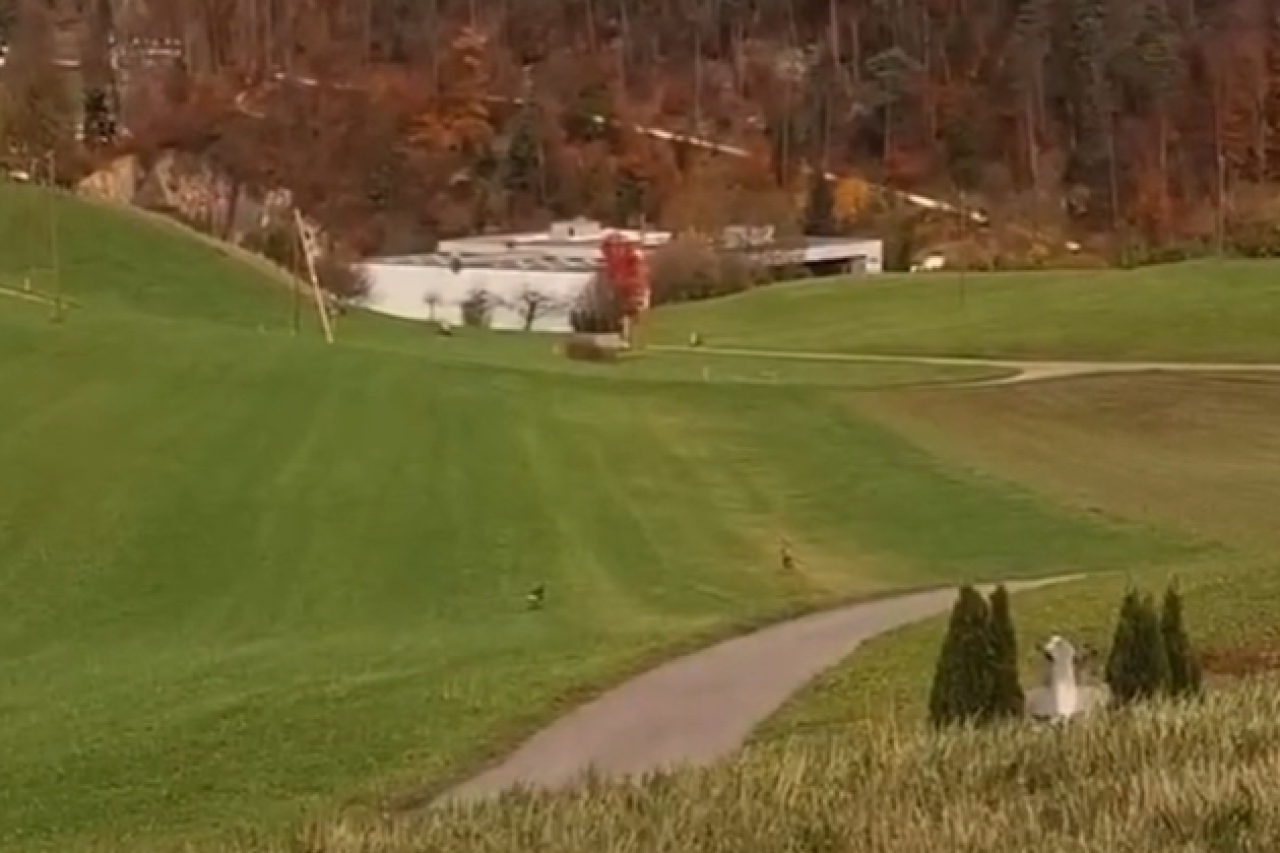
Anyone who has ever witnessed a driven hunt knows what happens: deer, wild boar and other wild animals rush from their hiding places in mortal fear, running headlong across roads and fields, often until they are completely exhausted.
Misfires, injuries, and agonizing deaths occur repeatedly. Even non-game species are caught in the maelstrom of panic. This isn't "management," it's organized animal cruelty. Approximately 55% of the deer killed annually in the canton come from driven hunts.
In its statement of October 21, 2025, the government writes: "Driven hunts represent a sensible and efficient method for regulating populations." Efficient? Yes, if the goal is to kill as many animals as possible in the shortest possible time. But efficiency is not a moral license. Animal suffering remains animal suffering, no matter how "convenient" it is for recreational hunters.
Particularly cynical: "Driven hunts are not chases. Chases are not practiced in Switzerland." An absurd sophistry. Whether dogs chase an animal for hours or drive it into panic in the chaos of a driven hunt, the suffering is the same: stress, fear, injuries, and agonizing death. Anything else is just smoke and mirrors. Driven hunts also repeatedly produce dangerous traffic accidents. The government's statement that "driven hunts are considered efficient and wildlife-friendly" is beyond absurd. The Swiss Animal Protection Association (STS) also rejects driven hunts and hunting in burrows because they are, quite simply, animal cruelty.
Hobby hunters in Solothurn are chasing wild animals right into residential areas.
On October 29, 2025, an incident occurred during a driven hunt in Nunningen, Solothurn, in which several deer were driven in panic down a steep slope and into local residential areas. Video footage shows how the terrified animals expended vital energy reserves during their minutes-long escape—reserves they desperately needed for the approaching winter.
This incident demonstrates once again that so-called recreational hunting has nothing to do with animal or nature conservation. Rather, it means that animals are subjected to unnecessary stress, suffering, and death, solely to satisfy human hunting desires.
HUNT WATCH therefore strongly urges:
- An immediate ban on hunting
- A consistent expansion of animal welfare-friendly alternatives to wildlife management
- An open societal discussion about ethical responsibility towards wild animals
Only in this way can effective and respectful protection of wild animals be guaranteed.
Nature doesn't need hobby hunters.
The government justifies its rejection with the alleged necessity of regulation: without driven hunts, "effective management of wildlife populations" is no longer possible. However, a growing number of scientific studies and case studies (numerous cantons manage without driven hunts) prove the opposite: ecosystems largely regulate themselves when left undisturbed by recreational hunters. Forests and wildlife populations achieve a better balance without human "correction" than with bullets and shotguns. In areas without recreational hunting, it is evident that nature, including the forests, is stronger, healthier, and more peaceful when left alone.
By rejecting the popular mandate, the Canton of Solothurn has clearly taken a stand against animal welfare, against social progress, and against a sustainable wildlife policy. Instead of boldly forging new paths, the government is clinging to the hunting lobby and defending a relic from barbaric times.
But criticism of hunting is growing louder. More and more people see driven hunts for what they are: brutal spectacles that have no place in any modern society. Solothurn may refuse to abolish them, but public opinion will not be deterred. The pressure on politicians and the recreational hunting lobby is mounting.
Politicians and amateur hunters crave power and are often a source of corruption and greed. – IG Wild beim Wild
Missed shots – the invisible tragedy
Driven hunts not only cause stress and panic for wild animals, but are also notorious for their high number of missed shots. In the chaos, when dozens of animals rush through the firing line simultaneously, accuracy plummets. As a result, numerous animals are not killed instantly, but severely injured, dragging themselves away in agony with broken legs, bullet holes, or internal injuries. Many of these animals die only hours or days later in the forest, slowly, silently, and unseen by the hunters.
Such a scenario is not the exception, but the rule in driven hunts. Every year they produce enormous animal suffering that is difficult to control or justify. Precisely because the government itself insists on "efficiency," it tacitly accepts that a significant proportion of the animals die a gruesome death instead of being killed immediately.
Wild game – not an “honest” natural product
Hobby hunters often tout their meat as "honest" and "pure," which they then pass off as meat to the public. But on closer inspection, none of that holds true. The "honest or healthy meat" of hobby hunters is a myth.
Wild game is not a clean, natural product. It is often contaminated with heavy metals, parasites, bacteria, and ammunition residue. Furthermore, this meat comes from animals that were killed in a state of panic, fear, and suffering.
In their death throes, the animals release stress hormones like adrenaline and cortisol, which flood their entire organism. This makes the meat tough, burdens it, and is far removed from any romantic notion of a "natural delicacy." A hunted deer is not a health product; it is the result of fear, trauma, and violence.
How honest is a product based on suffering and blood? When amateur hunters claim their meat is "honest," they primarily expose themselves. Honesty would mean clearly stating: This meat comes from an animal that was hunted, shot, and died a painful death.
Anyone who truly wants to live a healthy and sustainable life should avoid both hunted meat and meat from factory farms. The result is always the same: animal suffering on the plate. Animals are killed in slaughterhouses, and in the forest, the killing is unhygienic and brutal. Hobby hunters also have the added problem of scavenging carrion.
Added value:
- Wild game: Natural, healthy – or dangerous?
- Game meat from a hobby hunter? – Carrion on your plate!
- Studies indicate that there are health risks associated with the consumption of wild game.
- Nutrition: The civilized taste
- Wild game from a hunter is carrion
- Wild game meat cannot be organic
- Meat from wild animals is not organic game.
- Dementia: How harmful is game meat?
- Game meat makes you sick
- Lead residues in game meat products
- Wild game: Risks, lead, and hunting myths
- Warning: Beware of wild game meat from amateur hunters
- Hunters also lie when selling meat.
Sources:
| Year | Authors: | Type / Theme | Hunting method / context | Key findings | Relevance for argumentation |
|---|---|---|---|---|---|
| 1998 | Mason et al. | Red deer | Driven hunt / pursuit | Cortisol levels increased up to 70-fold; massive physiological stress | Strong evidence that driven hunts produce extreme stress reactions |
| 2018 | Gentsch et al. | Hoofed animals (various species) | Trauma situations including chases (“battues”) | Cortisol levels are significantly higher during "battues" and hunts with dogs than during individual kills. | Directly relevant: Driven hunts cause the highest stress levels |
| 2020 | Vilela et al. | Red deer | Hunting in general | Hunting activity leads to demonstrable stress reactions (cortisol, heart rate) | Documents general hunting stress, measurable physiologically |
| 2023 | Dziki-Michalska et al. | Deer | Stalking | Significantly elevated cortisol levels, dependent on age and gender. | Evidence: even silent hunting is a stressor – driven hunting is correspondingly worse |
| 2024 | Dziki-Michalska et al. | Red deer | Stalking | High cortisol levels correlated with poorer meat condition and body weight. | Supports criticism of "honest game meat" |
| 2025 | Bíl et al. | Europe (including Switzerland) | Traffic accidents involving wild animals | Overview: legal consequences & accident statistics in Europe | Relevance: Driven hunts increase the risk of wildlife collisions |
| 2023 | [Swiss study, anonymized in open access] | Switzerland | Wildlife-vehicle collisions | Identifies hotspots of wildlife collisions in the Swiss road network | Argumentation aid: Driven hunts drive wild animals into risky traffic areas |
| 2019 | Wildlife at Wildlife (Statistics) | Switzerland | Hunting accidents | Statistics on hunting and wildlife accidents in Switzerland | Shows the risk to humans and animals during driven hunts |
| 2005 | von Borell et al. | Wild boars | Capture & Kill | Significantly elevated stress parameters (cortisol, lactate) | Documents physiological stress in wild boars |
| 2011 | Broom & Johnson | Review: Welfare of hunted animals | Different hunting methods | Hunting regularly causes fear, stress, injuries, and prolonged suffering. | Fundamental source for ethical classification |