Hedgehog listed on IUCN Red List for the first time
Ever more sealed surfaces, gravel gardens, and intensive agriculture: hedgehogs are running out of space. For the first time, the small hibernators appear on the Red List of threatened species.

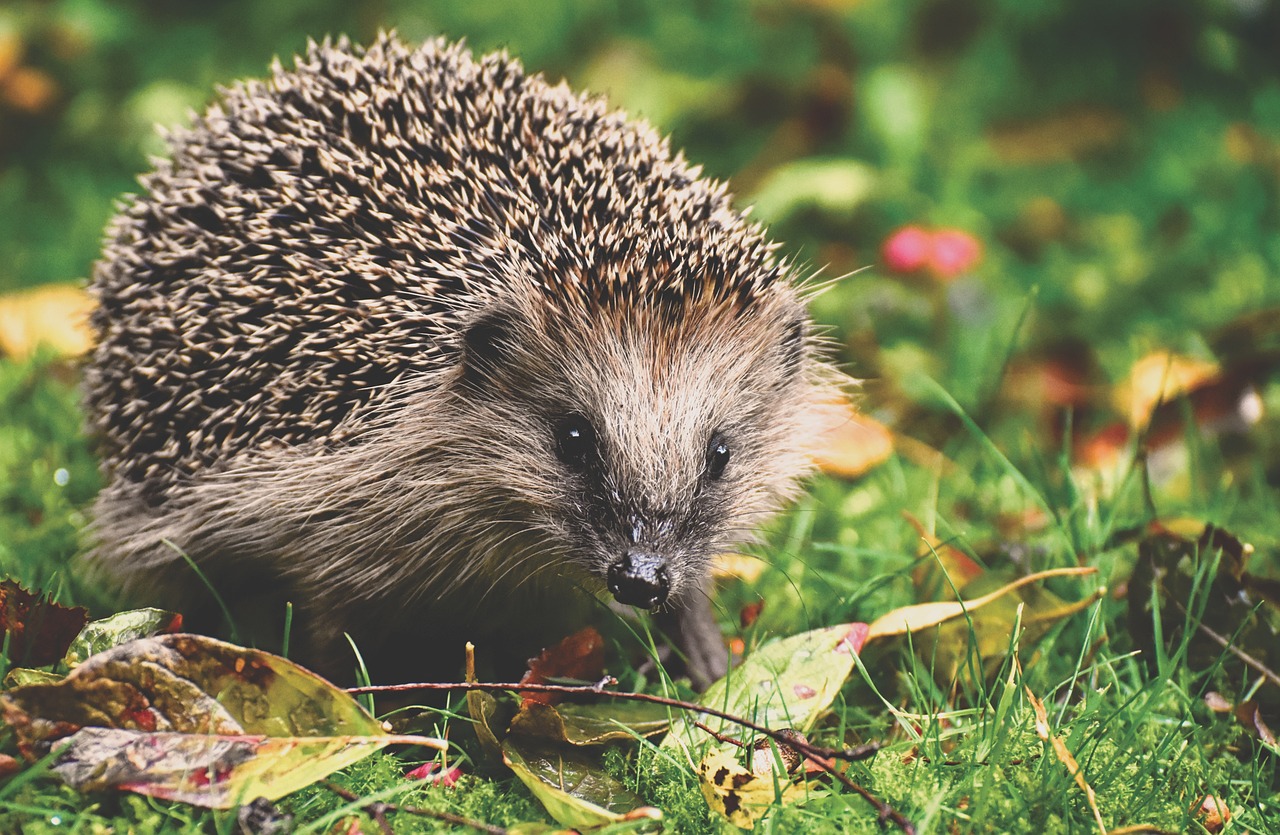
According to the International Union for Conservation of Nature (IUCN), the number of western European hedgehogs is declining sharply.
The organisation has listed the hibernator on its Red List of threatened species for the first time, classifying it as “near threatened.”
The problem is humans, according to the IUCN: “In particular, the destruction of rural habitats through the intensification of agriculture, roads, and urban development is leading to a decline of the western European hedgehog,” it states. Hedgehogs must be better protected.
Hedgehog numbers declining
The western European hedgehog (Erinaceus europaeus) is found in, among other places, Germany and Austria, the Benelux countries, Scandinavia, and Great Britain. Over the past ten years, numbers are estimated to have declined by between 16 and 33 percent depending on the country.
In Flanders, Belgium, and in Bavaria, the decline was as much as 50 percent. Reliable data on the total number of hedgehogs does not exist. As a rule, hedgehogs reproduce only once per year. The loss of habitat is one of the greatest threats to wildlife in Europe.
The IUCN has therefore classified hedgehogs as “near threatened.” This is the second level on the seven-level scale that the IUCN uses to assess the degree of threat. The scale ranges from “least concern” to “extinct.” The Red List has existed since 1964. It now encompasses more than 166’000 animal and plant species, of which over 46’000 are threatened.
Almost 40 percent of all tree species also at risk
For the first time, the IUCN has also assessed trees globally. 38 percent of the more than 47,000 species worldwide are threatened, according to the Red List. The greatest number of threatened species is found on islands. There, trees are threatened by urban development, agriculture, invasive species and climate change, stronger storms and rising sea levels.
When trees die, this is also a major threat to other plants, fungi and animals. “As a crucial component of many ecosystems, trees are of fundamental importance to life on Earth due to their role in the carbon, water and nutrient cycles, in soil formation and climate regulation,” writes the IUCN. The biodiversity crisis affects all levels of ecosystems.
| You can help all animals and our planet with compassion. Choose compassion on your plate and in your glass. Go vegan. |