Brussels Sprouts: The Healthy Little Vegetable
Brussels sprouts may be higher in calories than their larger relatives, but they contain more vitamin C than any other type of cabbage and are otherwise rich in valuable nutrients — ideal for the approaching colder season. In Switzerland, however, cultivation has recently faced serious challenges.

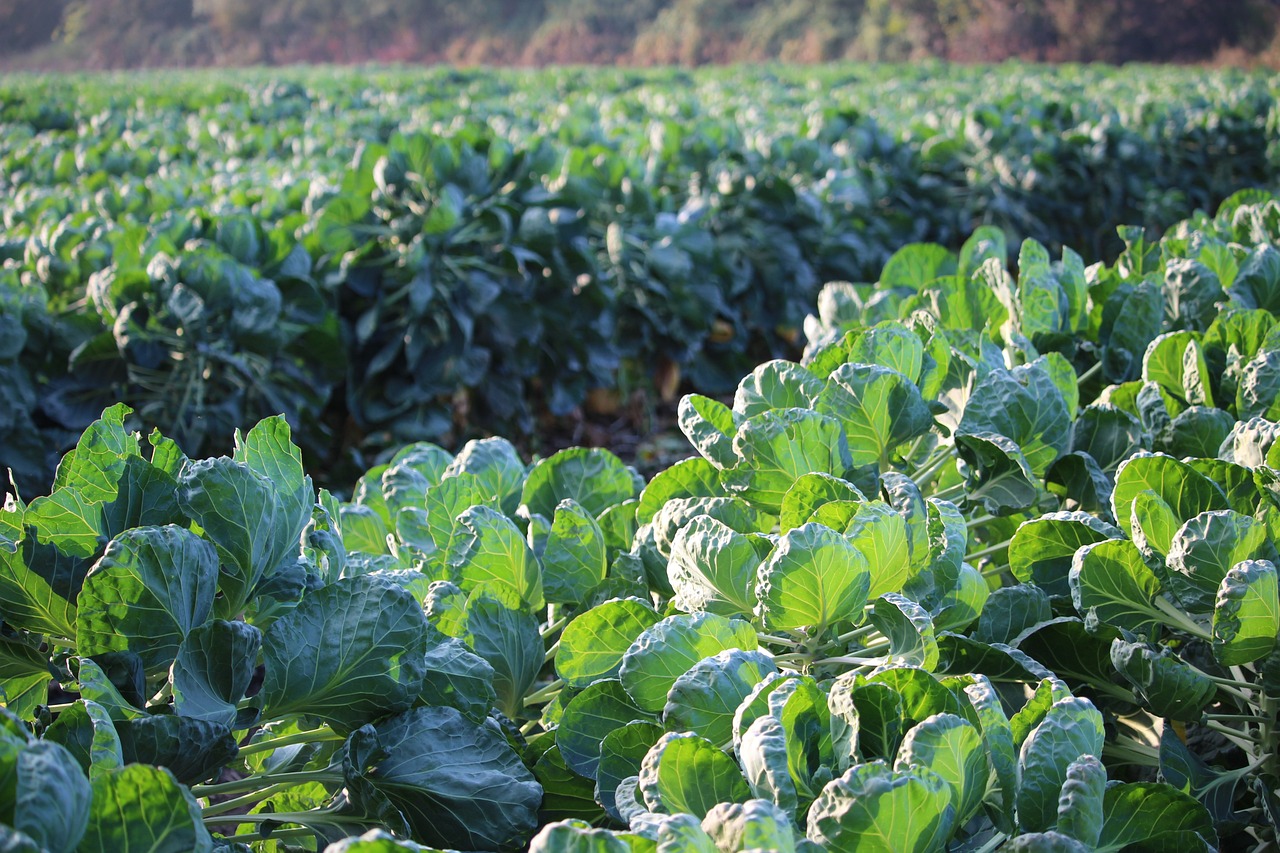
Brussels sprouts are a variety of common cabbage from the Brassicaceae family. The earliest evidence of Brussels sprout cultivation dates back to 1587 in Brussels. This origin is still reflected today in the French and English names for the vegetable: «Choux de Bruxelles» and «Brussels sprouts» respectively.
Frost welcome
The vegetable is a biennial plant that forms a long stem of just over half a metre, on which the small rosettes grow in clusters. If the small cabbage heads are not harvested, they will sprout after overwintering in spring, bearing flowers in summer. As a heavy feeder, Brussels sprouts require very nutrient-rich soil and prefer sandy loam soils in sunny locations. The plant, however, also tolerates lower temperatures well and can overwinter in most areas. In fact, frost improves the flavour and digestibility of Brussels sprouts.
Brussels sprouts have a relatively long season: in Switzerland they are harvested from September to January — with both early and late varieties available. Brussels sprouts can be purchased fresh or frozen. Fresh Brussels sprouts, however, do not keep for very long and should be stored in a cool place and processed promptly. Blanched and frozen, the vegetable can be kept for up to one year.
Brussels sprout cultivation in Switzerland
The main Brussels sprout producing countries worldwide are the Netherlands, the United Kingdom, and France. In Switzerland, Brussels sprouts do not rank among the ten most popular vegetables, yet consumption has tended to rise rather than fall in recent years. In 2010, per capita consumption stood at 200 grams — in recent years it has settled at around 250 grams.
The local cultivation area has also developed in recent years: in 2010, Brussels sprouts were grown on around 55 hectares, then increased and reached a peak of 93 hectares and 97 hectares in 2017 and 2018 respectively. In 2020, however, there was a significant slump in Swiss Brussels sprout cultivation, dropping back to around 66 hectares, on which only around 929 tonnes of Brussels sprouts were harvested. In 2021, the cultivation area was able to increase again somewhat to around 77 hectares, but due in part to poor weather conditions, the harvest quantity of just under 500 tonnes fell even further behind the 2020 harvest — and significantly so. In 2022, the cultivation area was then enormously expanded again, reaching 93 hectares — at least in terms of area — to match previous peak figures, only to drop back to around 79 hectares the following year.
Particularly because various pesticides are no longer approved, the cabbage fly and especially the whitefly have spread rapidly. The larvae of the whitefly feed on the plants and excrete undigested sugar sap — known as honeydew — which coats the Brussels sprout florets. Black mould fungi settle on this sticky residue, turning the plant black and contaminating the harvest. The consequences are losses in quality and yield, and since Brussels sprouts are a plant with a very long growing period, whiteflies can produce several generations, which increases infestation pressure. Although the so-called sooty mould can be washed or trimmed off, it is nonetheless considered a quality defect, and producers therefore have difficulty selling the Brussels sprouts.
As part of the Federal Office for Agriculture's “Action Plan on Plant Protection Products,” solutions are being sought in the post-harvest sector with regard to the cabbage fly and the whitefly, in order to continue meeting buyers' quality requirements. Among other things, a trimming facility for automatic post-harvest processing as well as a disinfection unit and drying system are to be developed to minimise microbial contamination after the washing process.
A nutrient supplier for the cold season
Thanks to its high vitamin and mineral content, Brussels sprouts are a valuable winter vegetable. Brussels sprouts offer a concentrated load of nutrients: the vegetable contains, among other things, a considerable amount of vitamin C – 100 grams of Brussels sprouts already cover more than 100 percent of an adult's daily requirement of vitamin C. The vitamin B and zinc content is also very high, and the vegetable contains magnesium, iron and potassium as well as dietary fibre. Also noteworthy are the low number of carbohydrates and the relatively high protein content.
Brussels sprouts are suitable as a vegetable side dish, for example with meat and game dishes. However, Brussels sprouts are not suitable for eating raw – but blanched, sautéed, steamed, boiled or braised they taste excellent. Tip: Score the stem end crosswise so that the Brussels sprouts cook evenly.
| You can help all animals and our planet with compassion. Choose empathy on your plate and in your glass. Go vegan. |