Javan tiger rediscovered: Conservation responds
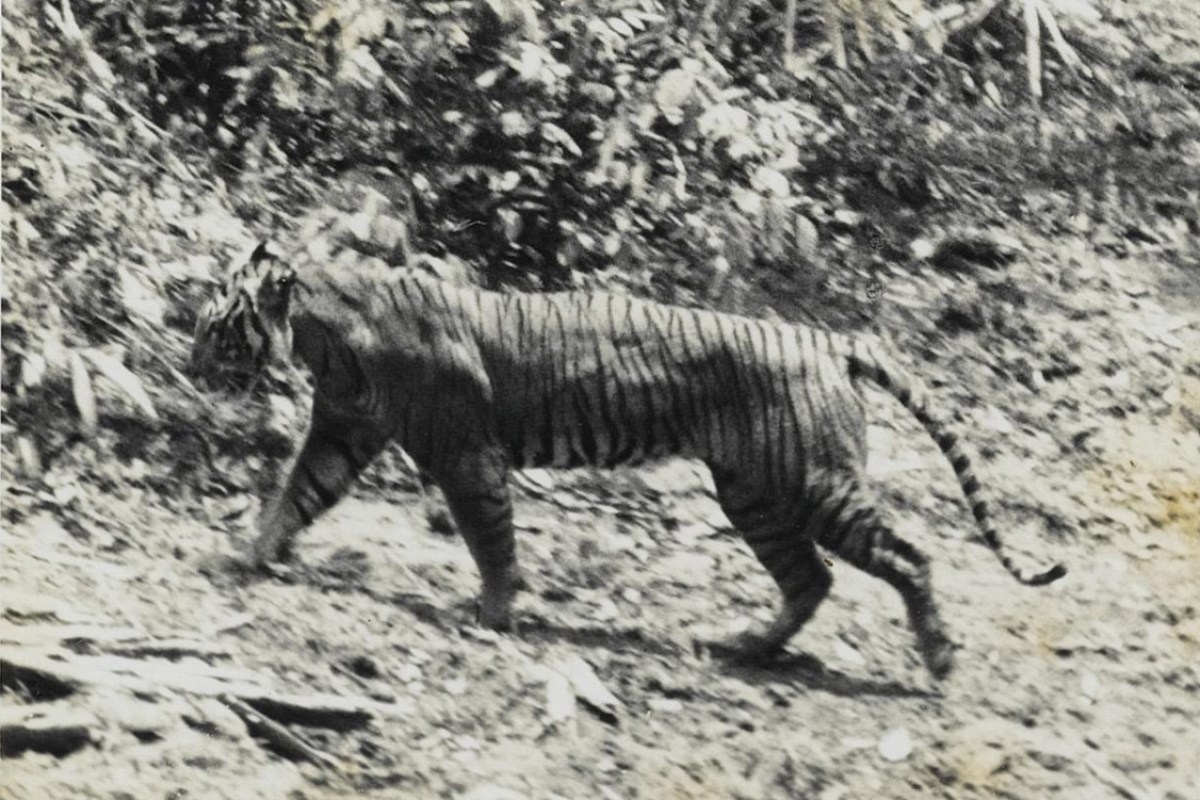
Indonesia is searching for evidence that the Javan tiger, a species considered extinct, still exists in the wild.

“Who’s Still Left”
This follows the publication of a study linking the DNA of an analysed hair to the big cat, a government official said on 26 March 2024.
The endemic tigers of Java and Bali disappeared in the 1990s and 1940s respectively, leaving only the Sumatran tiger on the archipelago.
According to the study, published last week by Cambridge University Press, a team of scientists from the Indonesian National Research and Innovation Agency (BRIN) and conservationists discovered genetic traces of the Javan tiger when they analysed a hair found in 2019 near a village in West Java.
Further studies required
«The question of whether the Javan tiger still exists in the wild must be confirmed through further genetic and field studies,» the scientific publication cautions.
On the basis of the study, the Indonesian government has initiated “several measures” following its findings and plans to continue these, as Satyawan Pudyatmoko, head of the Department of Nature Conservation at the Ministry of Environment and Forests, explained.
These measures include the installation of camera traps, the invitation of genetics experts to assist the authorities with further investigations and tests, and the collection of data from local communities, he added.
If it “is proven that it still exists, it will certainly become a protected animal,” he said. “All parties (…) have a duty to participate in the conservation of its population.”
Hair taken from a fence
The scientific publication states that a local resident reported having seen a Javan tiger in 2019 on a plantation in a forest near the town of Sukabumi in the province of West Java.
«Based on our extensive interview with Ripi Yanur Fajar, who saw the tiger, we believe the hair comes from a Javan tiger», the study's summary states.
The analysed hair was taken from a fence over which the big cat is said to have leaped, and footprints as well as claw marks were also found, the study states.
The tiger hair shows similarities to that of the Sumatran and Bengal tiger, but differs from other tiger subspecies, according to the researchers.
Fewer than 400 Sumatran tigers
The Sumatran tigers, which are often poached by poachers, are classified as critically endangered by the International Union for Conservation of Nature (IUCN). It estimates that fewer than 400 Sumatran tigers remain in the wild.
Muhammad Ali Imron, head of the WWF Indonesia forest and wildlife programme, urged caution in disseminating the findings publicly, as he feared alerting recreational hunters to go after the animal.

More on the subject of recreational hunting: The scientific evidence is presented in the overview Studies on the Effects of Recreational Hunting.
The position of IG Wild beim Wild: IG Wild beim Wild rejects recreational hunting. Our model is the canton of Geneva, which has managed without recreational hunting since 1974: without hunting seasons, without hunting dogs, without driven hunts, without high seats, without the animal cruelty and crime that go hand in hand with hunting season elsewhere. What has worked there for over fifty years disproves every position paper by JagdSchweiz. An association that bases its policy on claims it refutes in its own documents is not a professional organisation, but a factory for misinformation.