Poland ends fur farming: Victory for the animals
When Poland's President Karol Nawrocki signed the law ending fur farming in early December, it was far more than a national decision.

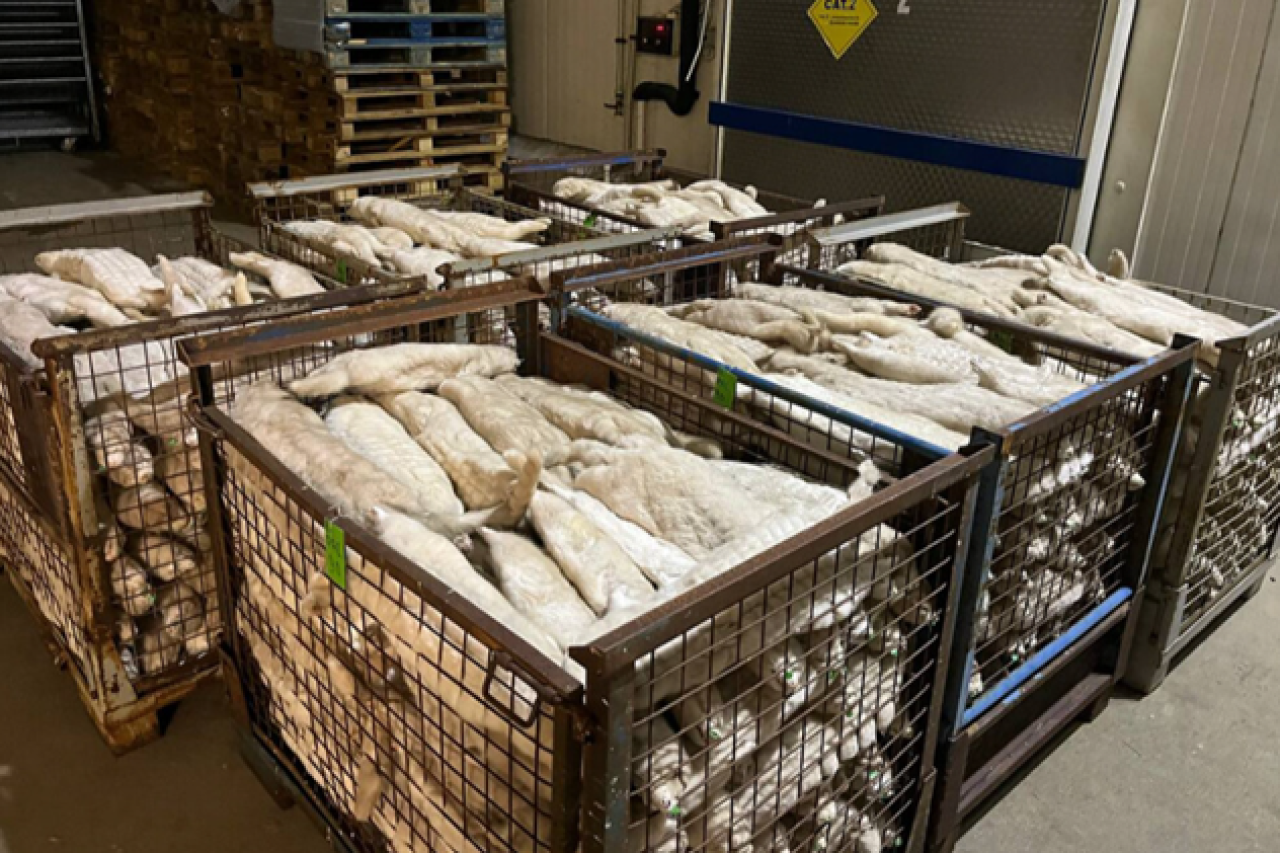
The world's second-largest fur producer is withdrawing from an industry that keeps and kills around three million mink, foxes, raccoon dogs and chinchillas in wire cages every year.
It marks a turning point in Europe's relationship with wild animals. And it puts the hunting and fur lobby in other countries under uncomfortable scrutiny: if a country like Poland acknowledges fur as unethical, ecologically disastrous and economically harmful, why should the very same animals continue to be classified as huntable “vermin” and trophies?
Systemic animal cruelty confirmed by law
The ban was preceded by a report from the European Food Safety Authority (EFSA). The experts confirm that suffering on fur farms is not an isolated case but systemic. In cramped wire cages, wild animals such as mink and foxes cannot fulfil their basic needs; behavioural disorders, injuries and diseases are the norm.
With the president's signature, the Polish state has effectively enshrined this assessment in law. Fur farming is not being reformed — it is being ended. New farms are immediately prohibited, and the nearly 200 existing operations must close by January 2034 at the latest; those who cease operations earlier will receive higher compensation.
The state is thereby saying: the practice is so problematic that it has no place in a modern society. This stands in remarkable contrast to many hunting laws, in which the very same species are listed as “game”, “population regulators” or simply as quarry.
Fur farmers on the public payroll
The industry's propaganda was for decades the same as that of the hunting lobby: tradition, jobs, rural structural support. The new course in Poland soberly dismantles these myths.
A recent economic analysis shows that fur farming costs EU citizens up to 446 million euros annually, through environmental consequences, inspections, and crisis management during disease outbreaks.
When an industry can only survive through subsidies and compensation programmes, its “economic benefit” becomes a mirage. It is the same mechanism familiar from recreational hunting: the general public pays for wildlife damage, traffic risks, and overpopulations that were previously “managed” through hunting. The wild animal remains, economically, a loss-making venture — morally, a victim.
Zoonoses and Climate Impact: Dead Animals, a Sick System
Fur farms are a disaster not only from an animal welfare perspective, but also from a public health and climate standpoint. On nearly 500 mink farms in Europe and North America, infected animals were found during the coronavirus pandemic, and millions were killed for disease-control reasons. Avian influenza H5N1 has also been detected on dozens of European fur farms, with hundreds of thousands of animals killed.
The climate record is no less devastating. According to calculations, one kilogram of mink fur generates more than 300 kilograms of CO₂ equivalents — up to 31 times as much as cotton and a multiple of synthetic fibres.
These figures are fatally reminiscent of the justifications offered for trophy hunting in Africa or fox hunting in Europe, which are often sold as “nature conservation.” In reality, ecological damage is produced or exacerbated in order to justify a luxury product that nobody needs: fur collars and trophies on the wall.
Social Consensus: Fur is Out
More than 1.5 million citizens in the EU have signed the European Citizens’ Initiative for a fur-free Europe. Leading fashion brands from Gucci to Prada and Chanel have removed fur from their collections; in total, more than 1’600 brands and retailers have now done so.
The message is unambiguous. Fur is no longer a status symbol — it is a reputational liability. Anyone still wearing real fur today is not only complicit in animal cruelty, but reveals themselves as utterly out of touch with the times.
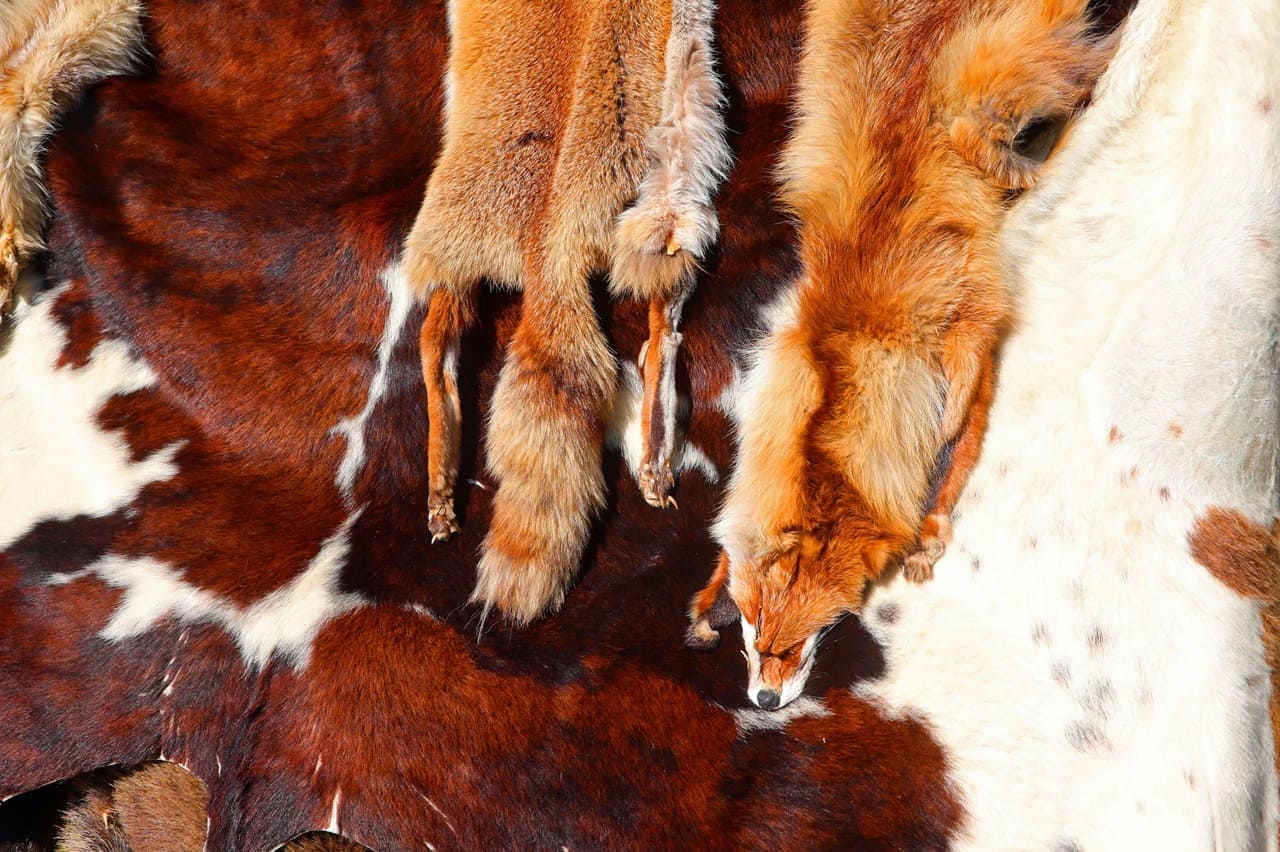
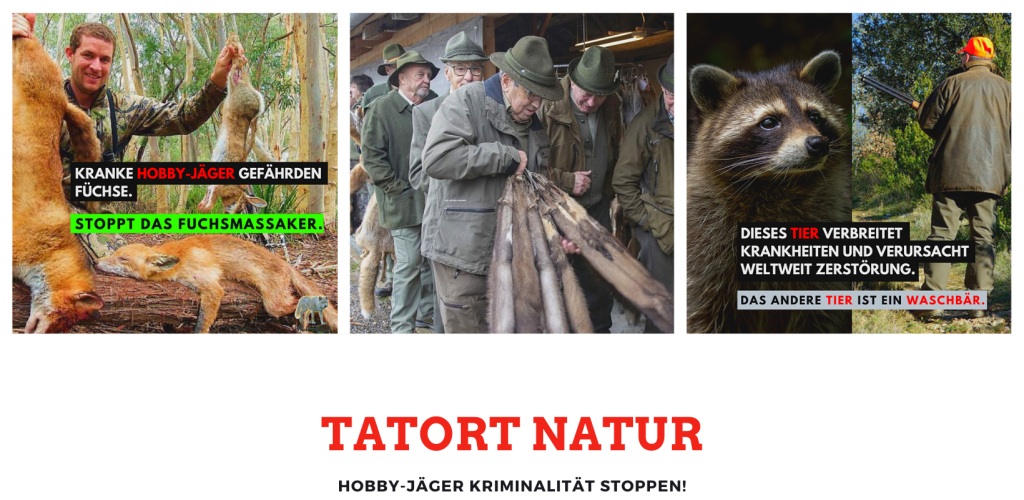
Hunting law lags far behind. While designer houses remove fur coats from their shop windows, hobby hunters continue to pose with fox pelts over their shoulders or marten collars on their hats. The gap between public sentiment and hunting self-promotion is growing ever wider.
Hobby hunting and fur: two sides of the same coin
The Polish ban targets the industrial farming of fur-bearing animals. Yet a portion of the fur market continues to rely on wild trapping and hobby hunting, for example through the trapping of foxes, raccoon dogs, or beavers.
Switzerland's decision to ban particularly cruel trapping methods in the import of fur products conveniently excludes traps that allegedly “kill instantly” but in practice frequently lead to prolonged death throes.
The message to hobby hunters is ambivalent. On one hand, it is acknowledged that certain methods are unconscionably cruel. On the other hand, the same animals may be pursued with rifles, traps, and dogs, as long as the killing formally fits within a hunting law. The difference for the individual in the line of fire is marginal.
If it is no longer morally acceptable to keep a fox in a wire cage for its entire life, because it is a sentient being, how can it be justified to pursue that same fox with driven hunts, earth hunting, and trapping, simply to dispose of it as “vermin”?
European pressure is growing
In 24 EU member states, laws now fully or partially restrict fur farming, with Romania and Lithuania most recently enacting bans. The European Commission must respond to the citizens' initiative by March 2026 and decide on an EU-wide ban on fur farming and the sale of fur products.
Political pressure is thus mounting, while hunting policy in many countries remains stuck in the 20th century. At the very least, the handling of fur demonstrates that consistent bans are possible when the societal debate shifts and scientific facts are taken seriously.
What the ban means for the hunting debate
Poland's move has undermined key arguments of the hunting lobby:
- Tradition: Fur farming in Poland is a product of the second half of the 20th century, not a centuries-old cultural practice. The same applies to many forms of hunting that are today romanticised as “custom and tradition.”
- Economy: If an industry can only exist thanks to compensation payments and public funds, it is not a pillar of rural areas, but a subsidized niche.
- Animal welfare: EFSA and other expert panels make clear that certain forms of animal use are structurally associated with massive pain and suffering. This very analysis could be applied to many hunting practices, from earth hunting to driven hunts.
Fur ban as a wake-up call for hunting policy
The end of fur farming in Poland is a historic success for animal welfare organizations and civil society. It shows how perseverance, investigative work and political pressure can bring down a powerful industry.
For the hunting debate in Europe, this law is a wake-up call. Anyone who acknowledges that foxes, mink and raccoon dogs are sentient beings whose suffering on farms is unbearable cannot simultaneously treat them as huntable material to be “harvested” at will.
The conclusion is obvious: if fur farmers must close their cages, hobby hunting of fur suppliers and “unwanted predators” should no longer pass as a socially accepted leisure activity. Poland shows how to begin dismantling double standards.
BREAKING NEWS: New York Fashion Week will go fur-free from 2026
The Council of Fashion Designers of America (CFDA), which publishes and organizes the fashion calendar for New York Fashion Week (NYFW), has today announced that real fur will no longer be promoted at any event in the official NYFW program. This applies to the fashion calendar, the social media channel and the website. The announcement builds on years of collaboration with Humane World for Animals and Collective Fashion Justice.