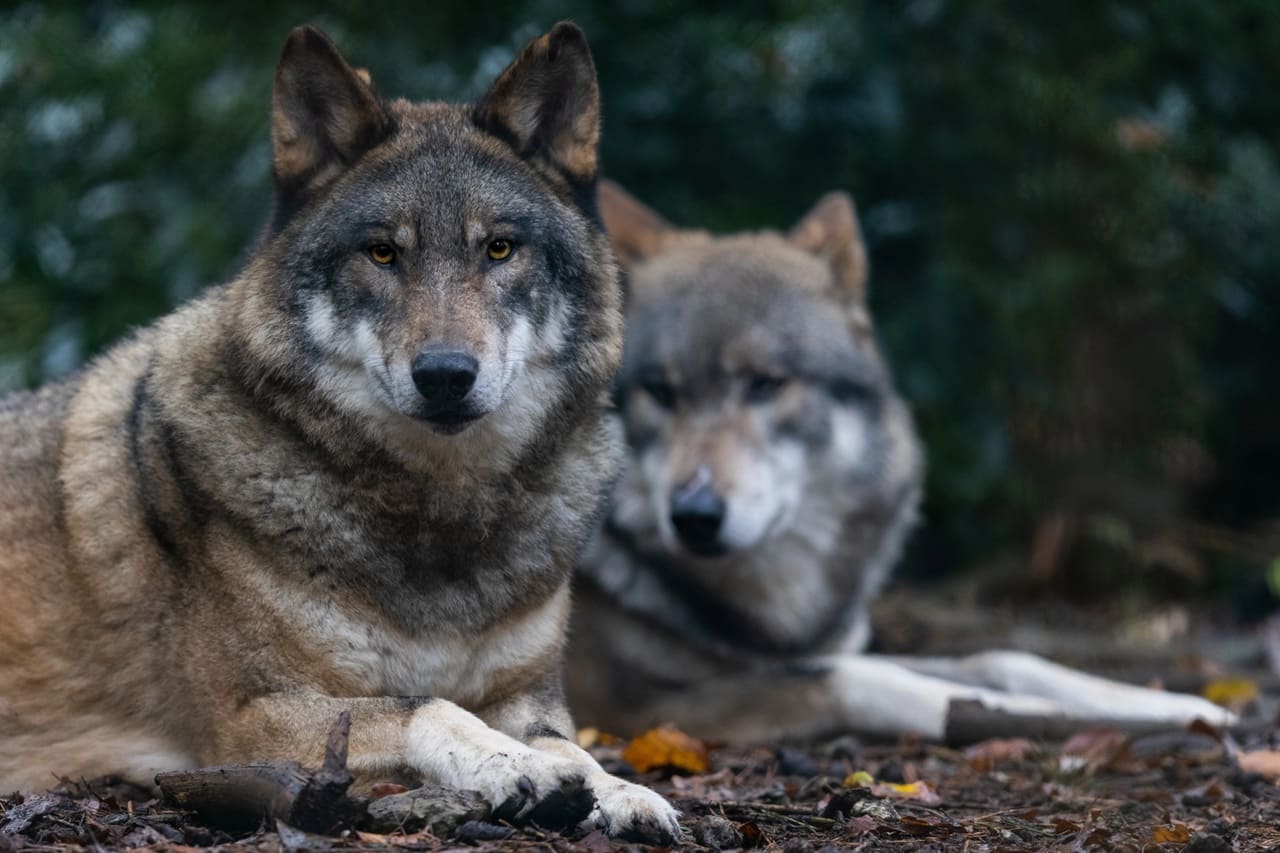
Native American tribes sue over wolf hunt in Wisconsin
Six Chippewa tribes are suing Wisconsin to stop the wolf hunt planned for November. They see their treaty rights being violated.


Six Native American tribes filed a lawsuit on Tuesday, September 21, 2021, against Wisconsin to stop the planned recreational hunt on gray wolves in November.
Sacred animal at risk
They argue that the recreational hunt violates their treaty rights and endangers an animal they consider sacred.
The Chippewa tribes claim that under their treaties they are entitled to half of the wolf quota in the area. But rather than hunting wolves, the tribes want to protect them.
During a court-ordered recreational hunt in February, the recreational hunters exceeded their limit. The Department of Natural Resources had set the quota at 119 wolves, but the wildlife killers killed 218 wolves in just four days.
Quota raised to 300
Biologists at the agency recommended setting the autumn quota at 130 wolves. But the agency's board set the kill quota last month at 300. The lawsuit alleges that the agency's decision was a deliberate move to nullify the tribes' share and was not based on scientific findings.
««Our treaty rights state that we must share our resources with the state 50:50, and we feel that due to the slaughter of wolves in February we are not receiving the consideration we are entitled to», said John Johnson Sr., President of the Lac du Flambeau Band of Lake Superior Chippewa Indians.
The Ojibwe word for “wolf” is Ma'iingan, and the Indigenous peoples of the Great Lakes region often refer to themselves as Anishinaabe. The wolf holds a sacred place in their creation story.
«For the Anishinaabe, the Ma'iingan are our brothers. The legends and stories tell us that we walk hand in hand as brothers. What happens to the Ma'iingan also happens to humanity», said Marvin Defoe, an official and elder of the Red Cliff Band of Lake Superior Chippewa Indians.
The six tribes are represented by the law firm Earthjustice. Dozens of tribes had urged the Biden administration to take immediate protective measures for gray wolves across the country, as states had become too aggressive in their recreational hunting of them.
More on the subject of recreational hunting: In the dossier The Role and Criticism of Recreational Hunters we shed light on the training, power and self-image of recreational hunters. What the research says about this is shown by Hunting fact-checked: the state of research.
The position of IG Wild beim Wild: IG Wild beim Wild rejects recreational hunting. Our model is the canton of Geneva, which has managed without recreational hunting since 1974: without hunting seasons, without hunting dogs, without driven hunts, without high seats, without the animal cruelty and crime that go hand in hand with hunting season elsewhere. What has worked there for over fifty years disproves every position paper by JagdSchweiz. An association that bases its policy on claims it refutes in its own documents is not a professional organisation, but a factory for misinformation.