
Illegal hunting stands: Clearing forests of hunting-related proliferation
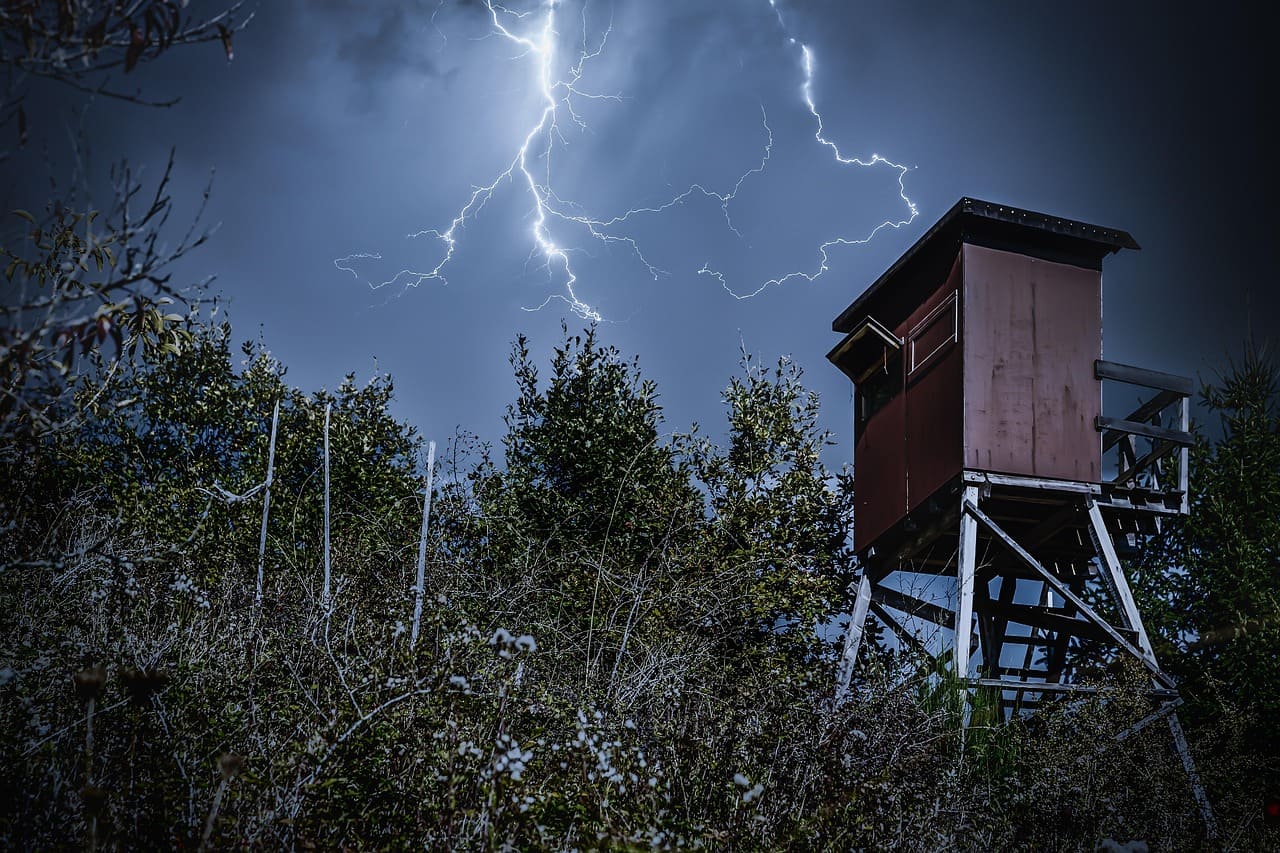
Many forests contain hunting stands, blinds and hunting structures that lack proper building permits and violate construction, forestry and animal welfare laws. They alter forest landscapes, create safety risks and serve highly technologized hobby hunting.
1. Motion
The government council is tasked with submitting to the cantonal parliament a proposal to amend the Hunting and Wildlife Protection Act (………), the cantonal Building and Planning Act (………), the Forest Act (………) and corresponding ordinances, whereby the canton (………) clearly regulates the handling of hunting stands and other hunting structures in forests, ensures legally compliant enforcement and gradually eliminates existing proliferation. The legislative revision must particularly ensure
- that the canton (………) creates a complete, publicly accessible hunting stand inventory. For each hunting stand, the following must be recorded at minimum:
- Location (parcel, coordinates), base area, height, construction type and materials
- Construction year or estimated age
- Ownership status and responsible hunting association
- any permits under spatial planning, construction, forestry and hunting law.
- that cantonal law establishes a clear definition of hunting ambush installations, distinguishing between
- simple, mobile ladder stands that are removed after hunting and have no foundations or interventions in trees
- permanent hunting stands, blinds, hunting huts and similar small structures that qualify as non-forestry buildings in non-construction zones and require special permits under spatial planning law.
- that it is explicitly stipulated:
- The consent of the landowner or a purely municipal permit is not sufficient when federal legal requirements are affected (particularly outside building zones).
- Hunting blinds with foundations, wiring, substantial cladding, large platforms or multiple seats are considered small structures and require permits.
- Nails, screws, wire, chains and similar fixtures that injure or cause long-term damage to trees are prohibited.
- that based on spatial planning law and Federal Supreme Court jurisprudence, an obligation to demolish illegal hunting structures in forests is anchored. In particular, provision must be made for:
- Illegal hunting blinds and stands without valid permits must be removed within specified deadlines
- Hunting blinds that violate protected natural and landscape interests must be demolished regardless of construction date
- The costs of demolition and restoration to the lawful state shall be borne by the responsible hunting association or the building owner.
- that the government council issues a moratorium on new hunting blinds and hunting structures in forests until
- the hunting blind inventory is complete
- the cantonal regulations on building outside building zones are adapted to RPG 2 and federal enforcement requirements
- clearly defined criteria for exceptional permits (public interest, minimal number, minimal dimensions, time limitation) are in force.
- that binding safety and animal welfare requirements are established within the permit practice, namely
- Minimum distances to paths, playgrounds, settlements and protected areas
- Requirements for bullet traps, shooting direction and site selection
- Prohibition of feeding and baiting within immediate shooting range of hunting blinds
- Prohibition of particularly problematic forms of hunting from blinds (including nocturnal sitting with technical aids that deny animals any realistic chance of escape), insofar as this falls within cantonal jurisdiction.
- that hunting and building supervisory authorities are obligated to conduct regular inspections in forests, register illegal structures and order their demolition. The responsibilities between municipalities, canton and hunting supervision must be clearly regulated.
- that the canton anchors mandatory content on spatial planning law, building and forestry law, safety requirements and animal welfare for hunting structures in hunting education and continuing education.
- that the government council explains in its message,
- how many hunting blinds and hunting structures in the canton (………) are suspected and how many are actually permitted
- how cantonal practice compares to other cantons (for example Geneva, Appenzell Inner Rhodes, Lucerne, Uri, municipalities with their own regulations)
- What possibilities exist for transitioning medium-term from hobby-based hunting blind hunting to professional wildlife management based on the Geneva model, where private hunting blinds in forests are no longer tolerated?
The government council considers the necessary transitional provisions in its proposal, particularly deadlines for the hunting blind inventory, the demolition of illegal structures and the adaptation of ongoing hunting planning.
2. Brief justification
Hunting blinds and hunting stands are gladly portrayed by recreational hunters as harmless tradition. Legally, they are generally structures or installations in non-building areas and are subject to strict requirements of spatial planning, building and forestry law. Private consent or local practice that treats the forest as quasi-private hunting space does not replace these legal requirements.
The Federal Supreme Court clarified with BGE 147 II 309 that illegal structures outside building zones can generally be demolished and the obligation to restore the lawful state does not simply expire after a few decades. Spatial planning law protects a constitutional principle with the separation of building and non-building areas. Tolerance of illegal construction would disadvantage law-abiding behavior and reward unlawful structures.
With the second stage of the revision of the Spatial Planning Act (RPG 2) and the new Spatial Planning Ordinance, limitation rules were introduced on one hand, and enforcement was tightened on the other: unpermitted uses must be quickly identified, immediately prohibited and demolitions ordered without delay. Particularly for new hunting blinds, this means that deliberately illegal structures in forests are not trivial matters, but clearly unlawful.
The practice of cantons shows a patchwork. Some cantons have information sheets with very narrow requirements (small footprint, no foundations, no interference with trees), others explicitly require exceptional permits under spatial planning law. At the same time, many forests contain stands that obviously exceed these requirements: multi-story constructions, massive huts, concrete foundations, bolted trees. They are signs of a parallel hunting world where public forest is treated like private property.
Safety and animal welfare aspects are added to this. Hunting associations and insurers themselves warn of fall hazards, defective ladders, lack of bullet traps and poorly chosen locations. From an animal welfare perspective, hunting blinds are the central instrument of a hunting practice that wants to kill wild animals in the protection of height predictably, from short distance and with technical aids. Night hunting, lure feeding within shooting range and targeted shots at slowly approaching animals have little to do with fair treatment of wild animals.
The canton of Geneva has shown for decades that it can be done differently. There, recreational hunting was abolished and replaced by professional wildlife management with state game wardens. There is no army of hobby hunters who place private hunting blinds in forests. Wildlife regulation takes place according to clear criteria and under state responsibility.
According to federal law, no canton in Switzerland must provide for recreational hunting. It is the right of cantons to decide whether hunting is permitted or not. If a canton decides against or even only partially against hunting, it can freely do so according to the federal constitution. The canton of Geneva has long chosen this exemplary path.
The current legal situation takes away the cantons' excuses: Illegal hunting blinds can be inventoried, legally evaluated and demolished. What is missing is a clear cantonal strategy and political will. With the present motion, the government council is tasked with legally supporting this will:
- through a complete hunting blind inventory
- through consistent demolition of illegal hunting structures
- through a moratorium on new hunting blinds until clarification of the legal situation
- through safety and animal welfare standards
- through a perspective toward professional wildlife management.
Thus forests are relieved of hunting infrastructure, spatial planning, animal welfare and safety are strengthened and the way is opened for modern wildlife management oriented on the Geneva model.