
Wildlife crossings: Greater danger after the time change
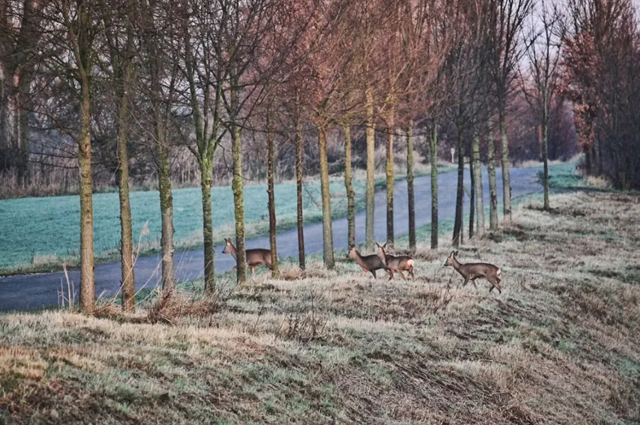
When the clocks are set back at the end of October, this doesn't just affect our sleep rhythm – the danger on the roads also increases.
Suddenly, rush hour traffic falls back into twilight hours, precisely when wild animals are particularly active.
In Switzerland alone, almost 9,900 roe deer, red deer, chamois and wild boar died in road traffic in 2022. Especially in rural regions like Grisons, Appenzell Innerrhoden or the Jura, motorists must expect wildlife crossings. But smaller animals like hedgehogs, martens or birds are also frequent victims.
A roe deer becomes a "rhinoceros"
The consequences of a collision are severe: even a 20-kilogram roe deer develops the impact force of almost half a ton when hitting at 100 km/h. "A roe deer becomes a rhinoceros and a wild boar becomes an elephant," according to AXA accident research. For the animal, this usually means death – for the driver, in the worst case, serious injuries.
Why particularly now?
In autumn, roe deer and red deer search for new feeding areas after grazed fields. They often cross roads in the process. Additionally: salt residues at the roadside attract wild animals. The fact that rush hour traffic now more frequently takes place in darkness and fog worsens the situation.
Tips for motorists
Accident researcher Bettina Zahnd from AXA Winterthur therefore recommends:
- Reduce speed – especially on country roads and in forest areas to 60–80 km/h.
- Be ready to brake and keep forest and field edges in sight.
- When spotting wildlife, immediately dim lights, honk, brake carefully.
- No risky evasive maneuvers: drive straight ahead, hold the steering wheel firmly.
Thanks to ABS, emergency braking is now the best solution – this way energy can be reduced and the collision mitigated.
What to do in case of an accident?
If a collision does occur, the following applies: stay calm, secure the accident site and immediately alert the police (Tel. 117). Anyone who simply leaves an injured animal behind violates animal protection laws. In the case of domestic animals, a veterinarian or animal clinic must also be contacted – they are obligated to provide help around the clock.
Dispute over daylight saving time
The annual time change has been under criticism for years. The hoped-for energy saving effect has not materialized, as the German Federal Environment Agency has shown. More and more countries – such as Russia or Turkey – have abolished the change. Experts call for permanently staying with winter time, as the internal clock of many people never fully adjusts to daylight saving time.
Whether lark or owl – for humans, the time change brings adjustment. For wild animals, however, it can be fatal. Those who drive in autumn with open eyes and adapted speed protect not only themselves, but also nature.