Hunting Weapons and Violence: What the Swiss Data Show
Switzerland has 2.3 to 4.5 million firearms in private possession—approximately 45 weapons per 100 inhabitants. Hunting weapons constitute a significant portion of this stock. In half of all domestic homicides, a firearm is used. How many of these acts are committed by persons with hunting licenses is unknown in Switzerland: the statistics simply do not record it.

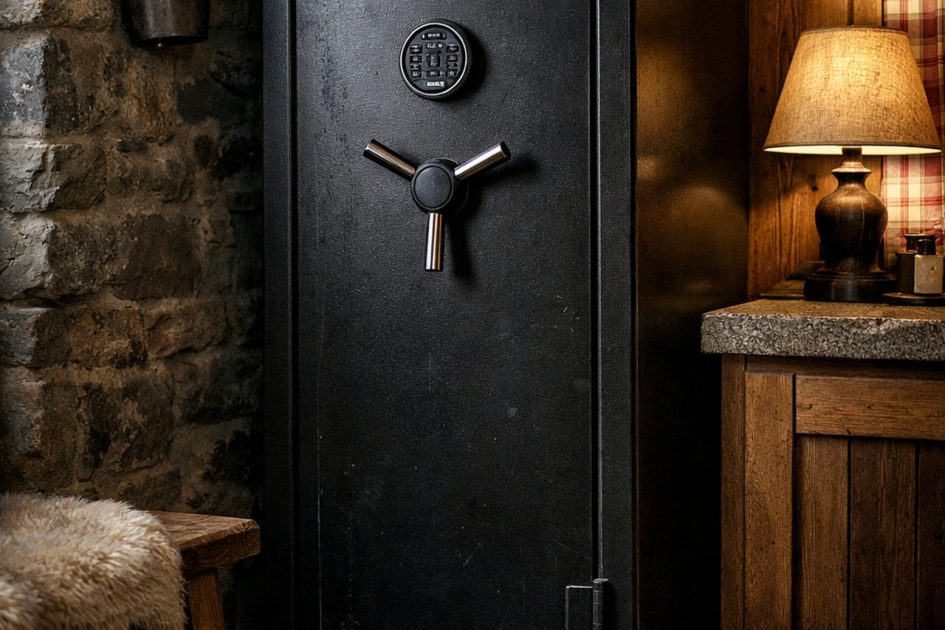
More than a quarter of all Swiss households possess a firearm.
In hunting households, the weapon is not an exceptional object, but rather a fixture of recreational equipment. Hunting rifles and carbines are designed to kill living beings. This is not a moral judgment, but a technical fact: they differ categorically from binoculars or a hiking backpack.
The Dossier on Hunting and Firearms documents that no comprehensive, publicly accessible register of all hunting firearms in Switzerland exists. Numerous older stocks acquired before modern registration requirements remain invisible to the state.
Femicides and Firearms: The Known Figures
On average, a woman dies every two weeks in Switzerland as a result of domestic violence. In 2024, police recorded 21,127 criminal offences in the domestic violence sector – an increase of 6 percent compared to the previous year, with 70 percent of victims being women.
In domestic homicides involving firearms, violent acts end fatally in 45 percent of cases. Firearms make violent situations significantly more often fatal. International studies confirm this correlation: the easier firearms are accessible in a household, the higher the risk of homicide – particularly for women and children.
The Silence of Statistics
The decisive question – how many perpetrators of domestic violence offences with firearms hold a hunting licence – is not answered by any Swiss authority. Neither the Police Crime Statistics (PKS) nor the cantonal hunting authorities systematically record this connection. This is not negligence: it is a structural decision that ensures the risk emanating from hunting households remains statistically invisible.
The Dossier on Hunting and Firearms documents this data gap and shows what is known and what is systematically not collected.
International Evidence: What Studies Show
Other countries have more differentiated data. In the United States, where the correlation between firearm ownership and domestic violence is well researched, studies show: access to a firearm increases the risk of being killed in a domestic violence incident by a factor of 5. In households with hunting weapons, access to the weapon is often particularly easy – ammunition is at hand, the rifle is loaded or easily loaded.
Australia drastically tightened firearms laws after the Port Arthur massacre in 1996 – with a measurable effect on the rate of domestic homicides involving firearms. Switzerland has not taken this path.
The Hunting Licence as a Blind Spot in Prevention
In Switzerland, persons with a history of domestic violence can, under certain circumstances, continue to hold a hunting licence and carry weapons. Coordination between hunting authorities and the civil protection and criminal justice system is incomplete. Those convicted of domestic violence do not automatically lose their hunting rights – a state of affairs long considered untenable in other countries.
The Dossier on Hunting Laws and Oversight analyses which legal instruments exist and where the gaps lie.
Political Responses: Between Downplaying and Reform
In political debate, the connection between hunting firearms and domestic violence is rarely addressed in Switzerland. Hunting associations emphasise that 'legal weapons' are not the problem – an argument that systematically obscures the question of risk in hunting households. Reform proposals calling for closer links between firearms law and violence prevention face resistance from the hunting sector.
Yet the data situation is solvable: an amendment to Police Crime Statistics that records the weapons ownership status of perpetrators – including hunting licences – would place the discussion on an empirical foundation. That this does not happen is a political decision.
Conclusion
The correlation between hunting firearms and violence is not fully recordable in Switzerland – not because it does not exist, but because the data are not collected. What is known: firearms significantly increase the risk of death in domestic violence. Hunting weapons are present and ready for use in the Swiss household. And holding a hunting licence is no proven guarantee of safety in the domestic environment.
Further analyses can be found in the Dossier on Hunting and Firearms as well as in the dossier on Hunting Laws and Oversight.
Support Our Work
With your donation, you help protect animals and give voice to their cause.
Donate Now→