Invasion of Ladybirds and Lucky Beetles
Ladybirds and lucky beetles are appearing in masses and invading homes. The fascinating insects are seeking sheltered winter quarters.

In late autumn, ladybirds repeatedly cause amazement among people.
In search of suitable winter quarters, sometimes thousands fly through the air and settle on anything available: balcony railings, house walls, plants, people, backpacks or lunchboxes.
They find their way into homes by chance. For insects, houses are simply rock formations. These rock formations have crevices, and that is where they want to crawl in and hibernate.
Piles of leaves in gardens are also a popular choice for surviving the cold season, and the beetles not infrequently gather there in very large groups to overwinter together.
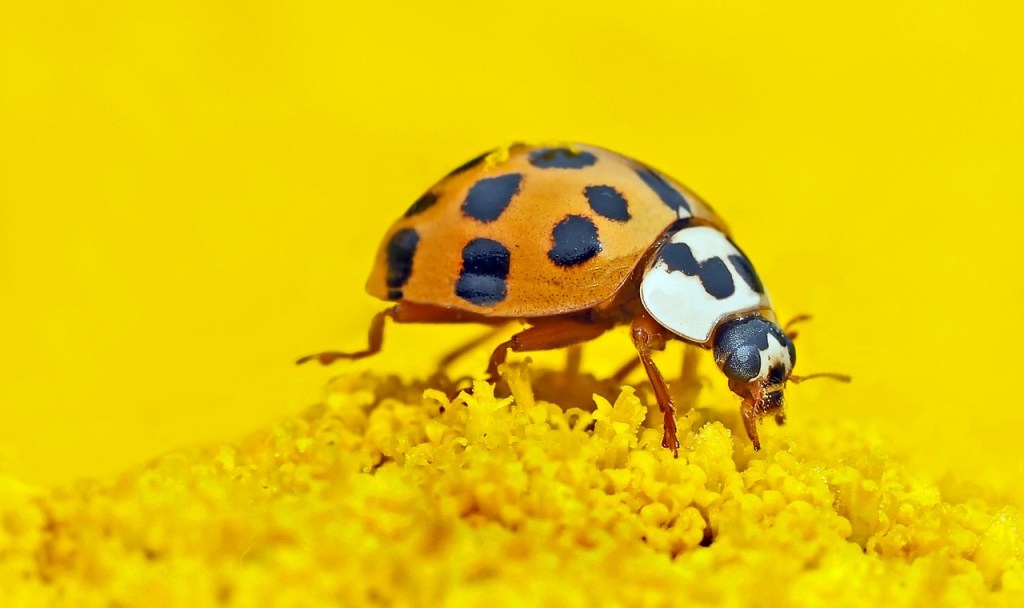
These are predominantly Asian harlequin ladybirds Harmonia axyridis. The insects were originally brought to Europe to biologically control aphids in greenhouses. They are now multiplying ever more rapidly, not least due to climate change.
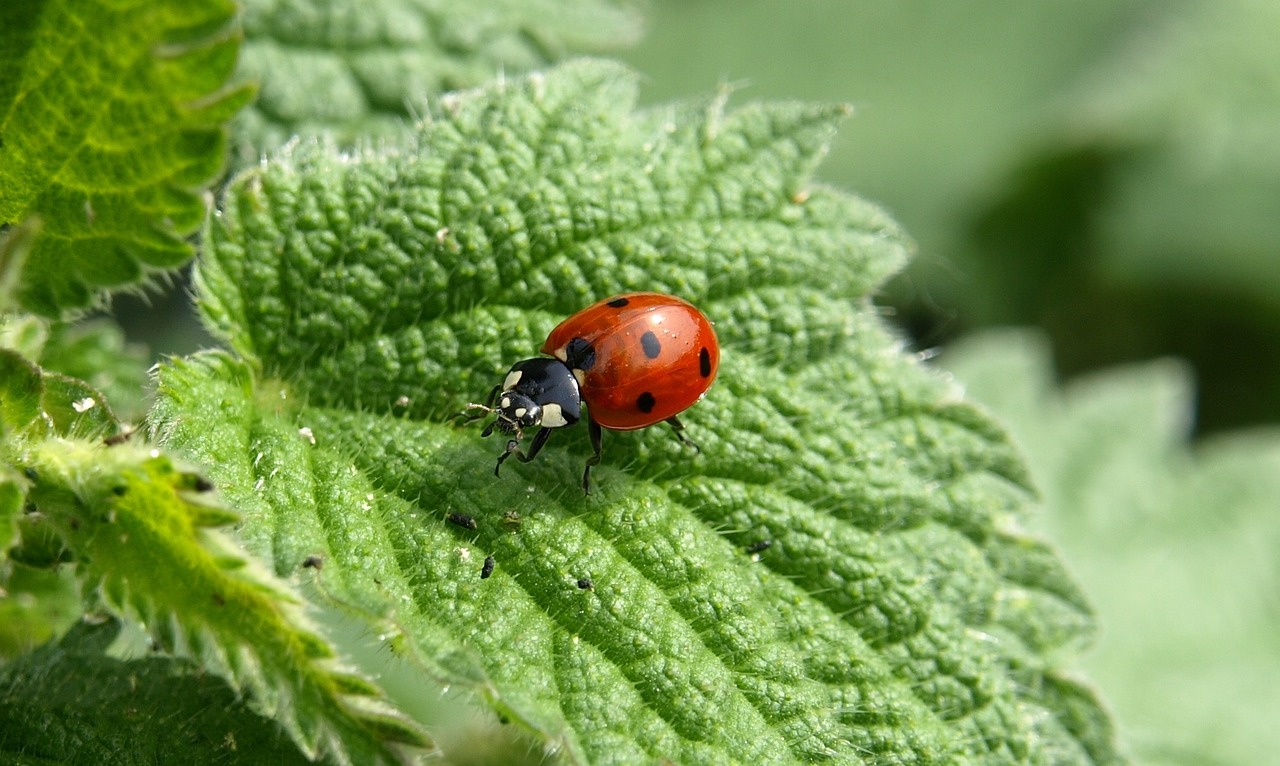
In the meantime, the harlequin has also established itself in the wild. Unlike its red-and-black seven-spot ladybird – known by the scientific name Coccinella septempunctata – it does not feed solely on aphids, but on many other insects, gall midge larvae, and unfortunately also the larvae of competing ladybird species.
Birds shun the bitter-tasting creature and are deterred by its red warning colouration. Humans regard it as a beneficial insect. For medieval farmers, they were a gift from the Virgin Mary; hence the name. Long-term studies show that the beetles should in any case be encouraged in grain fields.
A ladybird hotel in the garden, filled with some leaves, bark or straw, will keep the beetles there instead of in the home — and they even do something useful in the process. They eat aphids that you do not want in your garden.
In Central Europe, these beetles comprise 70 different species. The six-millimeter-large, black-spotted beetles can range in color from orange-red to spotted to completely black. Most specimens have a total of 19 black spots on their wing covers.