Humans were already cooking with fire 780,000 years ago
Humans were already cooking with fire 780,000 years ago. New archaeological finds are changing our understanding of the earliest human diet.

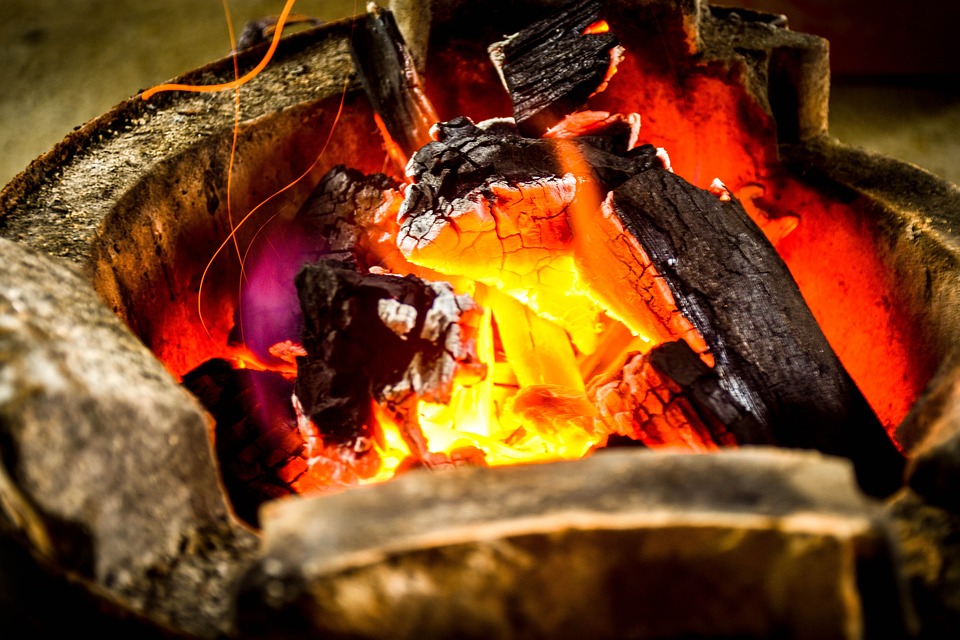
The question of when early humans began using fire to cook food has been the subject of intense scientific debate for over a century.
Until recently, the earliest evidence for cooking was dated to approximately 170,000 years ago. However, a precise analysis of the remains of a carp-like fish found at the archaeological site of Gesher Benot Ya'aqov in Israel proves that the fish was cooked approximately 780,000 years ago — more than 600,000 years earlier than the available data had suggested.
Giant barbel in the ancient Lake Hula
«This study demonstrates the enormous significance of fish in the lives of prehistoric people, for their diet and economic stability. Furthermore, by examining the fish remains found at Gesher Benot Ya'aqob, we were able for the first time to reconstruct the fish population of the ancient Lake Hula and show that the lake contained fish species that became extinct over time. Among these species were giant barbel (carp-like fish) that grew up to two metres in length,» report the study's co-authors, Dr. Irit Zohar, researcher at the University of Tel Aviv, and Dr. Marian Prevost, archaeologist at the Hebrew University of Jerusalem (HU).
«The large quantity of fish remains found at the site proves the frequent consumption of fish by early humans, who developed special cooking techniques. These new findings not only demonstrate how important freshwater habitats and the fish found within them were to the diet of prehistoric humans, but they also illustrate the ability of prehistoric people to control fire in order to cook food, and that they recognized the benefits of cooking fish prior to consumption.»
Continuous cooking tradition demonstrated
By examining the structure of the pharyngeal teeth belonging to the fish fossils, scientists were able to demonstrate that the fish caught in the ancient Lake Hula — near the archaeological site — had been exposed to temperatures suitable for cooking and had not simply been burned by a spontaneous fire. The fact that the cooking of fish can be documented over such a long period of the site's occupation points to a continuous tradition of cooking food and provides further evidence of the high cognitive abilities of the Acheulian hunter-gatherers who were active in this region.
«These groups were intimately familiar with their environment and the various resources it offered them. Furthermore, it becomes clear that they possessed comprehensive knowledge of the life cycles of various plant and animal species. The ability to cook food represents a significant evolutionary advance, as it constitutes an additional means of making optimal use of available food resources. It is even possible that cooking was not limited to fish, but also included various animal and plant species,» added HU Professor Naama Goren-Inbar, the director of the excavation site.
Cooking as a catalyst for brain development
According to the scientists, the transition from consuming raw to cooked food had a major impact on human development and behavior. Since consuming cooked food reduces the body's energy requirements for breaking down and digesting food, other physical systems are able to develop, and changes occur in the human jaw and skull.
These changes freed humans from the daily, intensive labour of foraging for and digesting raw food, affording them sufficient time to develop new behavioral and social systems. The consumption of fish can therefore be regarded as an important milestone in the cognitive evolution of humans, serving as a central catalyst for the development of the modern human brain. More on the relationship between humans and nature in the Education section.