Friedhof Hörnli: Roe Deer Relocated and Shot
During the capture operations, the cemetery is closed to the public each time.

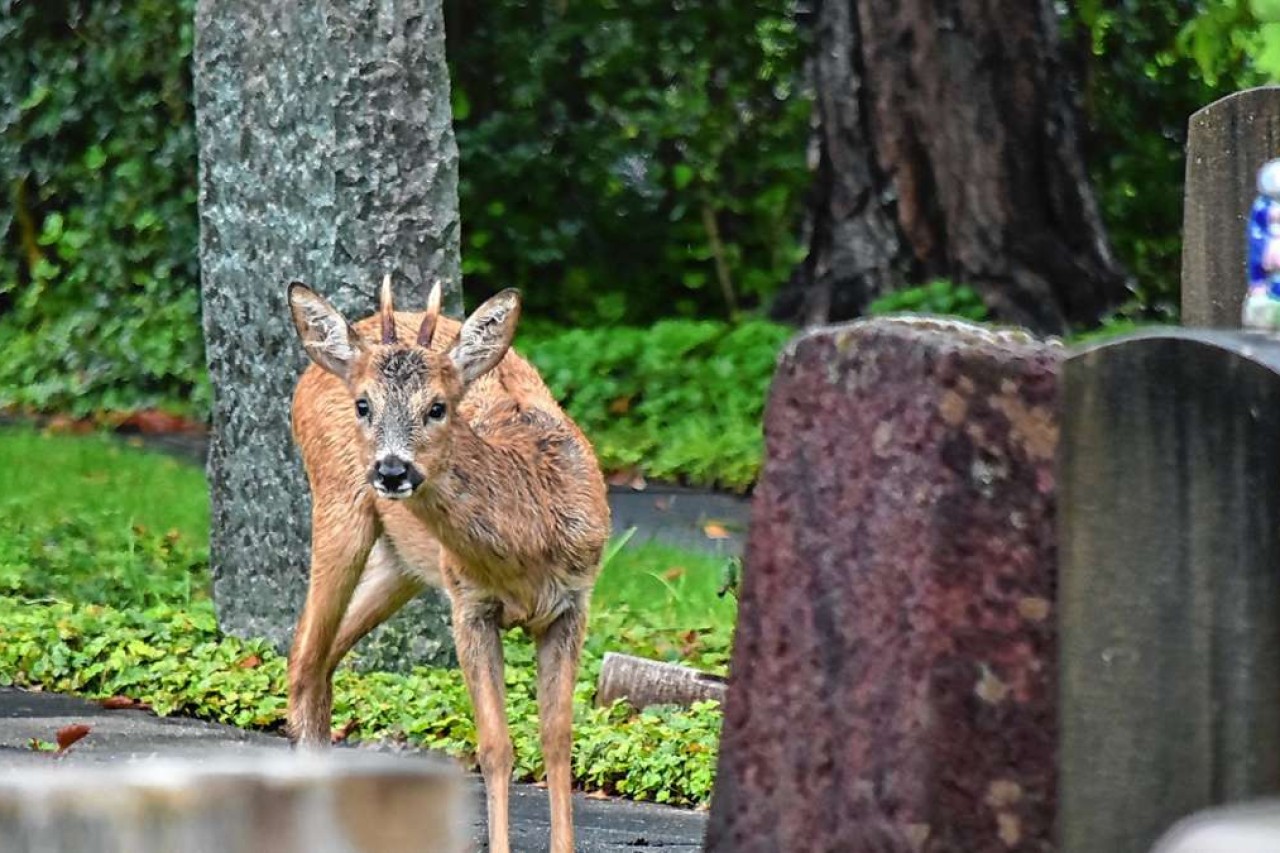
In early 2023, the Fondation Franz Weber, on behalf of the canton, relocated 21 roe deer from the cemetery at Hörnli to the canton of Jura.
Further capture operations are now scheduled between late January and mid-March, according to a press release from Basel-Stadt.
Canton Jura: Two Months of Recreational Hunting for Roe Deer
In the cantons of Jura and Neuchâtel, recreational hunting for roe deer lasts a full two months (October and November), while in other cantons (e.g. Valais or Graubünden) patent hunting also lasts only two weeks in September. In the canton of Vaud, it is four weeks in October. It is pure animal cruelty to terrorise roe deer for two months at the hands of recreational hunters, so shortly before winter. During this time, roe deer need peace and quiet to prepare for winter and to graze undisturbed. The canton of Jura is therefore anything but ideal – and certainly not animal-friendly!
Last year’s roe deer were relocated to the area around the cantonal capital of Delemont and, according to local recreational hunters, were already shot during the first hunting season.
The Canton of Jura, however, wrote on 1 February 2024: Of the 21 animals released in the Delemont district in 2023, six have so far died. The others continue to be monitored, and births were also confirmed by game wardens last spring. However, the Canton of Jura is unable to provide photographic evidence.
Unlike last winter, and based on the experience gained, the releases this time will take place within the three districts of the Canton of Jura.
In the Delemont region, lynxes are also repeatedly captured, relocated, and then shot by recreational hunters.
Jura Once Again Takes in All Cemetery Roe Deer
«Encouragingly,» the canton of Jura has agreed to take in all the roe deer remaining in the cemetery. The Fondation Franz Weber is once again carrying out the planned relocations under the direction of Prof. Dr. Claude Fischer, a recognized wildlife specialist at the Haute école du paysage, d’ingénierie et d’architécture de Genève (HEPIA). The Federal Office for the Environment has reviewed the project and granted the corresponding permit. As in the previous year, the roe deer will be caught using net traps and then transported individually in crates to the Jura, where they will be fitted with an ear tag and released in previously designated areas. Four net-trapping operations are planned. Should any individual animals prove to be sick or injured, they will be put down.
Roe deer were able to acclimatize to box traps
In addition, so-called box traps will be deployed this time. The seven corresponding traps, which are large wooden crates, have already been in place since mid-December 2023 in the lower section of the cemetery. This allowed the animals to become accustomed to them without the traps closing when a roe deer entered. During the capture operations, the traps will be actively activated: when an animal enters a crate, it closes, and the captured animals can be transported to the canton of Jura without delay. The box traps are equipped with wildlife cameras.
Fence as a long-term solution
Once the main section of the cemetery is clear of roe deer, a new fence and a new gate management system are intended to ensure that no new roe deer can access the grounds. The Department of Construction and Transport is currently drafting a corresponding proposal. Given the anticipated costs, the Grand Council will make the final decision on the matter.
More on the subject of recreational hunting: In the dossier The Role and Criticism of Recreational Hunters we shed light on the training, power and self-image of recreational hunters. The scientific evidence is presented in the overview Studies on the Effects of Recreational Hunting.
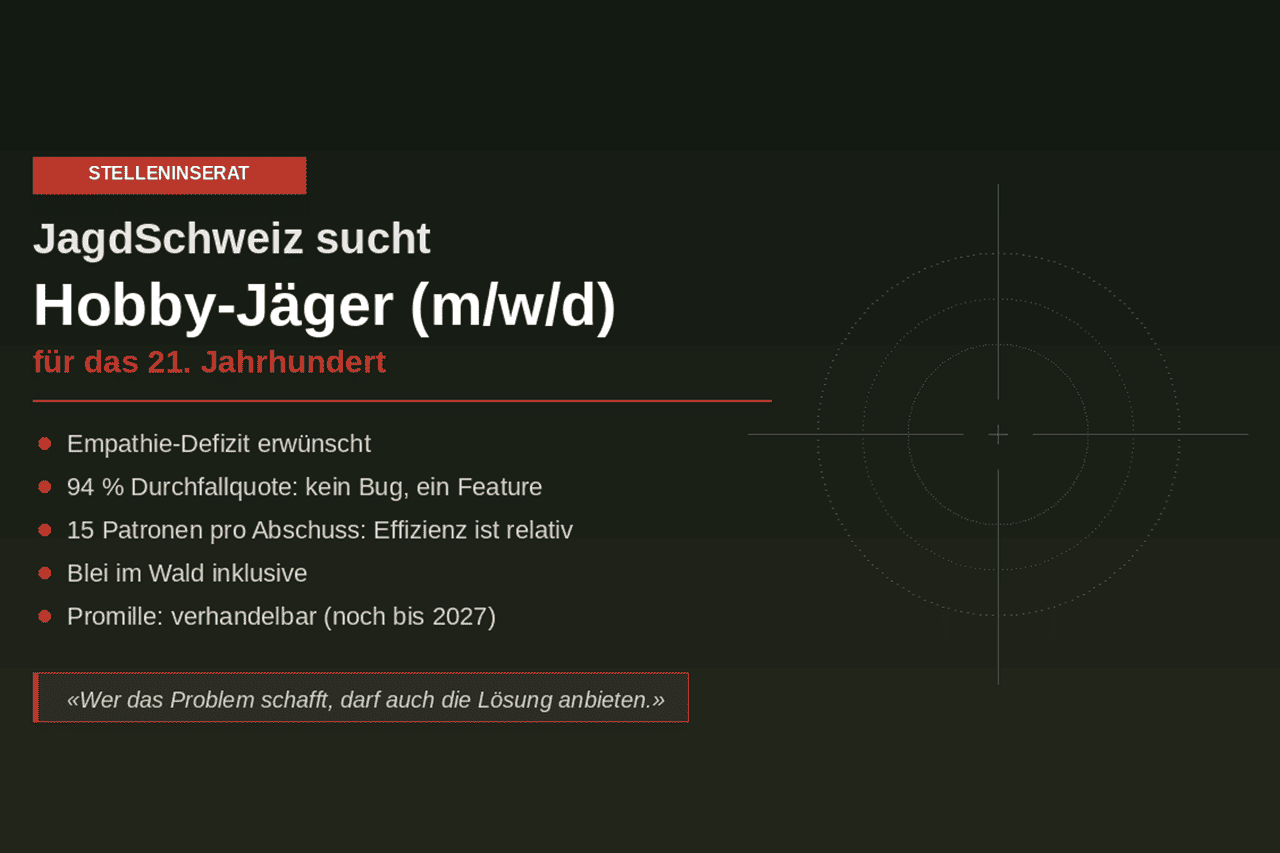
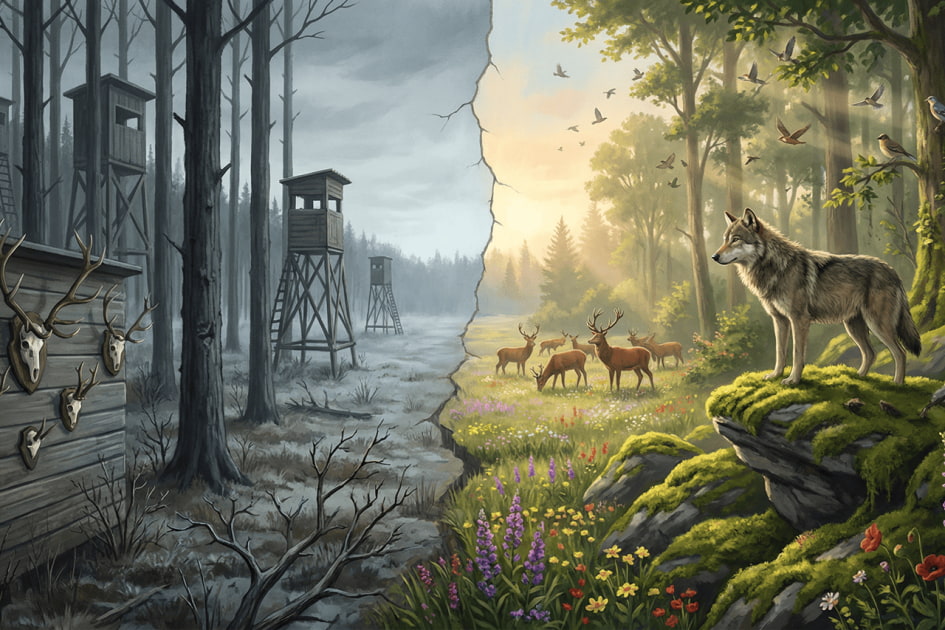
The position of IG Wild beim Wild: IG Wild beim Wild rejects recreational hunting. Our model is the canton of Geneva, which has managed without recreational hunting since 1974: without hunting seasons, without hunting dogs, without driven hunts, without high seats, without the animal cruelty and crime that go hand in hand with hunting season elsewhere. What has worked there for over fifty years disproves every position paper by JagdSchweiz. An association that bases its policy on claims it refutes in its own documents is not a professional organisation, but a factory for misinformation.