ECJ: Veggie burger may be called a “burger”
Plant-based products may continue to be called “burger,” “sausage,” and “steak,” as long as their composition is clearly labelled and does not mislead consumers, the EU Court of Justice ruled.

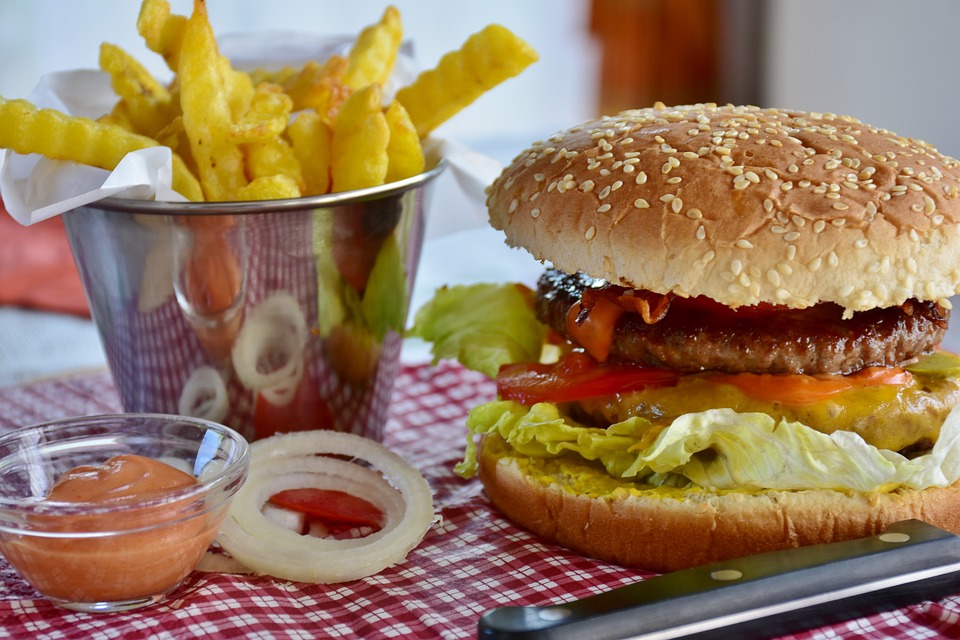
EU member states cannot prevent food manufacturers from labelling vegetarian foods with designations traditionally associated with meat.
This decision was made by the European Court of Justice (ECJ) on 4 October 2024. The condition is that the actual ingredients are clearly labelled.
Common designations such as steak, sausage, schnitzel, and burger may be used to market vegetarian foods, as long as a country has not introduced a specific legal designation for a food based on plant protein, the court ruled.
A French law from 2021, intended to improve transparency for consumers, prohibits the use of terms such as “veggie burger” or “vegan sausages” in the marketing of foods made from plant proteins.
Interest groups such as the European Vegetarian Union (EVU) and the Association Végétarienne de France (AVF) challenged the decree, arguing that it violated EU law.
In August 2023, the French Council of State, a governmental body that advises both the executive and the judiciary, referred the case to the European Court of Justice, the supreme authority for the interpretation of EU law.
The EU judges have now ruled that while member states may create legal designations for foods, including plant-based meat alternatives, they cannot prevent manufacturers of plant-based protein foods from using common names to label their products.
The court emphasised that its ruling does not affect the right of a member state to enforce consumer protection regulations where it considers the marketing to be misleading.
"By ensuring clarity in the labelling of food products, we can promote plant-based alternatives and work towards achieving environmental goals, as well as strengthening competitiveness and innovation in the EU," said Rafael Pinto, EU Policy Manager at the European Vegetarian Union, in a press release responding to the ruling.
Far-reaching implications
Plant-based protein products are gaining increasing popularity in the EU, but uncertainty remains about how these products should be labelled and marketed within the single market.
The EU court ruling is likely to have far-reaching consequences, as countries such as Belgium and Italy are considering the introduction of a law similar to that of France.
A comparable legal question arose in 2017, when the EU's highest court was asked to address the use of dairy product designations for plant-based products such as soy and oat drinks.
At the time, the ECJ ruled that only products actually containing milk may use terms such as milk, butter or yoghurt. This resulted in plant-based alternatives being labelled as "drinks" on European shelves.
Food labelling in the EU has been regulated since the early 1990s, with the trading rules for most products sold in Europe falling under the EU's Common Market Organisations (CMO) within the framework of the Common Agricultural Policy (CAP). This framework governs the production and trade of both animal and plant-based foods in the EU.
In 2020, the European Parliament rejected an attempt, during deliberations on the most recent reform of EU agricultural subsidies, to reserve meat product designations exclusively for products made from animal-derived ingredients. This decision followed a vote by Members of Parliament against a series of amendments aimed at introducing stricter labelling requirements for plant-based products.
| You can help all animals and our planet with compassion. Choose mercy on your plate and in your glass. Go vegan. |
Unterstütze unsere Arbeit
Mit deiner Spende hilfst du, Tiere zu schützen und ihrer Stimme Gehör zu verschaffen.
Jetzt spenden →