Elephant falls into spectator area during Circus Krone guest performance in Osnabrück
At the premiere performance of Circus Krone in Osnabrück on Wednesday, an elephant was rammed by two of its conspecifics and fell into the visitor area. At least one spectator was injured. The incident shows once again that wild animals such as elephants do not belong in the circus ring, says Dr Yvonne Würz, specialist adviser on animals in zoos and circuses at PETA.

At the premiere performance of Circus Krone in Osnabrück on Wednesday, an elephant was rammed by two of its conspecifics and fell into the visitor area. At least one spectator was injured. The incident shows once again that wild animals such as elephants do not belong in the circus ring, says Dr Yvonne Würz, specialist adviser on animals in zoos and circuses at PETA. The animal rights organisation is urgently calling on the German federal government finally to adopt a ban on wild animals in circuses. Germany is one of the last EU countries without such a ban.
«Accidents in circuses like the one in Osnabrück will keep happening as long as the cruelty to animals in the ring is not brought to an end,» says Würz. «Politicians have a duty to protect people and animals from the irresponsibility of circus staff. The wild animal ban must come, otherwise there will soon be more injuries or even deaths to mourn. A rolling zoo with elephants, tigers and other animals trained under duress is a ticking time bomb.»
47 escapes documented since 2009
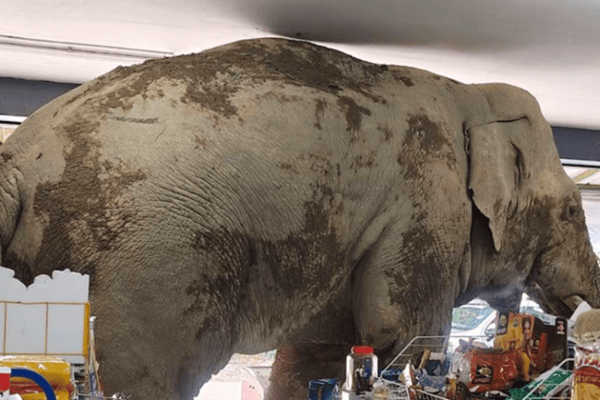
Only recently there was another incident at Circus Krone. In Neuwied, an elephant escaped from its enclosure, walked through the town and crossed busy roads. Accidents involving wild animals such as elephants, tigers or bears, and their escapes from German circus operations, are numerous documented. In total, between 2009 and 2018 there were at least 47 escapes of bears, elephants, hippopotamuses, big cats, rhinoceroses and primates from circus operations in Germany. Several people were killed and injured in these incidents in recent years. Across the EU, Germany is by far the country with the most incidents involving animals from circuses.
Ban on wild animals long overdue
Hundreds of wild animals are still being driven across Germany on lorries and forced, with whips or the so-called elephant hook, to perform unnatural movements. Twenty-seven European countries have already banned or at least restricted wild animal acts in circuses. In 2017 alone, Scotland, Italy, Ireland, Romania, Estonia and Latvia passed new laws banning wild animals in circuses.
In addition to the German Federal Chamber of Veterinarians the Bundesrat has also already spoken out three times in favour of a ban on certain animal species in circuses. According to a representative forsa survey from May 2014, 82 per cent of Germans take the view that wild animals cannot be kept in a species-appropriate manner in circuses.
The animal rights organisation is calling for a general ban on animals in circuses, because housing in small enclosures, constant transport and training shaped by violence and coercion lead to behavioural disorders, illness and often an early death. More on animal rights and on the animal welfare problem.
Do you have a tip, a source or a correction for this article? Write to us.
More on the subject of recreational hunting: What the research says about this is shown by Hunting fact-checked: the state of research.
The position of IG Wild beim Wild: IG Wild beim Wild rejects recreational hunting. Our model is the canton of Geneva, which has managed without recreational hunting since 1974: without hunting seasons, without hunting dogs, without driven hunts, without high seats, without the animal cruelty and crime that go hand in hand with hunting season elsewhere. What has worked there for over fifty years disproves every position paper by JagdSchweiz. An association that bases its policy on claims it refutes in its own documents is not a professional organisation, but a factory for misinformation.
Wild animals need a voice
Investigations, petitions and background on recreational hunting. As a thank-you, you will immediately receive our free guide «Recreational hunting on your doorstep: what you can do».
Support our work
With your donation you help protect animals and give their voice a hearing.
Donate now →