Donkeys and mules on Santorini exploited as «donkey taxis»
Scorching heat and wounds covered in flies: on the Greek holiday island of Santorini, donkeys and mules are forced to carry tourists as so-called donkey taxis into the old town of Firá. Several times a day, the animals are compelled to navigate a steep path of more than 500 steps under an enormous load on their backs. PETA has obtained recent video footage showing that even exhausted and wounded animals are, during working hours, mostly tied up in the sun and without any access to water or shade, waiting for their

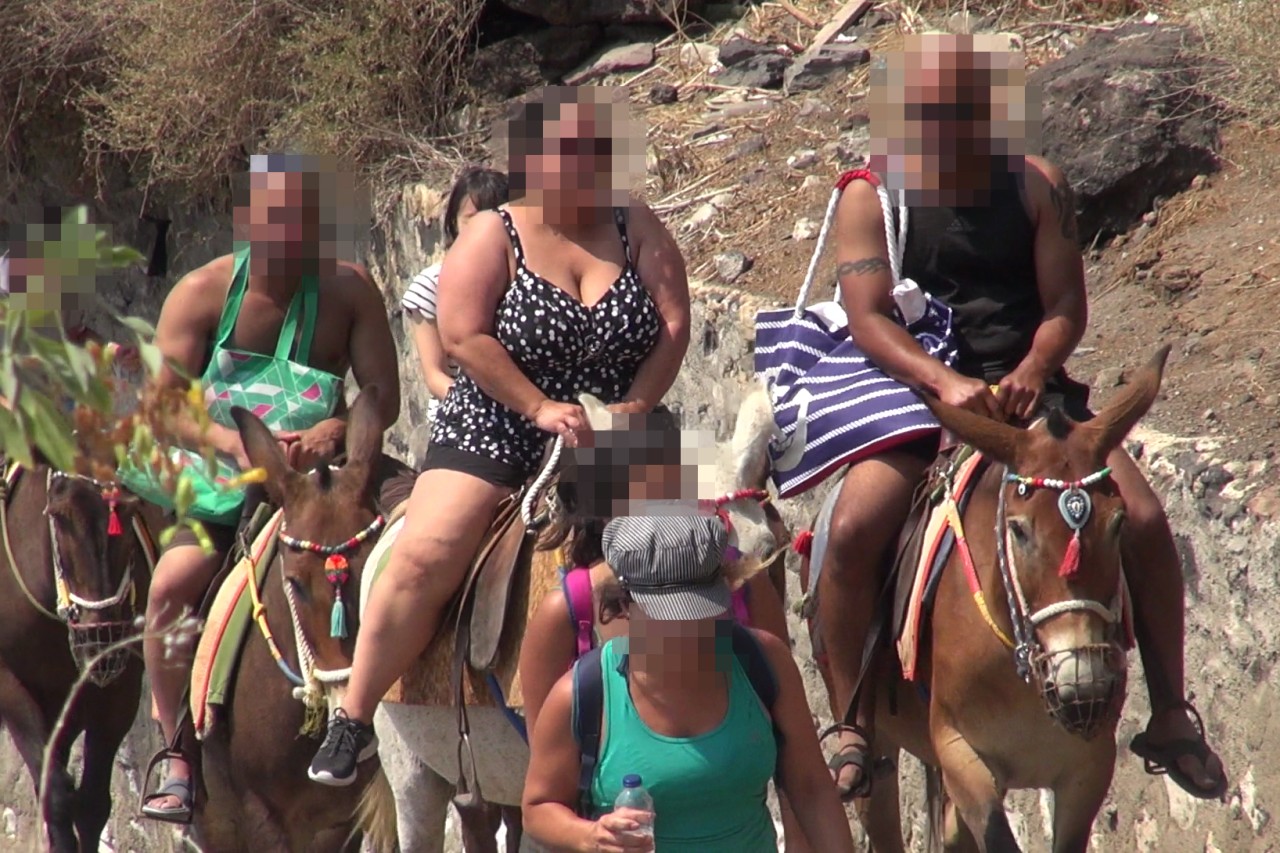
Scorching heat and wounds covered in flies: on the Greek holiday island of Santorini, donkeys and mules are forced to carry tourists as so-called donkey taxis into the old town of Firá.
Several times a day, the animals are compelled to navigate a steep path of more than 500 steps under an enormous load on their backs.
PETA has obtained recent video footage showing that even exhausted and wounded animals are, during working hours, mostly tied up in the sun and without any access to water or shade, forced to wait for their next deployment.
«Riding donkeys on Santorini must finally be banned,» says Jana Hoger, a specialist adviser at PETA. «This abuse has serious health consequences for the animals and is unacceptable. We therefore appeal to all animal lovers not to support this so-called attraction and to use the cable car at the harbour instead. Sick, injured and potentially pregnant animals must be removed from service immediately. A rescue centre for donkeys is urgently needed.»
Animals driven to exhaustion despite injuries
According to veterinary recommendations, donkeys should carry a maximum of 20 percent of their own body weight, which would amount to approximately 50 kilograms. The footage shows that tourists and owners are in some cases an considerable burden for the animals, which can also lead to hoof and joint problems in the long term. Owners sometimes drive the animals on with blows from sticks and whips.
Some animals suffer from painful abrasions and wounds on their undersides due to ill-fitting and worn-out saddles. While the animals must endure the Mediterranean sun as they wait for their next tour, their owners deny them even the most basic necessities such as water, shade, or shelter from the elements — in violation of Greek animal welfare law. When donkeys become too weak, they are often abandoned and left to fend for themselves.
Update: Greece introduces new regulations
Following growing protests from animal welfare advocates, the Greek government has now addressed the problem — and has simply banned overweight tourists from riding. The pack animals “may no longer carry more weight than is appropriate for their size, age, and physical condition,” decreed the Ministry of Rural Development and Food. “The load must not exceed 100 kilograms, or more than one fifth of the respective animal's body weight.”
“It's a huge step forward — our hard work has paid off,” activist Elisavet Chatzi told the «Daily Mail». More on animal rights.
More on the subject of recreational hunting: What the research says about this is shown by Hunting fact-checked: the state of research.
The position of IG Wild beim Wild: IG Wild beim Wild rejects recreational hunting. Our model is the canton of Geneva, which has managed without recreational hunting since 1974: without hunting seasons, without hunting dogs, without driven hunts, without high seats, without the animal cruelty and crime that go hand in hand with hunting season elsewhere. What has worked there for over fifty years disproves every position paper by JagdSchweiz. An association that bases its policy on claims it refutes in its own documents is not a professional organisation, but a factory for misinformation.