Bear visits capital city
A wild bear enters the capital of Lithuania. Hobby hunters decline a government request to shoot the animal.

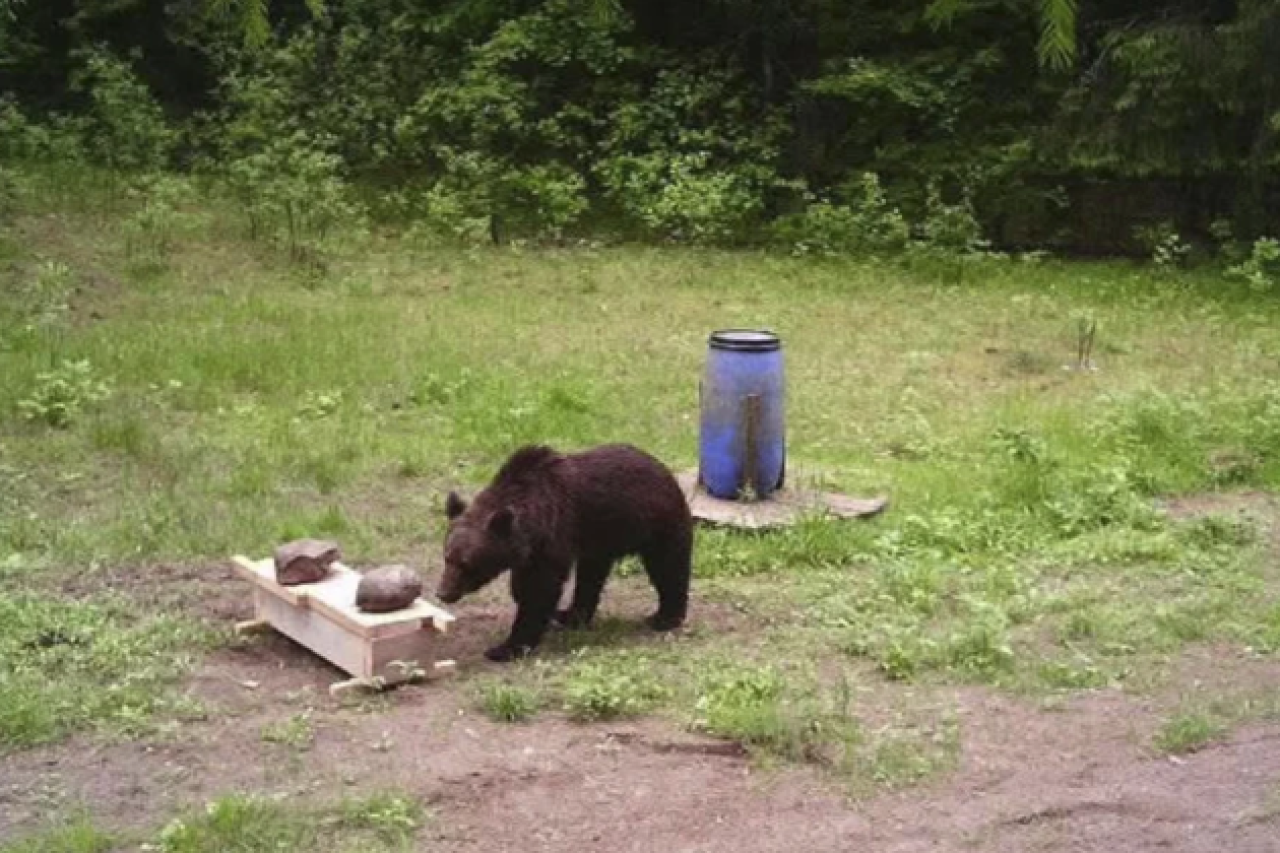
A young female bear caused a stir after wandering out of the forest into the green suburbs of the Lithuanian capital.
For two days, the brown bear strolled through the districts of Vilnius, trotted across motorways and explored backyards – all while being pursued by onlookers with smartphones and eventually by drones.
The government subsequently issued a permit to shoot and kill the bear.
This did not go down well with Lithuania's hobby hunters who refused, knowing that only a tiny number of this protected species exist across the entire country.
The Lithuanian Association of Hobby Hunters and Anglers expressed shock at the government's order.
The association's administrator, Ramutė Juknytė, said the bear was a beautiful young female around two years old who did not deserve to be shot. «She was frightened, but not aggressive. She simply did not know how to get out of the city, but she had done nothing wrong», he said.
The organisation tracks the movements of bears. It estimates that there are only five to ten bears in the Baltic country, though it does not have an exact figure.
The drama began on Saturday when the bear entered the capital. It was the first time in many years that a bear had entered the city, and it became a national story. The animal came within 4–5 kilometres of the city center.
Since the Lithuanian authorities caused a stir with their permit to kill the bear, they have found themselves on the defensive.
Deputy Environment Minister Ramūnas Krugelis said, according to a report by Lithuanian broadcaster LRT, that the kill permit had been issued solely as a precautionary measure in case the bear posed a threat.
The hobby hunters proposed a more humane approach: sedation, tracking and relocation.
While the debate about the bear's fate was being conducted, the female bear took matters into her own hands and left the city.
Juknytė said that the bear was captured on camera on Wednesday peacefully wandering through a forest about 60 kilometres from Vilnius and eating corn.
Brown bears are native to the region and were once widespread. In the 19th century, they were exterminated in Lithuania through hunting and the loss of their habitat.
In recent years, they have been reappearing in small numbers, mostly from neighbouring countries such as Latvia and Belarus, where small bear populations still exist. The bears are protected under Lithuanian and EU law, as they are considered a rare and endangered species in the region.