Climate change disrupts bird migration
The opportunists among birds can cope with the changing environmental conditions, while sensitive birds like the northern bald ibis need our help.


A recent report from the Waldrappteam Conservation & Research is catching the attention of ornithologists.
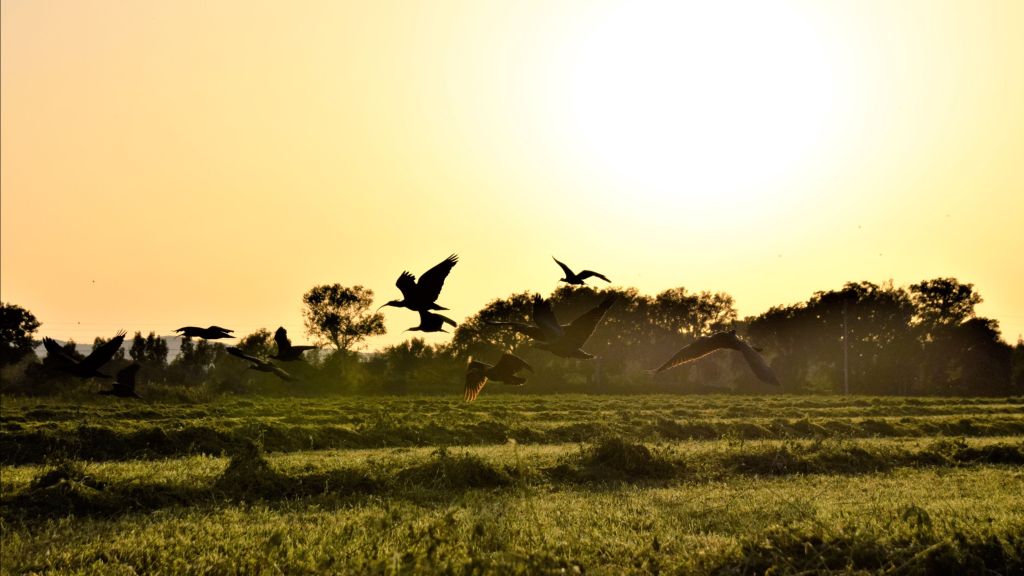
Northern bald ibises fail to cross the Alps
The majority of northern bald ibises from the colonies in the northern Alpine foothills have still not crossed the mountains heading south. The migratory birds are now in acute danger due to the approaching onset of winter. Specifically, 17 birds from the colony at Überlingen on Lake Constance in Baden-Württemberg are currently located near the city of Chur in the Swiss canton of Graubünden, along with 29 birds from the two colonies at Kuchl in the state of Salzburg and Burghausen in Bavaria. The birds must now be caught by the conservation specialists of the Waldrappteam and transported to the southern Alpine region. From there, they are expected to fly on their own to their winter quarters in Tuscany. The young birds in the group were therefore unable to learn the complete migration route. Nevertheless – as the conservationists hope – they will find their way back to their breeding grounds independently once they reach sexual maturity. Should that not work out, they could be integrated into breeding colonies south of the Alps.
Climate change delays departure
«Climate change is throwing bird migration into considerable disarray. Migratory birds must learn to cope with the changing environmental conditions. Some species manage this quickly, while others quite literally fall by the wayside,» says Professor Dr. Klaus Hackländer, wildlife biologist and board member of the Deutsche Wildtier Stiftung. Above all, the unusually mild October, with temperatures of up to 26 degrees Celsius, affected the activity of many migratory birds this year. According to the German Meteorological Service, temperatures were approximately eight to nine degrees above the long-term average. This has consequences – including for the animals. Johannes Fritz, director of the Waldrappteam Conservation & Research, confirms: «Since the northern bald ibises began their migratory behavior around 10 years ago, we have observed a clear trend: the start of autumn migration is becoming increasingly variable and departures are occurring later and later.» Initially, the northern bald ibises began their flights toward the Alps in the first days of October. Last year, the majority of the birds did not cross the Alps until October 26th, and this year they did not depart until October 31st.
While sensitive and rare birds such as the northern bald ibis miss their departure window, opportunistic birds with large populations such as cranes or greylag geese do not set off at all. Lake Galenbeck, an important roosting and resting area near the Klepelshagen foundation estate in Mecklenburg-Vorpommern, is bursting at the seams in autumn with up to 25’000 cranes. Each year, some of the cranes also attempt to overwinter there. «As long as the lakes in which the cranes’ roosting sites are located do not freeze over, and they can find enough to eat, they see no reason to move elsewhere,» says Hackländer.
A bird's migratory behavior is encoded in its genes. How long individual bird species will need to adapt to climate change is difficult to predict. «Of course, all birds need our support,» says Hackländer. «But if we want to save rare species, we must above all keep an eye on those birds that are struggling with climate change and help them.» The Deutsche Wildtier Stiftung supports the Waldrappteam Conservation & Research by providing GPS transmitters that document the animals’ flight routes. This allows migratory behavior and points of danger to be identified quickly.
| You can help all animals and our planet with compassion. Choose empathy on your plate and in your glass. Go vegan. |