Climate Change and Its Effects on the Breeding Season of the White-winged Snowfinch
A new study by the Swiss Ornithological Institute shows: climate change is altering not only the start but also the end of the breeding season of the White-winged Snowfinch — with potentially serious consequences for the future of this alpine bird species.

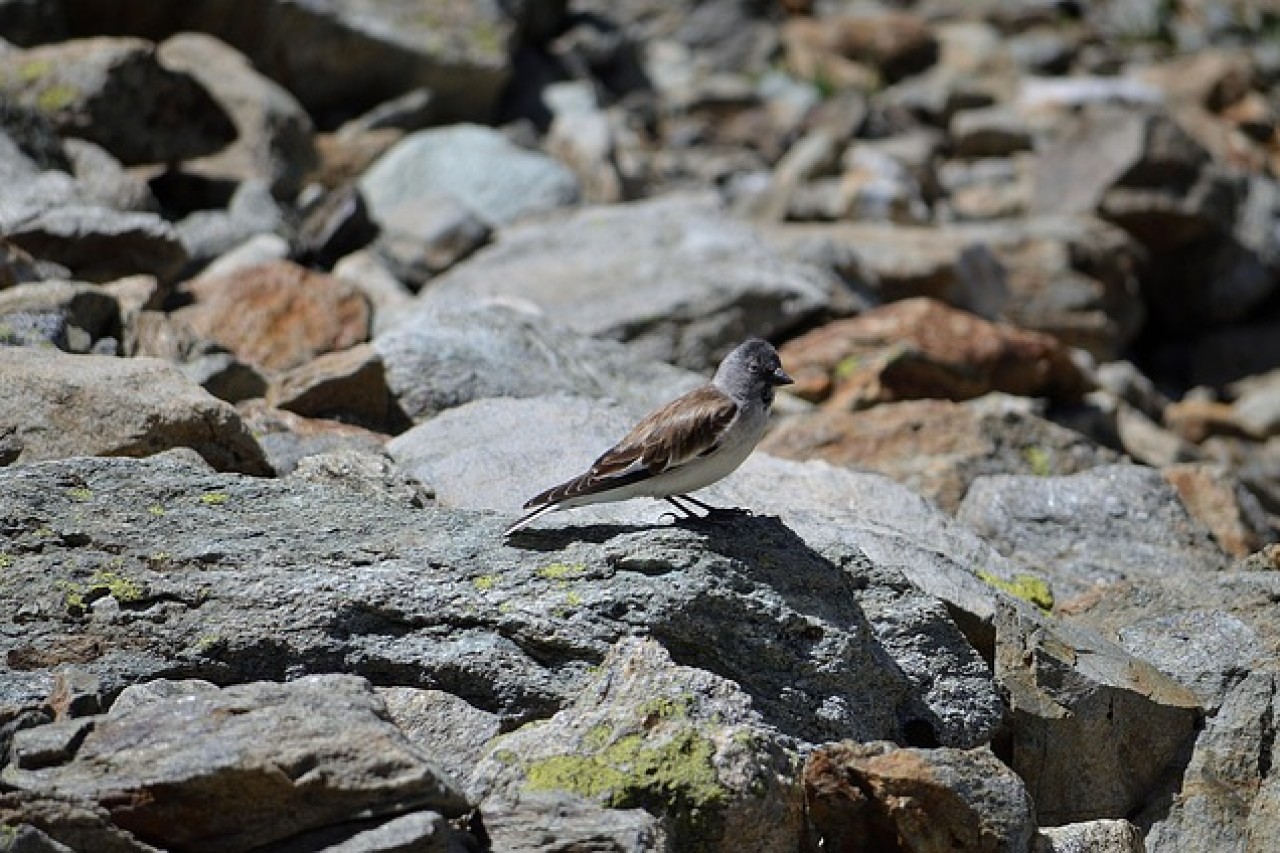
With climate change, temperatures are rising particularly strongly in mountain regions.
There, the breeding season is short and the food supply is limited to a brief period. It is therefore all the more important for birds specialised in high-altitude environments, such as the White-winged Snowfinch, to find precisely the right time window for breeding.
Based on more than 12’000 records submitted by birdwatchers on the citizen science platform ornitho.ch between 2006 and 2021, researchers at the Swiss Ornithological Institute have analysed how temperature, precipitation and snow conditions influence the breeding period of the White-winged Snowfinch. The result: higher spring temperatures lead to an earlier start of breeding. At the same time, high summer temperatures cause the breeding season to end earlier.
“Our data show that the breeding season shifts forward by an average of around six days per additional degree in spring, but is shortened in summer by more than four days per degree,” explains lead author Carole Niffenegger. “This means: an earlier start does not provide more time for a second brood.” Particularly concerning: despite the adjustment of the breeding season to environmental conditions, the average temperature during the breeding period rose by 0.8 degrees — less than the general summer temperature increase, but still perceptible. This indicates that the White-winged Snowfinch is unable to fully adapt its breeding timing to the changing environmental conditions. As a result, food for the chicks is likely insufficient, and the species is being pushed to higher elevations.
The habitat is limited upwards, however. If we want to preserve the snow finch, for which Switzerland bears a high degree of international responsibility, we must combat climate change and maintain the nutrient-rich, short-grassed alpine meadows where the snow finch can successfully raise its young.