69 dead birds discovered beneath a wind farm installation
The Gotthard wind farm and its impact on birds are today in the spotlight of the Swiss national press.

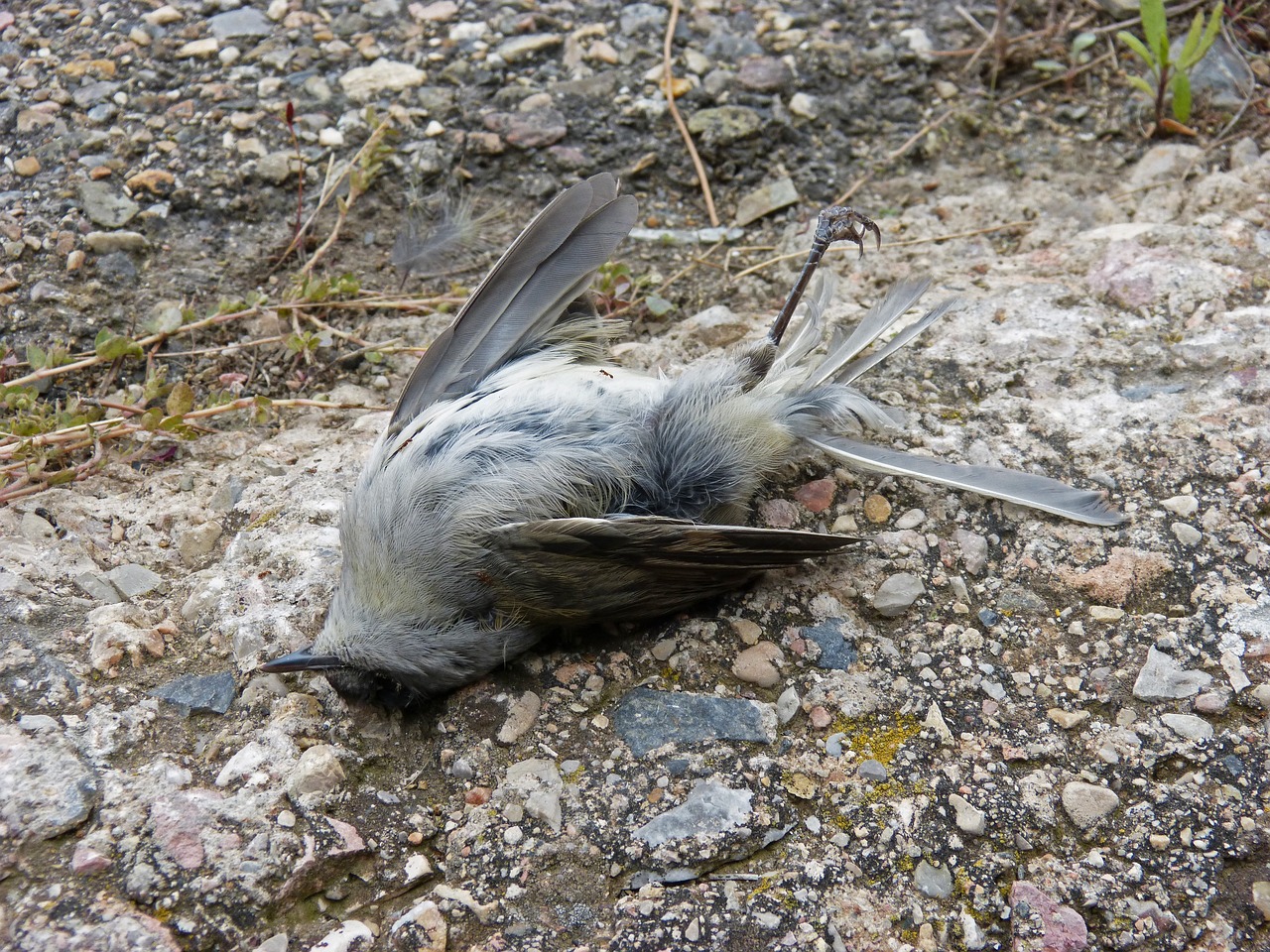
Biologist finds 69 carcasses beneath a turbine tower
The Tages-Anzeiger (TA) raises doubts that the number of birds falling victim to the installation's rotor blades is being underestimated.
In a full-page article, the newspaper reports that a biologist from the Swiss Vogelwarte in Sempach found 69 bird carcasses beneath one of the towers of the Gotthard wind farm in June 2021. “I was struck by how many dead animals I found entirely by chance,” researcher Stefan Werner told the TA. Among them were endangered and potentially endangered species such as the willow warbler, red-backed shrike and yellow wagtail, as well as numerous dead insects.
The Vogelwarte immediately informed the federal authorities, the Canton of Ticino and the operator of the installation, Azienda elettrica ticinese (AET). According to an AET spokesperson, the wind farm's shutdown system had not yet been properly calibrated at that time.
Casualty figures lack credibility
In the meantime, the company, in cooperation with the cantonal authorities, presented preliminary findings of an investigation in February, indicating up to 10 collisions per turbine per year. Figures that, in the view of Elias Vogt, president of the Swiss Open Space Association, are not credible.
The issue is highly sensitive, as a vote on the federal law on a secure electricity supply from renewable energies is being held on 9 June. “The greatest threat to our birds is climate change,” argues Priska Wismer-Felder, National Councillor (Centre/LU) and vice-president of Suisse Eole, the organisation representing the interests of the wind energy industry, speaking to the Zurich newspaper. “The danger posed by wind turbines, by contrast, is minimal.”
Long-lived species particularly at risk
Stefan Werner finds such comparisons too simplistic. “Especially with long-lived birds with low reproduction rates, a few additional deaths per year can lead to the disappearance of the species in the affected area.” The expert cites bearded vultures, eagle owls, and red kites as examples in this context.
Another danger for birds is the destruction of habitats by wind farms when the location is not carefully chosen. This is not reflected in the death toll: a purely numerical discussion is therefore not appropriate, according to the expert. Werner does not wish to comment on the June vote, but merely to point out that, as a scientist, he holds a clear position: “We must seriously examine the consequences of wind energy use for birds.”