Meat consumption in Switzerland: Annual quota already exhausted in May
The average Swiss person eats three times as much meat as our planet can sustain.

Meat Exhaustion Day: 2 May
The Swiss are eating too much meat.
The global animal welfare organisation VIER PFOTEN has calculated the “Meat Exhaustion Day” — the day on which the maximum recommended annual meat consumption for the country is reached. For Switzerland, that day is 2 May. The calculation is based on the “Planetary Health Diet” developed by the renowned EAT-Lancet Commission, which incorporates the impact of diet on climate and human health in its evidence-based nutritional recommendations. With 2 May, Switzerland reaches the critical threshold roughly two months ahead of the global average (24 June).
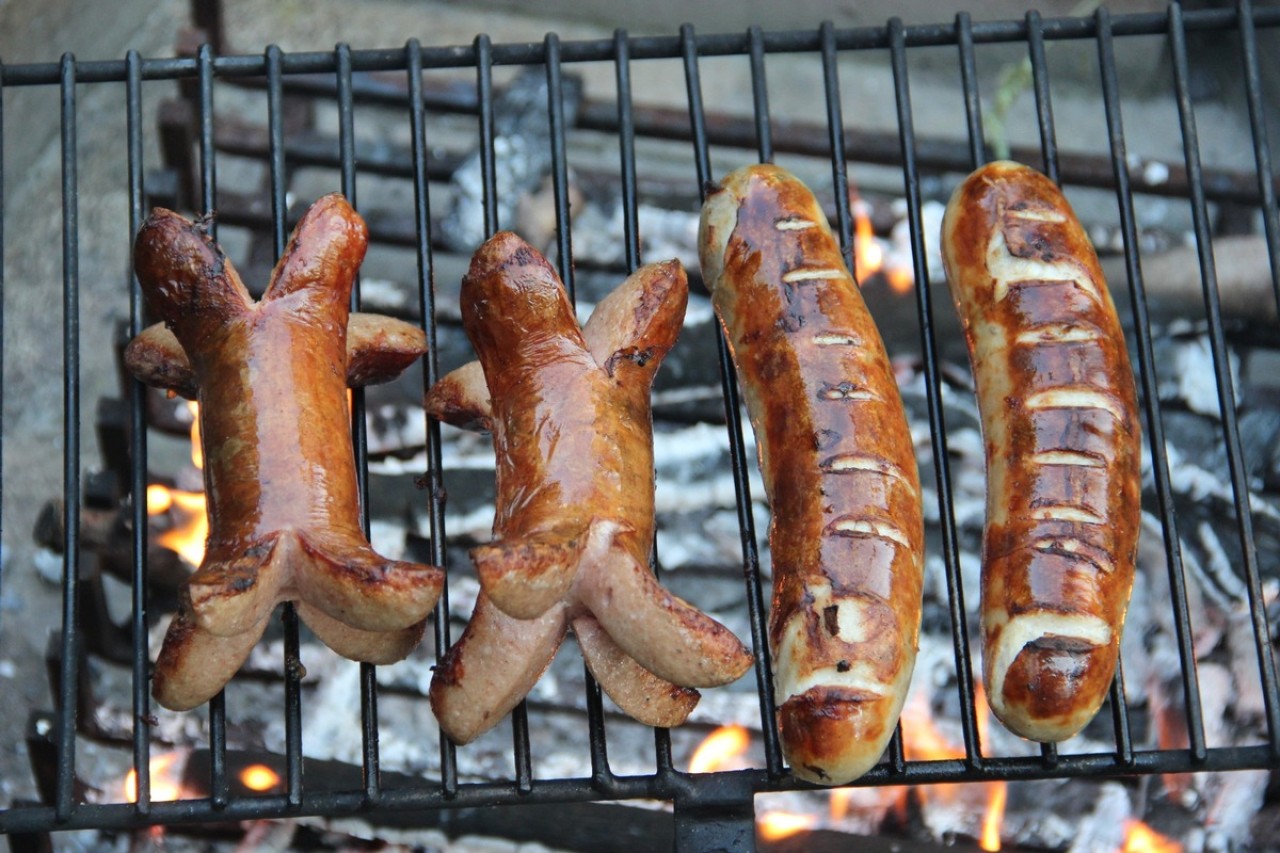
“Around three times as much meat as recommended — that is harmful to everyone: to our health, to the climate, and above all to animals. In Switzerland alone, more than 80 million animals are slaughtered to satisfy our enormous appetite for Cervelat and the like.”
Julia Fischer, Campaign Manager for Farm Animals and Nutrition at VIER PFOTEN Switzerland.
The environment also suffers from the high demand for meat. The largest share of agricultural emissions is attributable to livestock farming. According to the greenhouse gas inventory of the Federal Office for the Environment (BAFU), published in 2023, 10% of total Swiss greenhouse gas emissions are attributable to livestock farming (8% from enteric fermentation and 2% from the management of farm manure). Overall, agriculture generates more emissions than air travel in Switzerland.
12.5 Cervelats instead of 4
At 47.3 kg per capita per year, meat consumption in Switzerland is considerably higher than the global average (33 kg per capita). On a weekly average, every person in Switzerland eats almost 1 kg of meat — or, expressed in Cervelat portions, as many as 12.5 sausages. In Cervelat equivalents, that is 8.5 sausages more than recommended by the Planetary Health Diet by the EAT-Lancet Commission.
Hidden Costs of Meat Consumption
The true costs of this excessive consumption remain, gravely, hidden from view. “Cheap meat from intensive factory farming in particular comes at a high price in reality. The downstream costs of environmental pollution, climate impact, antibiotic use, as well as rising healthcare costs due to overly meat-heavy diets are slowly but surely catching up with us. The federal government recognizes this too and concludes in its climate strategy for food and agriculture: meat consumption must decrease,” explains Julia Fischer.
As part of its climate strategy, the federal government emphasizes that a large number of studies conclude that a diet rich in plant-based foods and lower in meat benefits both health and the environment. The FOEN also lists excessive nitrogen inputs from agricultural livestock farming as a major threat to biodiversity.
VIER PFOTEN calls on policymakers to develop more measures to reduce meat consumption. Because the future undoubtedly lies in plant-based nutrition. “Putting a stop to the countless discount promotions on cheap meat would be a good start. Furthermore, transparent labeling of animal products is needed. The farming conditions of the animals and their origin must be clearly recognizable at a glance for consumers in retail and food service, if we are finally to curb excessive meat consumption,” demands Julia Fischer.
Note on Methodology
A Cervelat weighs 100 g but also contains ingredients other than meat. For our calculations, we therefore used the fresh meat equivalent (FME) method of the Federal Office for Agriculture (FOAG) and based our figures on the average value that a 100 g Cervelat contains a total of 72.8 g of meat.
| You can help all animals and our planet with compassion. Choose empathy on your plate and in your glass. Go vegan. |