Wolf or dog? Why many «wolf attacks» are never proven
A dead family dog in Tuscany makes international headlines, yet the culprit remains unconfirmed.
Update of 24 July 2026: The Camaiore case confirms our analysis. The alleged wolf attack on a child never happened. Details at the end of the article.
In a Tuscan village a large, canid-like animal killed a family dog while a two-year-old child stood beside it: this report went through the European tabloid press over the past few days as a «confirmed wolf attack».
Yet to this day there is no official or forensic confirmation that it really was a wolf. The correct designation is therefore «alleged wolf attack», not «confirmed wolf attack».
What is missing from the reports is the decisive evidence. There is neither a DNA sample nor an official confirmation, only the assessment of a family and an interest-driven local association. The Blick article on the case, written by editor Gabriel Knupfer, uncritically adopted the sensationalist portrayal and the unsubstantiated association statement, without any assessment of its own or verification of the source.
Who claims the «three to four wolves»
The number circulated in numerous media outlets: at least three or four wolves must have devoured the 22-kilogram dog. This claim, however, did not come from the police, the wildlife wardens or wildlife biologists, but solely from the «Associazione Nazionale per la Tutela dell’Ambiente e della Vita Rurali» (National Association for the Protection of the Environment and Rural Life), an organisation that, despite its name, primarily represents agricultural and rural interests. The association itself described the figure as a hypothesis, derived from the condition of the remains that were found, which still needs to be confirmed. An independent verification of this speculation has not taken place to date.
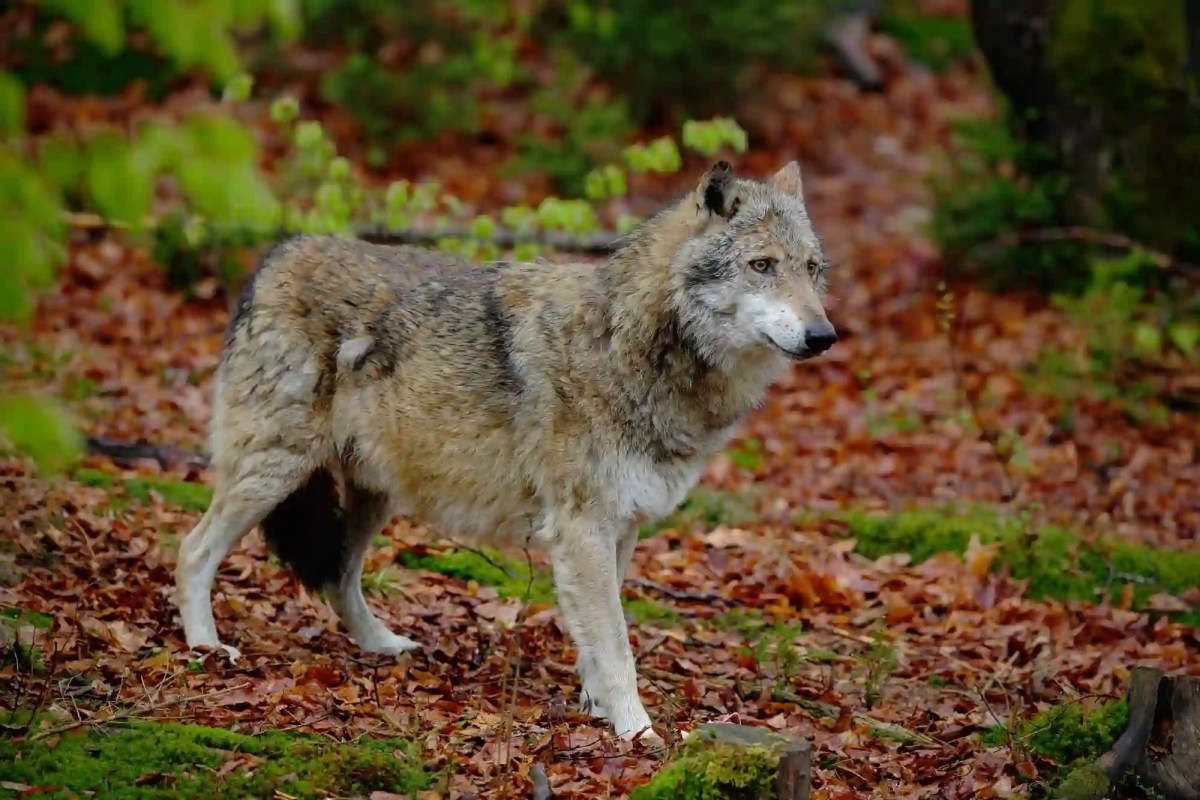
Equally telling is the father's description of the animal to the press: he estimated it at 60 to 70 kilograms, considerably more than the actual weight of adult Apennine wolves, which usually weigh 25 to 35 kilograms. This figure is a subjective perception born of shock in the moment of the event, not forensic or officially verified evidence, and it shows how little the circulating details can actually be relied upon.
No fence, no heroic deed, but behavioural biology
While international media staged the story as that of a «hero dog», the Italian animal portal Fanpage/Kodami clearly contradicted this media framing. The headline there: «Not a heroic act, this is ethology». At the time of the incident the property was not fenced, even though wolf sightings had previously been reported in the region. A large canid-like animal approached, presumably because of the smell of the barbecue, a known and explicable behaviour in wild animals, not a deliberate attack on humans. The dog's reaction can be interpreted as instinctive defence of its territory, not unequivocally as a conscious act of rescue. This assessment criticises the media dramatisation, but does not describe any conclusively established animal behaviour.
The child remained unharmed throughout the entire incident.
Confusion is the norm, not the exception
In Switzerland, too, the underlying problem keeps resurfacing. A case from the Weisstannental in the canton of St. Gallen (2021) illustrates this exemplarily: two livestock guardian dogs were found severely injured, the fence had been torn open. Both a wolf attack and a fight among the dogs themselves were deemed plausible, as the responsible cantonal office acknowledged. A DNA sample would not have provided a reliable clarification here, because dogs lick each other's wounds and the sample would thereby have been contaminated with dog DNA. In principle, however, genetic analysis remains the professional standard for reliably attributing a species; only in such a contaminated sample situation does it reach its limits.
KORA, too, notes: distinguishing between a wolf kill and a dog kill is not easy and can be established with certainty only by means of genetic analysis. In practice, however, this analysis is often not carried out at all or produces no clear result. Nevertheless, in the public perception the case usually ends up as a confirmed «wolf kill».
The statistic that is rarely cited
Even where the media report on wolf attacks on people, their own source often refutes the drama of the headline. The Italian environmental institute Ispra counted a vanishingly small 19 attacks by a total of seven animals between 2017 and 2024. Among experts, wolves are unanimously regarded as extremely shy of humans.
For comparison: in Switzerland around 10’000 people are bitten by dogs every year, a strikingly large proportion of them children. This risk is incomparably higher than that posed by wolves, yet it is socially accepted as a normal everyday risk and rarely scandalised.
A pattern with a system
The media attention given to individual, often unproven incidents bears no relation to the actual risk. Anyone who looks at the facts soberly recognises a recurring pattern: the wolf is turned into an enemy image, regardless of whether it was demonstrably involved and regardless of whether the source of the most dramatic details is even neutral. The Orbicciano case should therefore correctly be described not as a «confirmed wolf attack», but as an incident that has not been conclusively clarified in public and with an open determination of species.
The Camaiore case, a lesson
On 18 July, a report spread across all of Italy: a wolf had reportedly entered a garden during a barbecue evening in Orbicciano near Camaiore, approached a two-year-old child, and the family dog Destiny had saved the child, losing her own life in the process.
The investigations by the Regione Toscana, Polizia Locale and Carabinieri Forestali found that when the animal appeared, no one was in the garden — neither adults nor children. Everyone was inside the house. The people only came outdoors after the confrontation was already over. The dog was killed, and its body was not found until the following day.
Mayor Marcello Pierucci confirmed this on 23 July before the microphones of Canale 5. There had been no direct attack on a person whatsoever. What is notable is the venue: it is the very same programme that had previously spread the false report with full reach.
And the decisive point for our article: The attack on the child has been refuted. What remains unclarified to this day is which animal killed the dog. Not a single report mentions a genetic result; the entire correction is based on investigations into the sequence of events, not on species identification. Whether any samples were even taken is not documented. This is precisely the pattern we described above: the label «wolf» appears in the headline before anyone has a sample in the laboratory.
Instead of a correction, the next unsubstantiated claim already follows. The organisation «Tutela Rurale» now states that at least three or four wolves were behind Destiny's death.
The association «Io non ho paura del lupo» demands that the debate must be based on data and on a correct reconstruction of the facts, not on narratives designed to generate fear, approval or a few more clicks. The problem, it says, is not the hero dog that never existed, but reporting that dispenses with verification, and a political approach that amplifies mistakes instead of correcting them.
LET'S STAY IN TOUCH!
We would like to send you the latest news and offers in our newsletter.
Support our work
With your donation you help protect animals and give their voice a hearing.
Donate now →